Caspar David FriedrichTyskland, 1774–1840
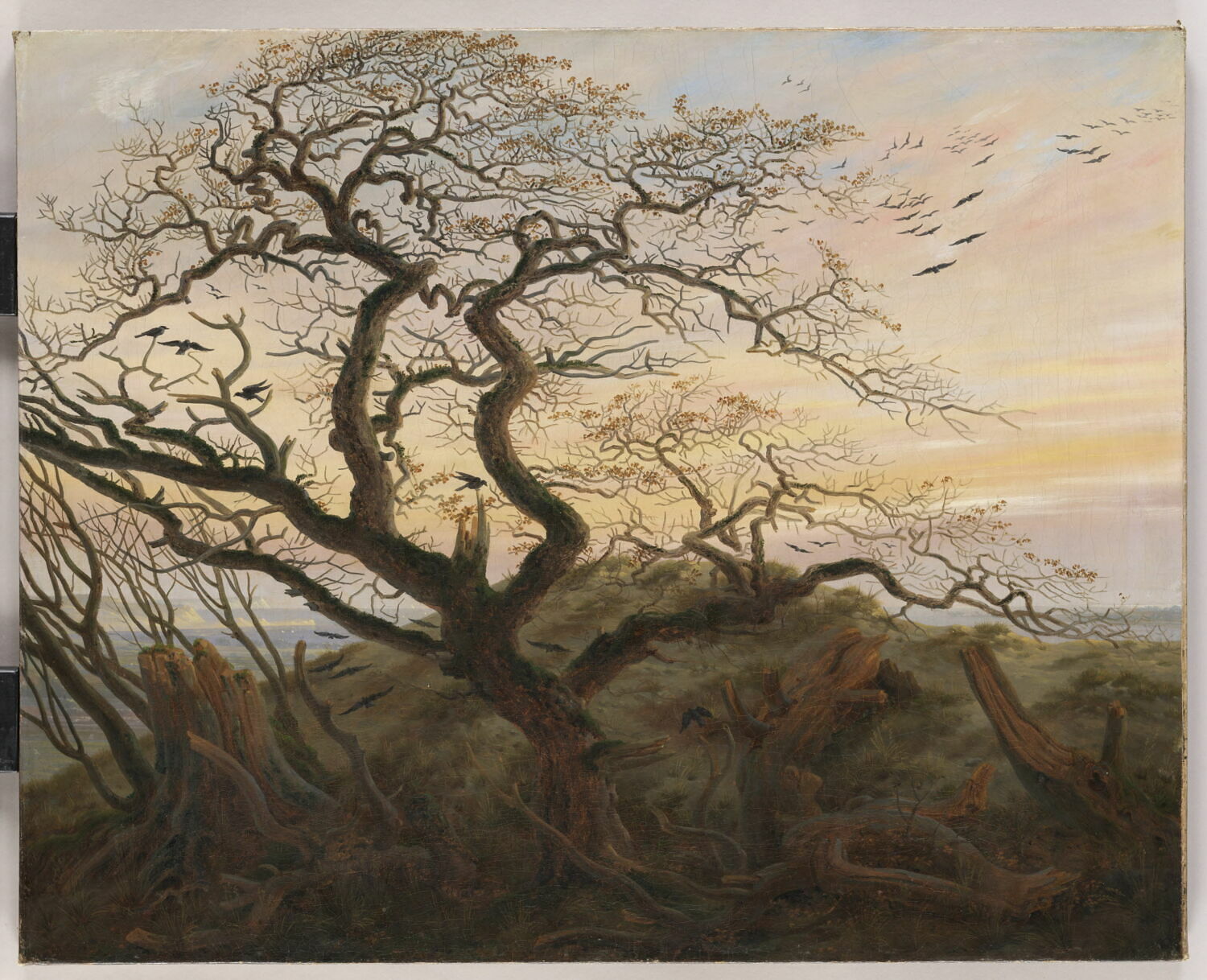
Alter Baum
Må man se det?
Ukendt: museet holder tæt

Kupferstich-Kabinett Dresden
Dresden, Tyskland
Ejeren er kendt. Om det er udstillet i dag, siger museet ikke, og at gætte har vi ikke lært.
- Uændret siden
- 27. sep. 2026
- Kilde
- Museets egne samlingsdata
Oplysninger
Kilder
- Kupferstich-Kabinett Dresden: the museum's own open data · hentet for 3 dage siden
- Billede: Kupferstich-Kabinett Dresden — In Copyright
Imens i livet hos Caspar David Friedrich
Hele livet1798–1804
Etchings and woodcuts
In Dresden Friedrich experiments with etching and makes designs for woodcuts that his furniture-maker brother cuts: by 1804 he has produced 18 etchings and four woodcuts, apparently in small numbers and distributed only to friends. His main media remain ink, watercolour and sepia, and he does not work extensively in oils until his reputation is more established.
1805
Wins Goethe’s Weimar competition
With two sepia drawings, “Procession at Dawn” and “Fisher-Folk by the Sea”, Friedrich wins the competition organised by Goethe in Weimar. The poet, whose reputation was suffering from the poor quality of the entries, responds enthusiastically to the artist’s resourcefulness, and the success establishes Friedrich’s reputation.
1807
The turn to oil painting
Until 1807 Friedrich works exclusively in drawing, chiefly in pencil or sepia, and then turns to oil painting as well.
1808–1809
The quarrel with Ramdohr: can a landscape stand on an altar?
The altarpiece is generally coldly received but becomes Friedrich’s first painting to win wide publicity: friends defend it publicly, while the critic Basilius von Ramdohr publishes a long article challenging the use of landscape in a religious context. In 1809 Friedrich answers with a programme comparing the rays of the evening sun to the light of the Holy Father — the only time he recorded a detailed interpretation of his own work.