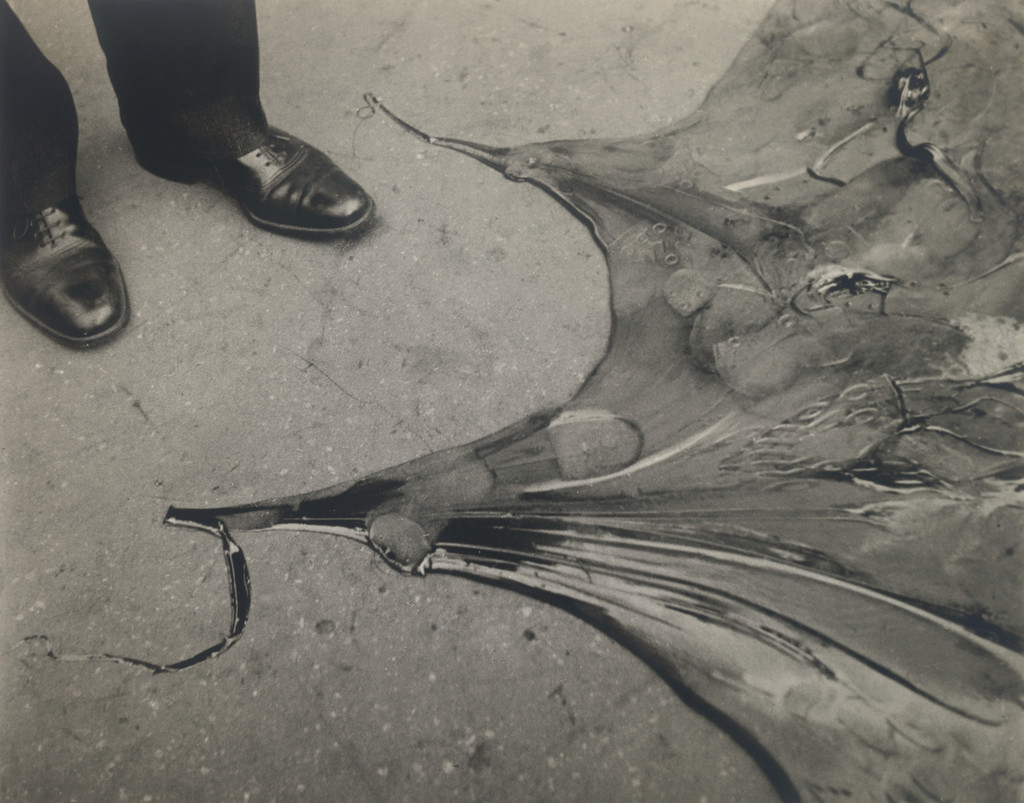
Lee MillerUSA, 1907–1977
Chairs
Må man se det?
Ja, det tager imod

Art Institute of Chicago
Sal1Chicago, USA
Udstillet for publikum. Hvem der står inde for det, står nedenfor.
- Kontrolleret
- for 6 timer siden
- Uændret siden
- 28. sep. 2026
- Kilde
- Museets egne samlingsdata
Oplysninger
- Inventarnummer
- 1978.1088
What it shows
I kataloget
Kilder
- Art Institute of Chicago: the museum's own open data · hentet for 4 dage siden
- Billede: Art Institute of Chicago — © the artist or rights holder
Imens i livet hos Lee Miller
Hele livet1926–1929
Travel: United States
15 March 1927
Saved by Condé Nast, onto the cover of Vogue
At 19 Miller nearly stepped in front of a car on a Manhattan street but was held back by Condé Nast, the publisher of Vogue, and the incident launched her modelling career: on 15 March 1927 she appeared on the cover of Vogue in a blue hat and pearls in a drawing by George Lepape. Editor-in-chief Edna Woolman Chase saw in her the embodiment of the “modern girl”, and on the advice of the illustrator Neysa McMein she adopted the name Lee.
1927–1929
New York's most sought-after model
For the next two years Miller was one of the most sought-after models in New York, photographed by Edward Steichen, Arnold Genthe, Nickolas Muray and George Hoyningen-Huene. A photograph of her by Steichen was used without her knowledge to advertise Kotex menstrual pads, causing a scandal.
1929
“I'm your new student”: Man Ray in Paris
In 1929 Miller travelled to Paris intending to apprentice herself to the Surrealist artist and photographer Man Ray; although he insisted he did not take students, she soon became — announcing “I'm your new student” — his model and collaborator, as well as his lover and muse. Some photographs taken by Miller are credited to Man Ray.
1930
A statue in Cocteau's “The Blood of a Poet”
Miller's friends included Duchess Solange d'Ayen, fashion editor of French Vogue, Pablo Picasso, Paul Éluard and Jean Cocteau. Cocteau was so mesmerised by her beauty that he turned her into a plaster cast of a classical statue for his film “The Blood of a Poet” (1930).
c. 1930
Rediscovers solarisation with Man Ray
Together with Man Ray, Miller rediscovered solarisation, by an accident variously described — in one of her accounts a mouse ran over her foot and she switched on the darkroom light mid-development. The technique became the couple's visual signature: Man Ray's solarised portrait of Miller (Paris, c. 1930) and her own portraits of Meret Oppenheim (1930), Dorothy Hill and Lilian Harvey (1933).