BalchandIndien, 1595
Painting
Må man se det?
Tager ikke imod for tiden

Victoria and Albert Museum
London, Storbritannien
Det hører til samlingen, men er ikke udstillet for tiden.
- Kontrolleret
- for 7 dage siden
- Uændret siden
- 25. sep. 2026
- Kilde
- Museets egne samlingsdata
About the painting
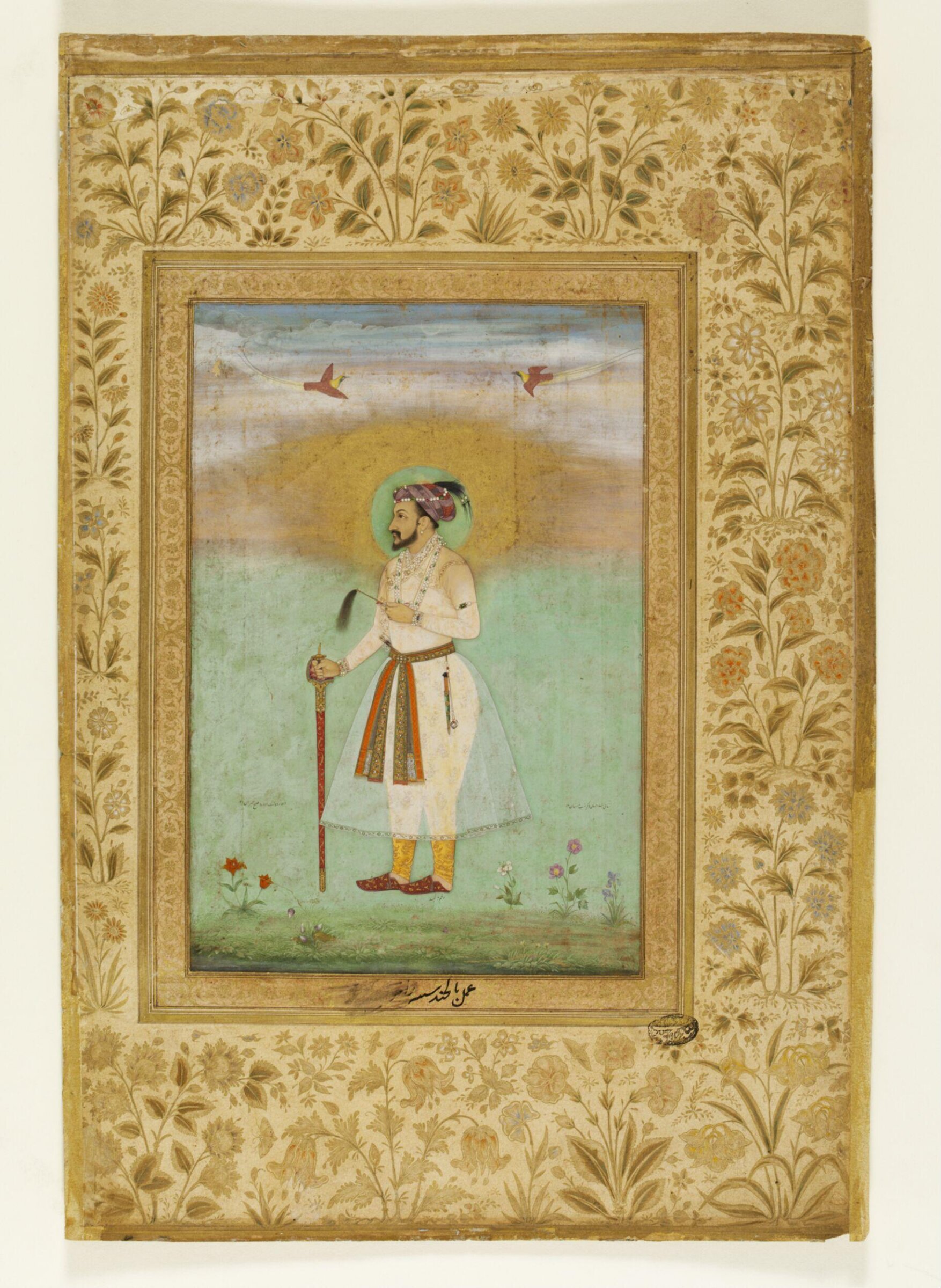
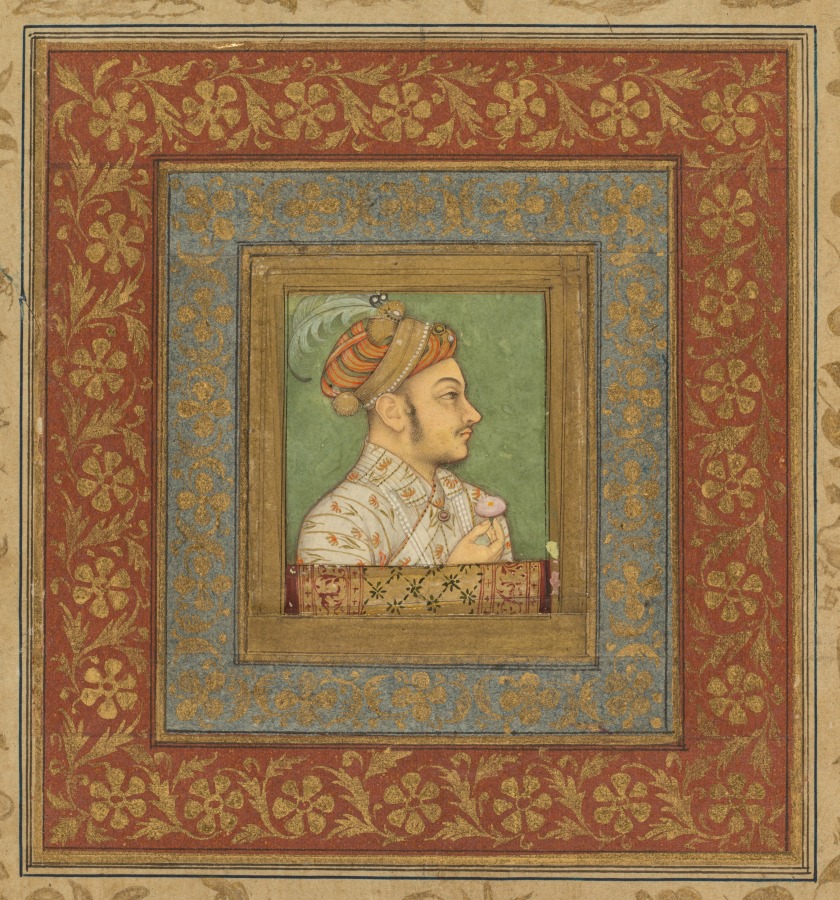
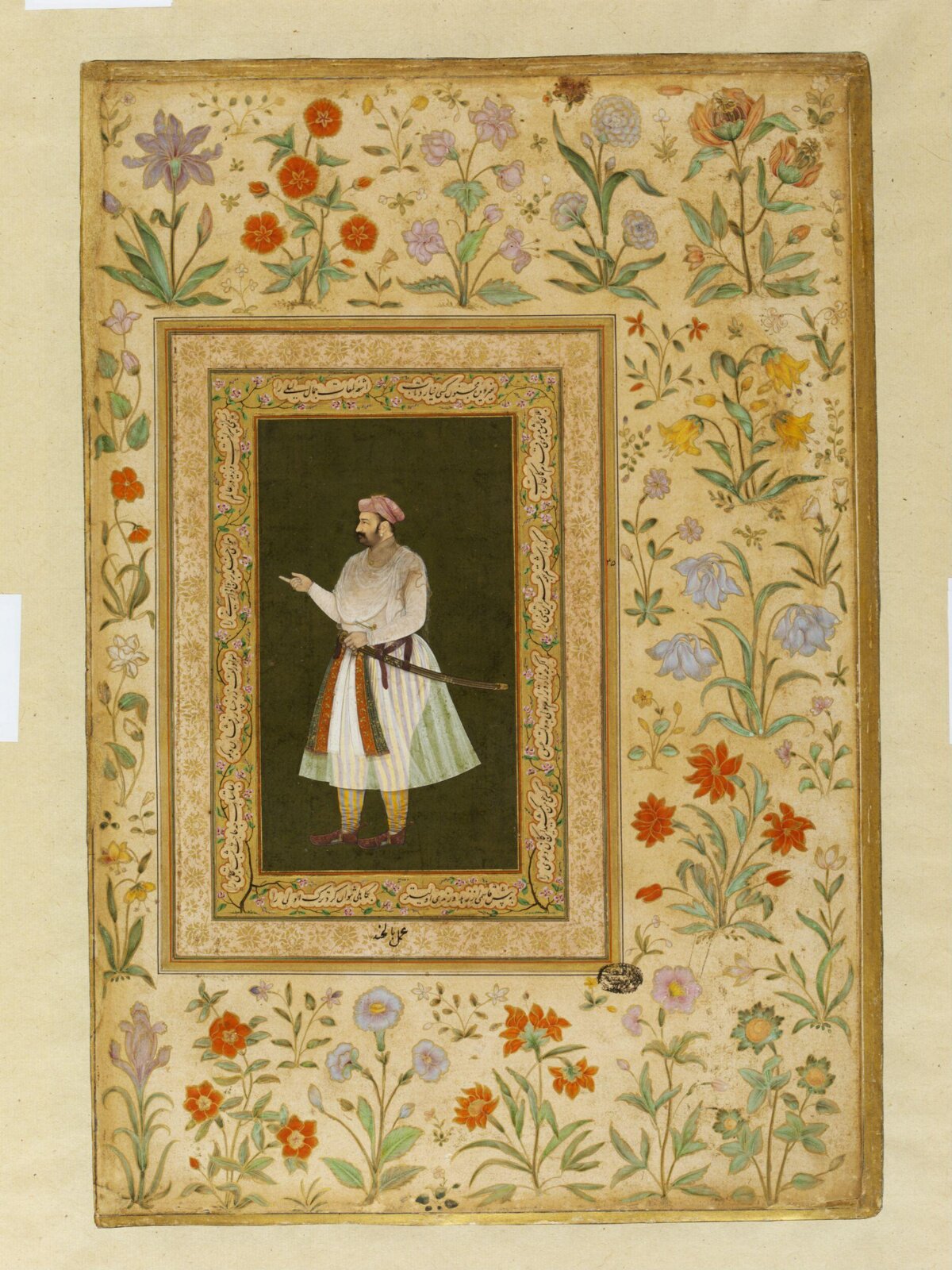
This portrait depicts one of the most significant Mughal nobles of the early 17th century. The family of Mirza Abu'l Hasan 'Itiqad Khan (1579-1641) belonged to the Iranian elite at the heart of the Persian-speaking court. which at that time ruled territory covering most of the north of the Indian subcontinent. The painting is ascribed in the framing gold border enclosing the portrait to the artist Balchand who, with his artist brother Payag, was in service to the emperor Shah Jahan (r. 1628-1658). The portrait was probably done in about 1630. It subsequently became part of a royal album, when the floral borders characteristic of Shah Jahan's reign were added.
Read on
The seal impression on the lower right of the border gives the lineage of the emperors from their descendant, the Central Asian ruler Timur, to Shah Jahan's father, Jahangir (r. 16t05-1627). Although from an authentic seal, the addition of the impression was probably added in about 1800.
The folio was part of a group of paintings, all with illuminated calligraphy on the reverse, that was acquired at auction in London and given to Lady Wantage by her father in 1868 on her twenty-first birthday. She bequeathed them to the museum in 1921, and at that time all were considered to be authentic examples of painting and calligraphy from the first half of the 17th century. In 1949, the great Indian scholar Moti Chandra identified a number of the folios as the work of later artists and calligraphers, suggesting a date of about 1800 for their creation.
Victoria and Albert Museum
Oplysninger
- Inventarnummer
- IM.120-1921
What it shows
I kataloget
Kilder
- Victoria and Albert Museum: the museum's own open data · hentet for 7 dage siden
- Billede: Victoria and Albert Museum — © Victoria and Albert Museum, London