
 Mark RothkoUSA, 1903–1970
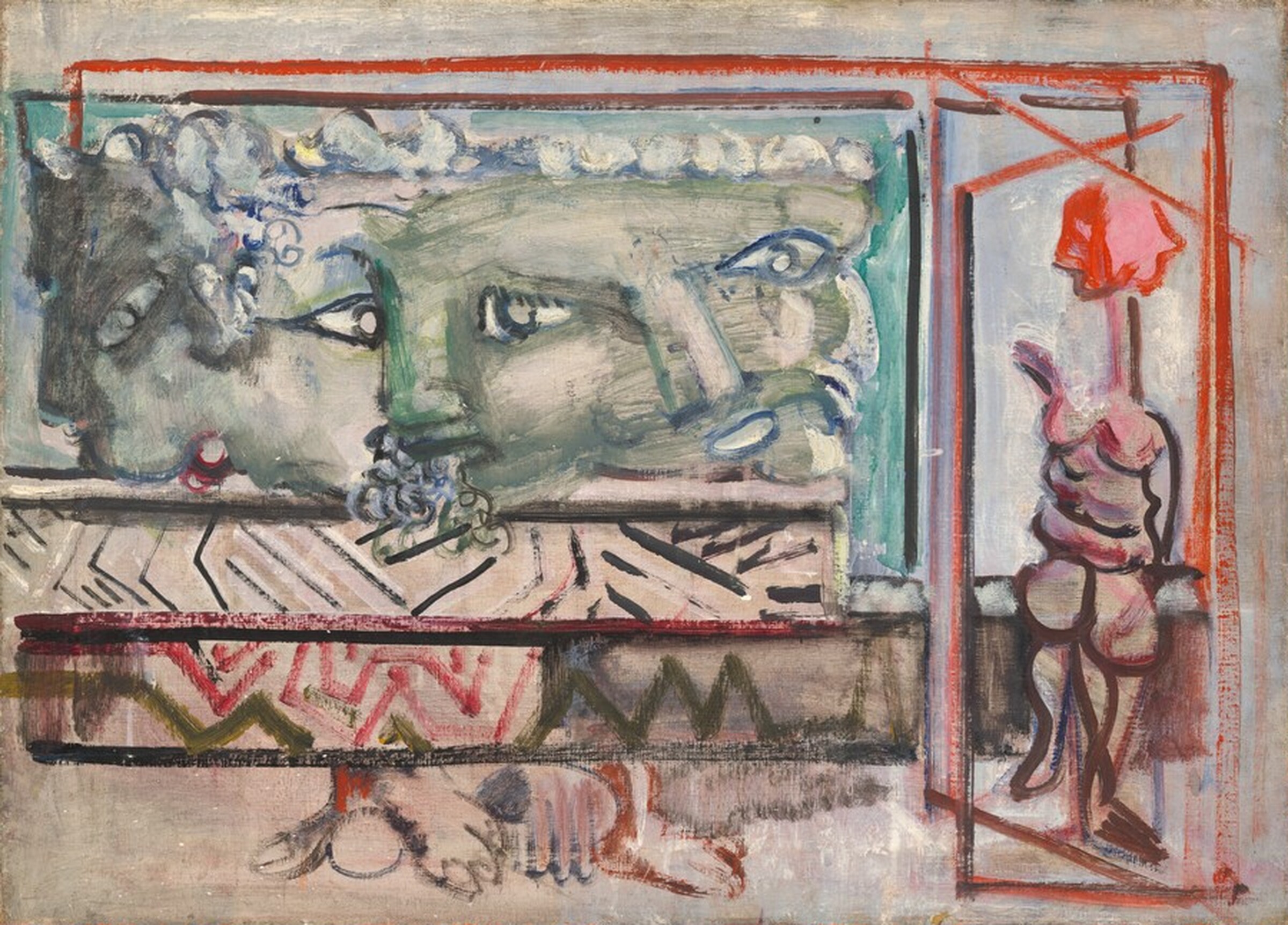
The Omen
Må man se det?
Tager ikke imod for tiden

National Gallery of Art
Washington, D.C., USA
Det hører til samlingen, men er ikke udstillet for tiden.
- Kontrolleret
- for 3 timer siden
- Uændret siden
- 19. aug. 2026
- Kilde
- Museets egne samlingsdata
Oplysninger
- Inventarnummer
- 1986.43.128
What it shows
I kataloget
Kilder
- National Gallery of Art: the museum's own open data · hentet for 4 dage siden
- Billede: National Gallery of Art — © the artist or rights holder
Imens i livet hos Mark Rothko
Hele livet1942
The Rothko–Gottlieb manifesto after the Macy’s show
New paintings were shown at a 1942 exhibition at Macy’s department store; answering a negative review in The New York Times, Rothko and Gottlieb issued a manifesto written mainly by Rothko, declaring themselves for the simple expression of the complex thought, for the large shape and for flat forms that destroy illusion and reveal truth.
1943
Berkeley: friendship with Clyfford Still
Hoping a change of scenery would help, Rothko returned to Portland and then travelled to Berkeley, where he met Clyfford Still and the two became close friends; Still’s deeply abstract paintings are thought to have influenced Rothko’s later work.
autumn 1943
Peggy Guggenheim
In the autumn of 1943 Rothko returned to New York and met the collector and dealer Peggy Guggenheim, who was at first reluctant to take on his work.
13 June 1943
Separation from Edith Sachar and depression
On 13 June 1943 Rothko and Edith Sachar separated again, and the divorce (1944) left him depressed for a long time.
1944–1945
Mell Beistle: meeting and marriage
Rothko met the book illustrator Mary Alice “Mell” Beistle in 1944 and married her in early 1945.
late 1945
The Art of This Century show
The one-person show at Peggy Guggenheim’s gallery was not a success: few sales, at prices from $150 to $750, and unfavourable reviews. Guggenheim nevertheless bought several works, including Sacrifice (1946), and showed it in her European galleries, making it among the first of Rothko’s paintings exhibited outside the United States.






![Scenes from the Passion of Christ: The Descent into Limbo [right panel], Andrea Vanni, 1380s](https://api.nga.gov/iiif/4205a539-eadd-4486-89a7-3cff9c1ba428/full/!2400,2400/0/default.jpg)


