Ikhlas
Akbar
Darf man es sehen?
Empfängt derzeit nicht

Victoria and Albert Museum
London, Vereinigtes Königreich
Es gehört zur Sammlung, ist derzeit aber nicht ausgestellt.
- Geprüft
- vor 7 Tagen
- Unverändert seit
- 25. Sept. 2026
- Quelle
- Sammlungsdaten des Museums selbst
About the painting
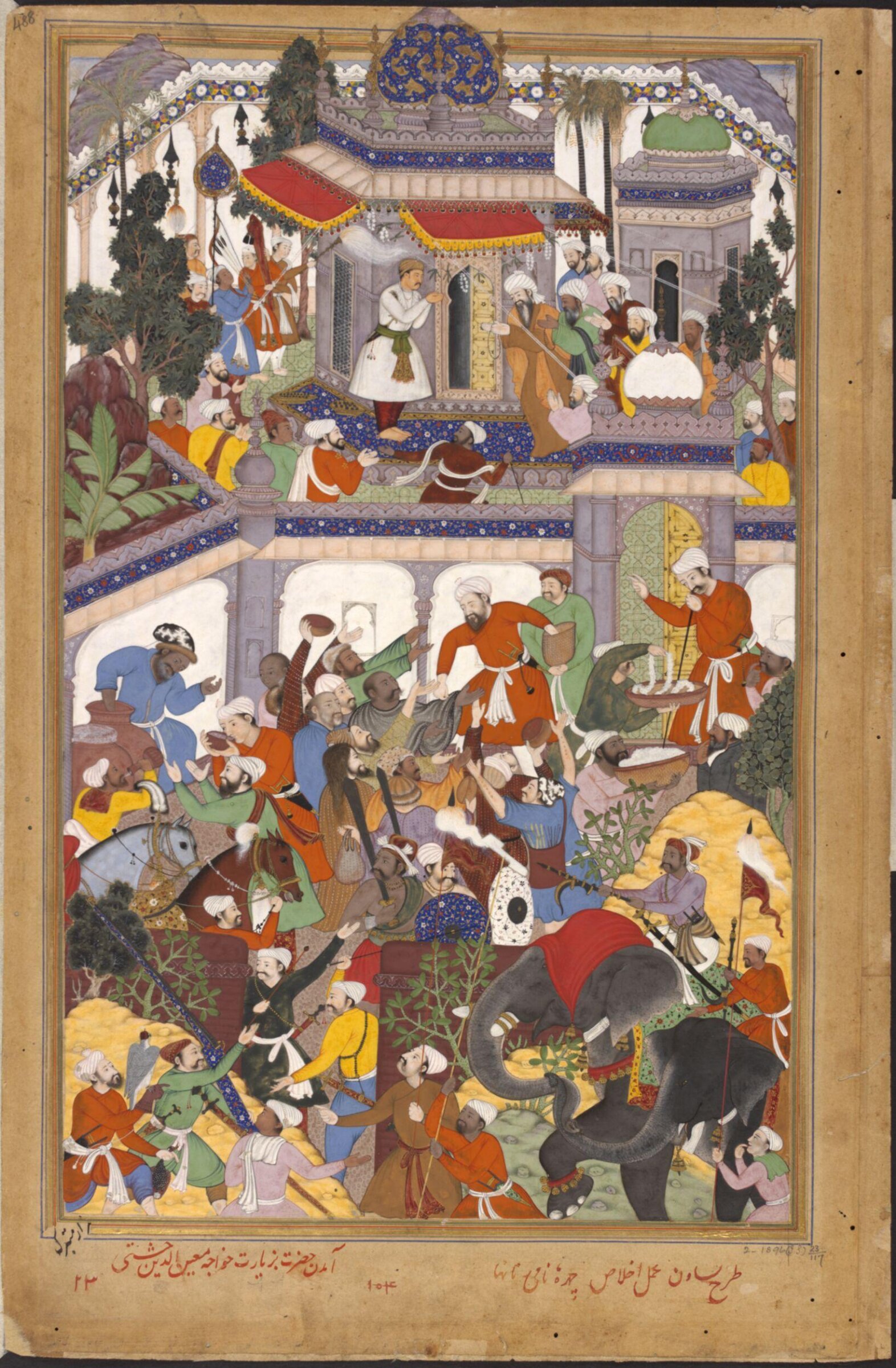
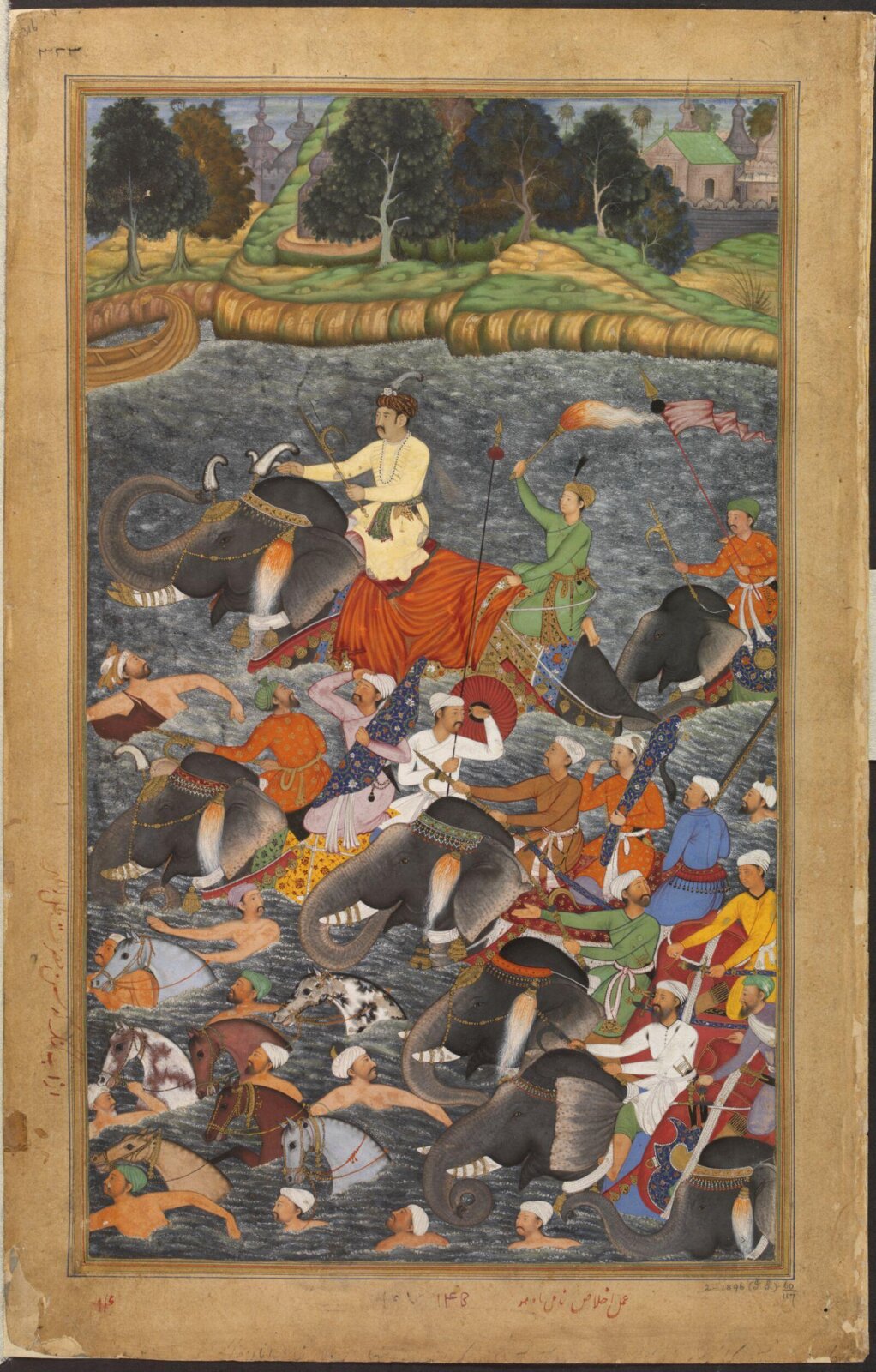
This page from the Akbarnama (Book of Akbar) shows the Mughal emperor Akbar (r.1556–1605) crossing the Ganges River on an elephant on his way to fight the rebellious brothers Khan Zaman and Bahadur Khan. Several mounted elephants are guided by their riders while the horses are led by soldiers. The animals are decorated with gold chains and other jewellery. The royal elephant and the emperor are depicted larger than the rest of the group to emphasise their presence. The emperor, wearing a yellow robe, green sash and brown turban, guides his elephant with a gold goad.
Read on
The Akbarnama was commissioned by Akbar as the official chronicle of his reign. It was written in Persian by his court historian and biographer, Abu’l Fazl, between 1590 and 1596, and the V&A’s partial copy of the manuscript is thought to have been illustrated between about 1592 and 1595. This is thought to be the earliest illustrated version of the text, and drew upon the expertise of some of the best royal artists of the time. Many of these are listed by Abu’l Fazl in the third volume of the text, the A’in-i Akbari, and some of these names appear in the V&A illustrations, written in red ink beneath the pictures, showing that this was a royal copy made for Akbar himself. After his death, the manuscript remained in the library of his son Jahangir, from whom it was inherited by Shah Jahan.
The V&A purchased the manuscript in 1896 from Frances Clarke, the widow of Major General John Clarke, who bought it in India while serving as Commissioner of Oudh between 1858 and 1862.
Victoria and Albert Museum
Angaben
- Inventarnummer
- IS.2:60-1896
What it shows
Im Katalog
Quellen
- Victoria and Albert Museum: the museum's own open data · abgerufen vor 7 Tagen
- Bild: Victoria and Albert Museum — © Victoria and Albert Museum, London