 William HogarthEngland, 1697–1764
Before
Darf man es sehen?
Empfängt derzeit nicht

Minneapolis Institute of Art
Minneapolis, Vereinigte Staaten
Es gehört zur Sammlung, ist derzeit aber nicht ausgestellt.
- Geprüft
- vor 6 Stunden
- Unverändert seit
- 25. Sept. 2026
- Quelle
- Sammlungsdaten des Museums selbst
Über das Werk
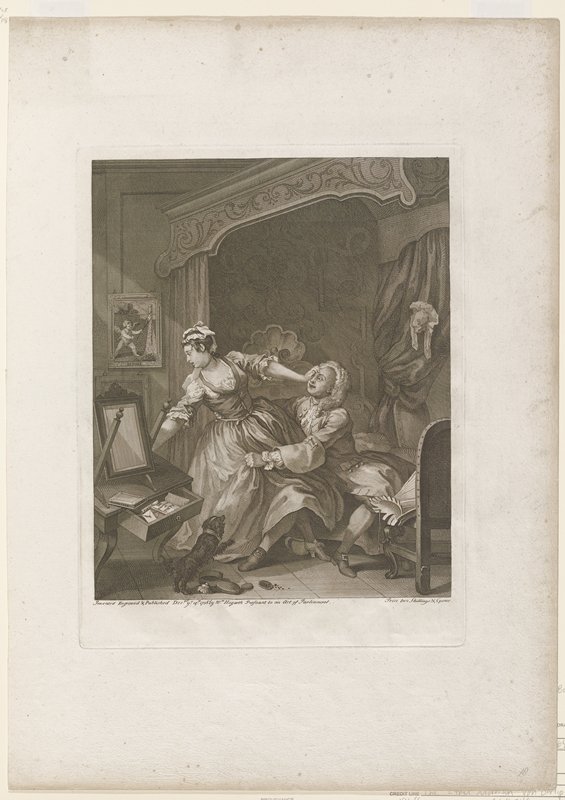
Hogarth brings his usual insightful humor to the role reversals pictured in these two images (P.68.349 and P.68.350). In Before the woman appears anxious after having invited her enthusiastic lover into her bedroom. She futilely pushes him away amid the barks of her dog. The man clings to her body wildly, his face excited and his bald head becoming exposed under his wig-a sight that in the eighteenth century carried sexual overtones. In After, by contrast, the man appears panicked and distant, and the woman now passionately reaches to embrace his fleeing figure. As was typical, Hogarth peppered his scene with details to develop his narrative further. In After a number of objects are symbolically broken-the dressing table, chamber pot, and bed curtains-and the rocket ignited by the putto in the painting in the background has been extinguished.
Minneapolis Institute of Art
Angaben
- Inventarnummer
- P.68.349
Im Katalog
Quellen
- Minneapolis Institute of Art: the museum's own open data · abgerufen vor 4 Tagen
- Bild: Minneapolis Institute of Art — public domain
Derweil im Leben von William Hogarth
Das ganze Leben1712–1764 · Wirkungsort
London
1735
Founds the St Martin’s Lane Academy
In 1735 Hogarth founded the St Martin’s Lane Academy in London — in essence a drawing studio that grew out of a circle of painters, draughtsmen and engravers who met at Slaughter’s coffee house on St Martin’s Lane. It became a forerunner of the Royal Academy of Arts and spread new artistic ideas in England.
25 June 1735
“Hogarth’s Act”: copyright for engravings
When the success of the two series produced numerous pirated copies, Hogarth lobbied Parliament for a law protecting engravers: the Engravers’ Copyright Act, known as “Hogarth’s Act”, became law on 25 June 1735 — the first copyright law to cover visual works and to recognise the authorial rights of an individual artist.