 William ChambersSchottland, 1723–1796
Drawing
Darf man es sehen?
Empfängt derzeit nicht

Victoria and Albert Museum
London, Vereinigtes Königreich
Es gehört zur Sammlung, ist derzeit aber nicht ausgestellt.
- Geprüft
- vor 7 Tagen
- Unverändert seit
- 25. Sept. 2026
- Quelle
- Sammlungsdaten des Museums selbst
Über das Werk
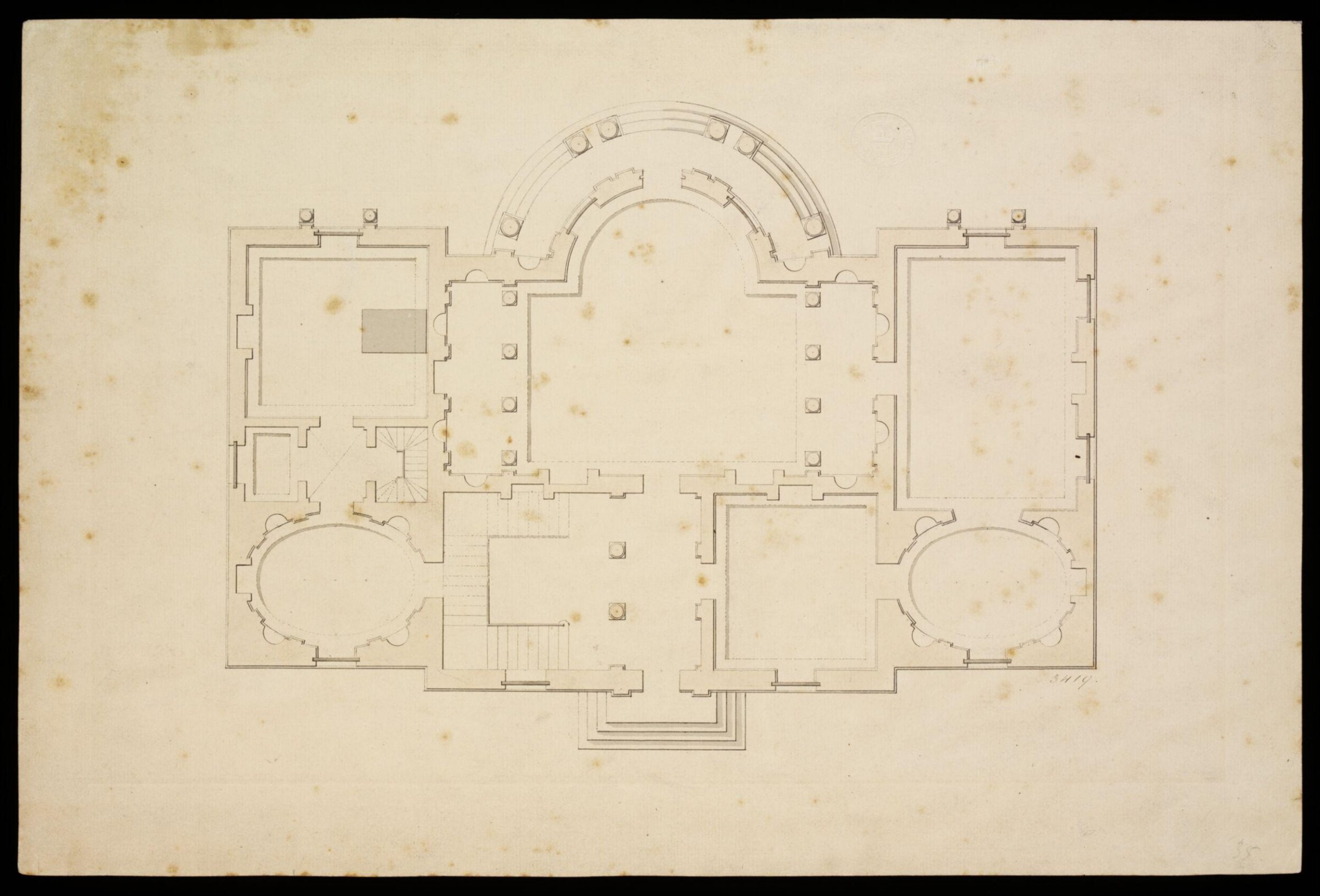
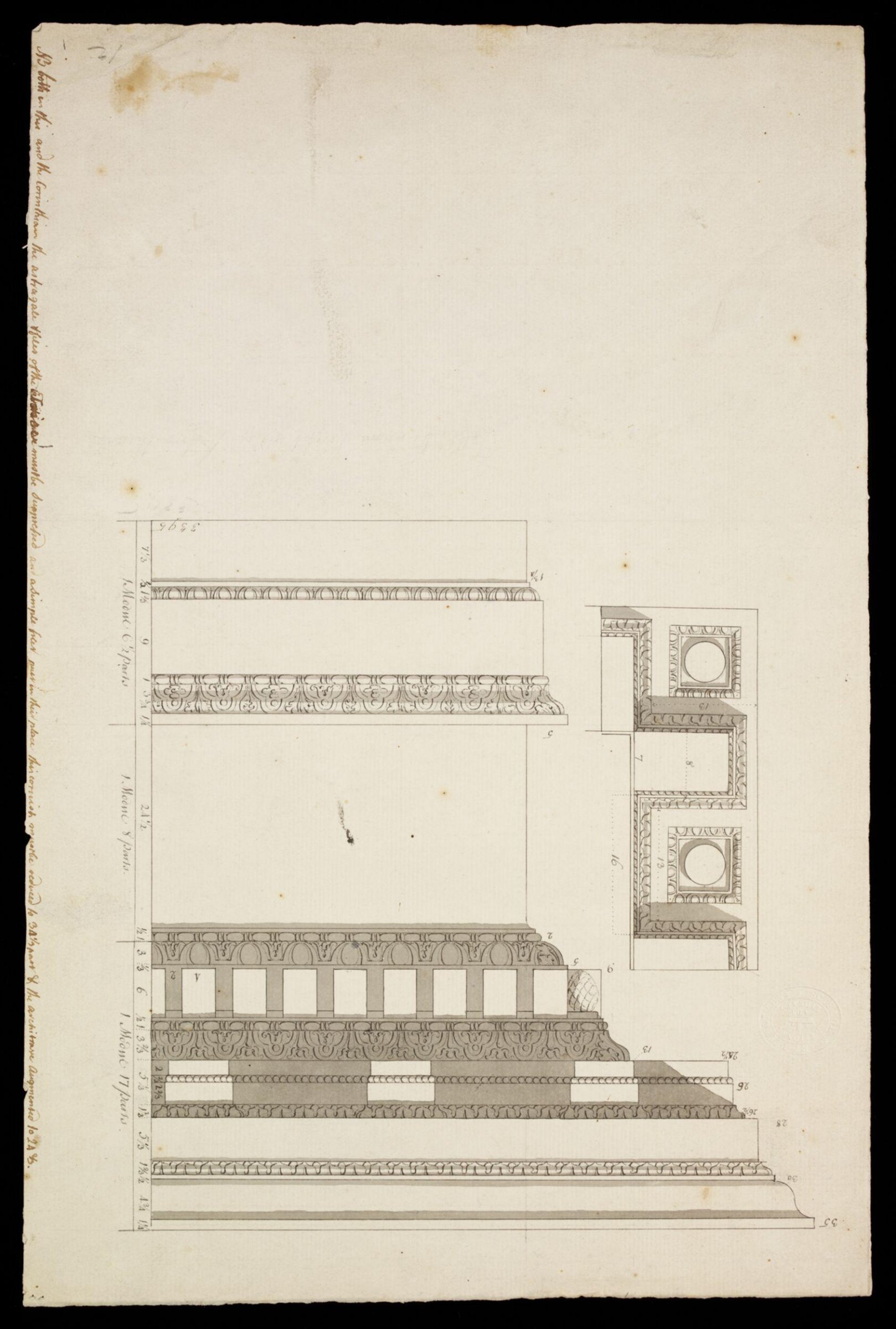
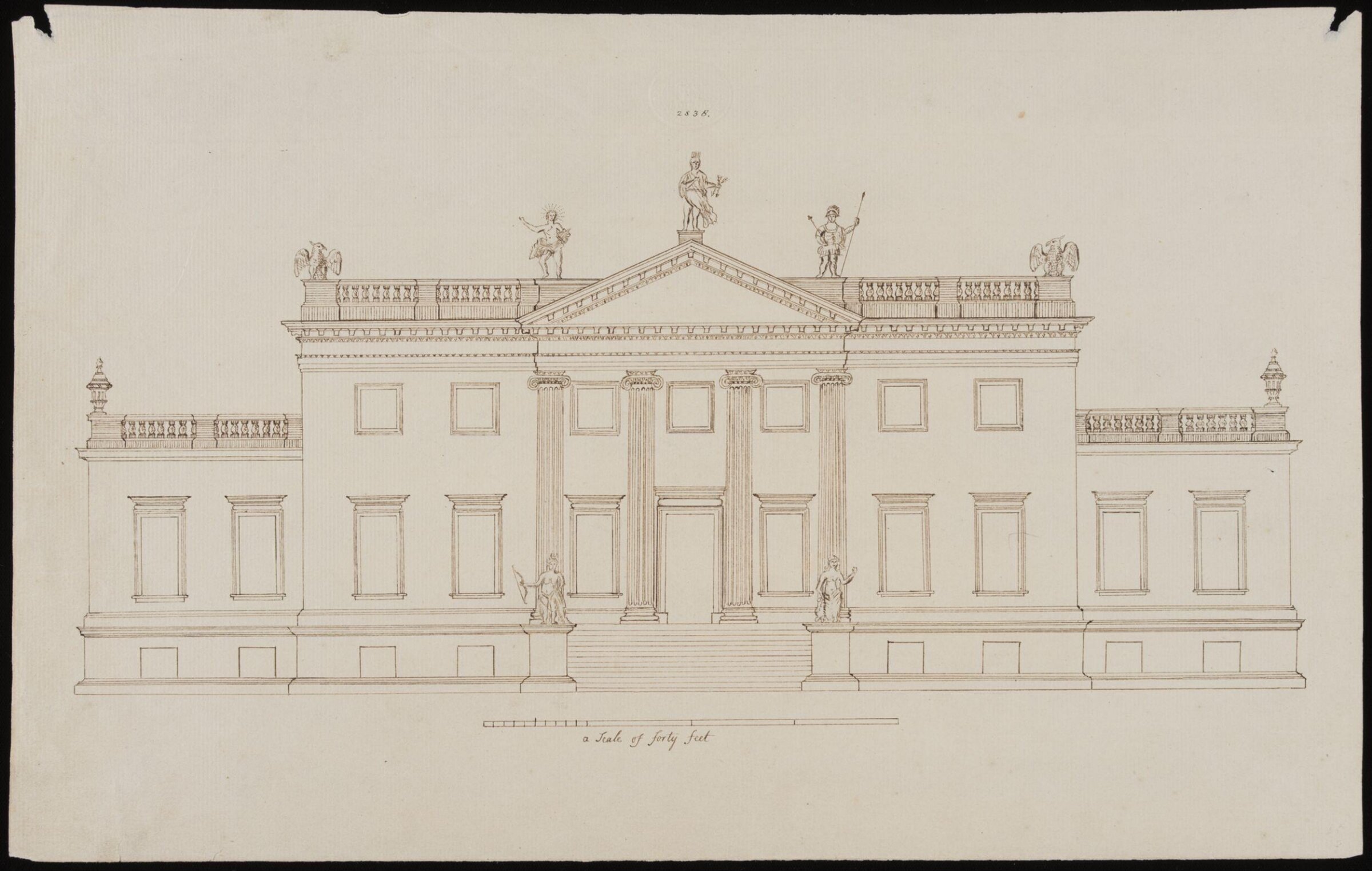
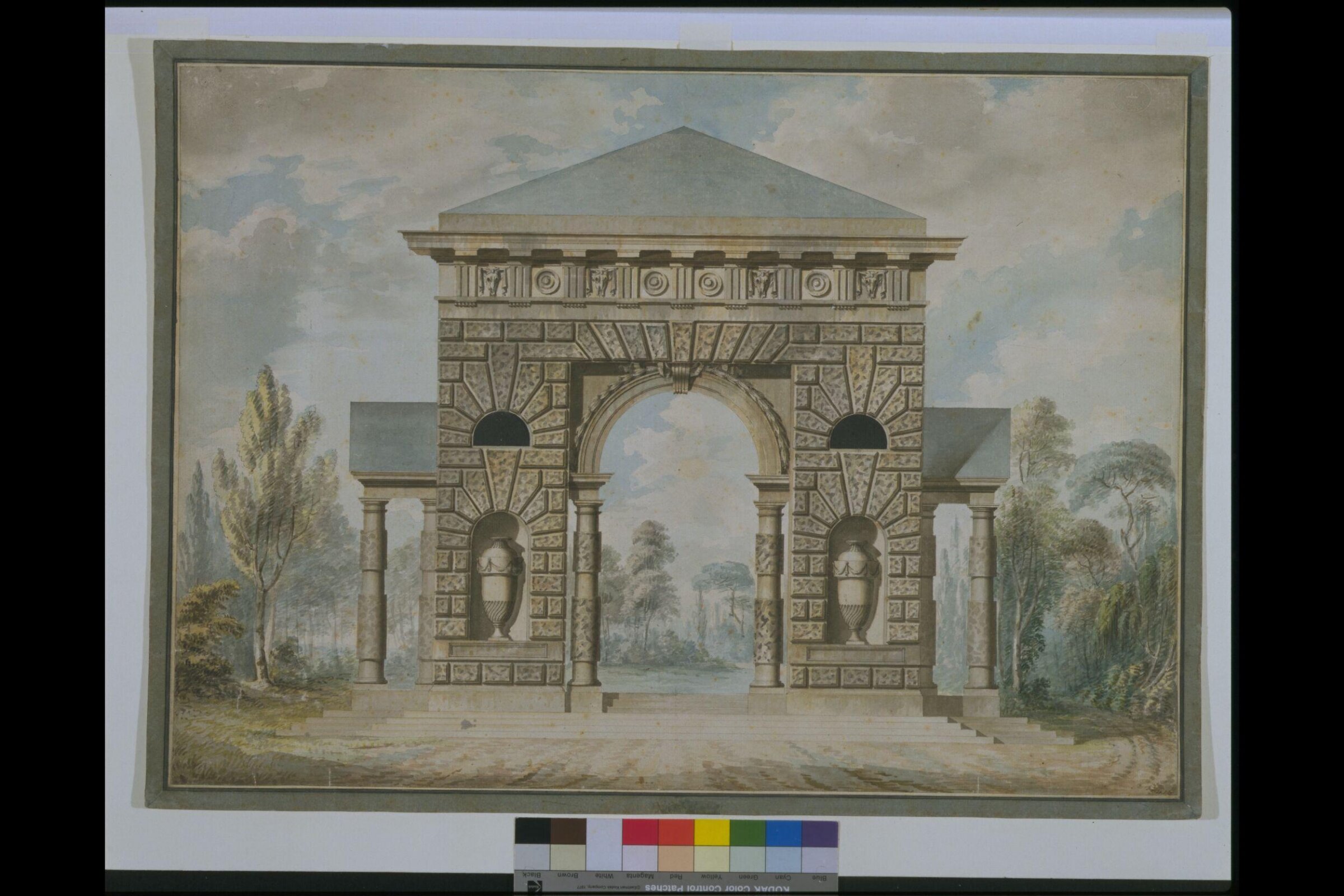
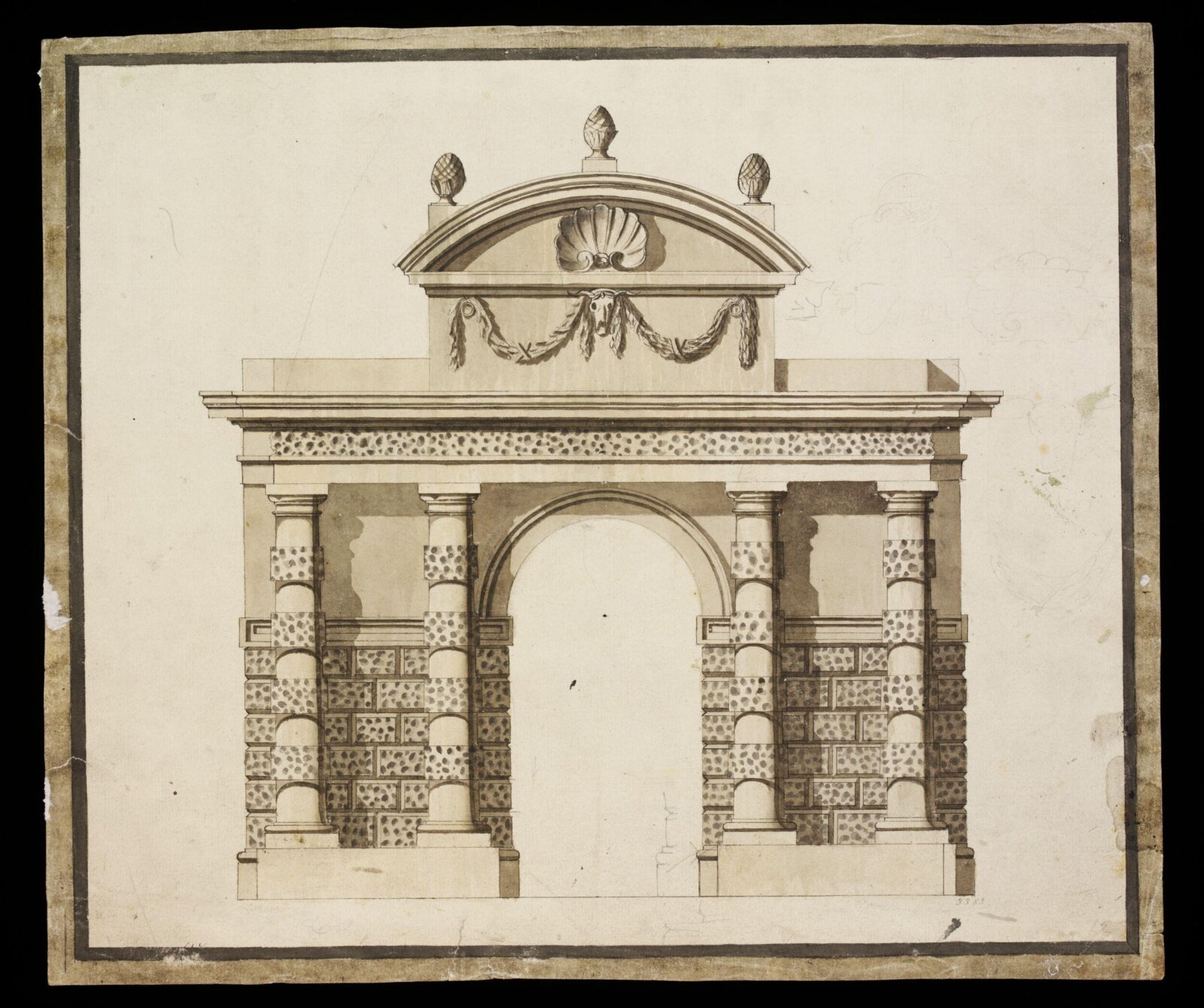
If the initials are 'JY', then it is possible that the drawing is by John Yenn, who joined the office in 1764. It can be compared with similar pupils' design exercises based on other Chambers gateways.
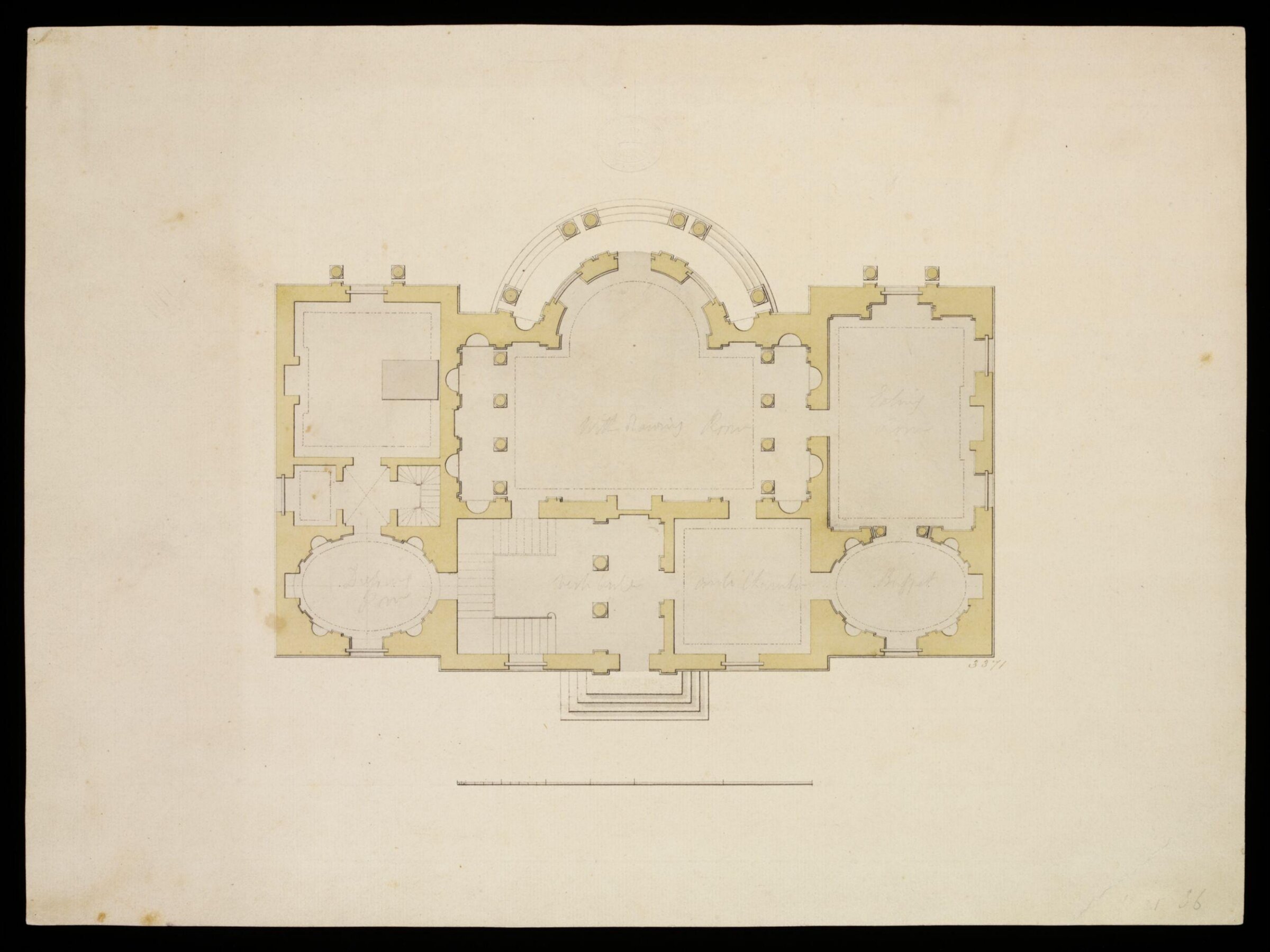
Thomas Brand was the cousin of his namesake Thomas Brand of the Hyde, Essex, who had met Chambers in Italy. At the Hoo, Chambers designed alterations and internal decorations, a bridge, a temple and a gateway, in addition to submitting designs for other projects such as stables and a boat-house. The gateway can be dated from a letter to Chambers from the client, dated 4 July 1764, which mentions a gate built 'this year' (RIBA). The Hoo was demolished in 1957.
Read on
Chambers was born in Sweden and died in London. He travelled widely, visiting China, and studied architecture at the Ecole des Arts, Paris, from 1749 and in Italy from 1750 to 1755. Many of his drawings from this period are contained in his important 'Franco-Italian' album, held in the V&A. Chambers moved to London in 1755 and published his influential Treatise on Civil Architecture in 1759. Chambers demonstrated the breadth of his style in buildings such as Gower (later Carrington) House and Melbourne House, London, in such country houses as Duddingston, Scotland, and in the garden architecture he designed for Wilton House, Wiltshire, and at Kew Gardens. He became head of government building in 1782, and in this capacity built Somerset House, London.
Victoria and Albert Museum
Angaben
- Inventarnummer
- 3383
What it shows
Im Katalog
Quellen
- Victoria and Albert Museum: the museum's own open data · abgerufen vor 7 Tagen
- Bild: Victoria and Albert Museum — © Victoria and Albert Museum, London