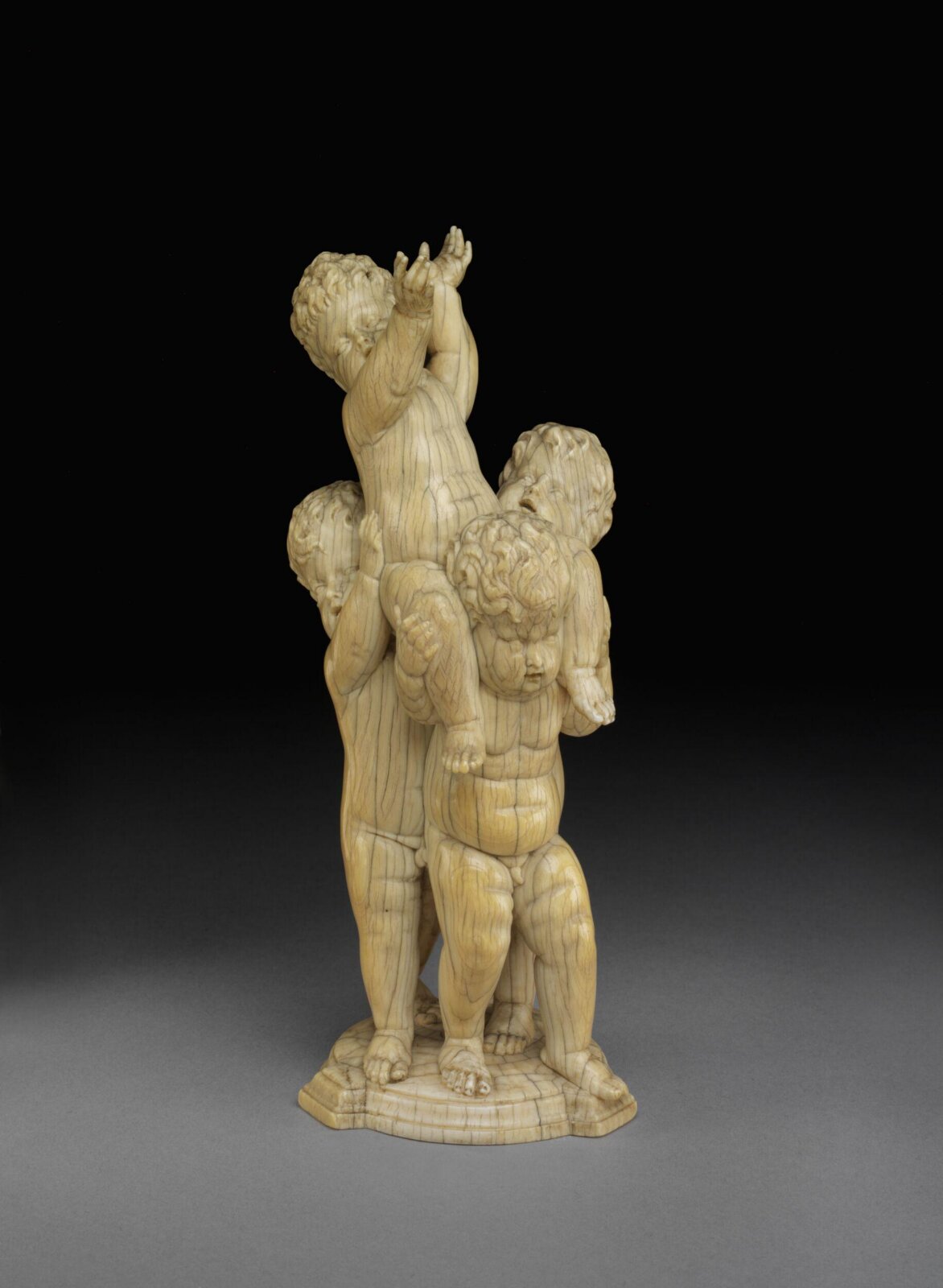
Four putti
Darf man es sehen?
Empfängt derzeit nicht

Victoria and Albert Museum
London, Vereinigtes Königreich
Es gehört zur Sammlung, ist derzeit aber nicht ausgestellt.
- Geprüft
- vor 7 Tagen
- Unverändert seit
- 25. Sept. 2026
- Quelle
- Sammlungsdaten des Museums selbst
About the sculpture
This carved ivory group, representing four naked boys or puttis, is made in ca. 1700 in the Netherlands or in Italy by an unknown artist in the style of François Du Quesnoy.
Amsterdam was the principal European port, and much ivory arrived there from Africa from the sixteenth century onwards. Many devotional ivories, whose authorship was unrecorded, were produced in the Netherlands during the seventeenth and eighteenth centuries, particularly crucifix figures and statuettes of the Christ Child. During the seventeenth century, leading artists such as Francois Du Quesnoy, and later Francis van Bossuit, carved or inspired numerous small-scale ivory reliefs and figures, and it is relevant that both these artists, as well as other Netherlandish sculptors, spent significant periods of time in Italy. Other Netherlandish ivory carvers emigrated to Britain in the eighteenth century.
Read on
Francois Duquesnoy (c. 1594-1643) was a Netherlandish sculptor who spent most of working life in Rome and assimilated the classical style. His tender and sensuous reliefs of cupids, satyrs and small children were highly influential.
Victoria and Albert Museum
Angaben
- Inventarnummer
- 13-1872
What it shows
Im Katalog
Quellen
- Victoria and Albert Museum: the museum's own open data · abgerufen vor 7 Tagen
- Bild: Victoria and Albert Museum — © Victoria and Albert Museum, London