 Isaac Levitan1860–1900
März
March
Darf man es sehen?
Unbekannt: Das Museum schweigt sich aus

Tretjakow-Galerie
Moskau, Russland
Der Eigentümer ist bekannt. Ob es heute ausgestellt ist, sagt das Museum nicht, und Raten haben wir nicht gelernt.
- Quelle
- Sammlungsdaten des Museums selbst
About the painting
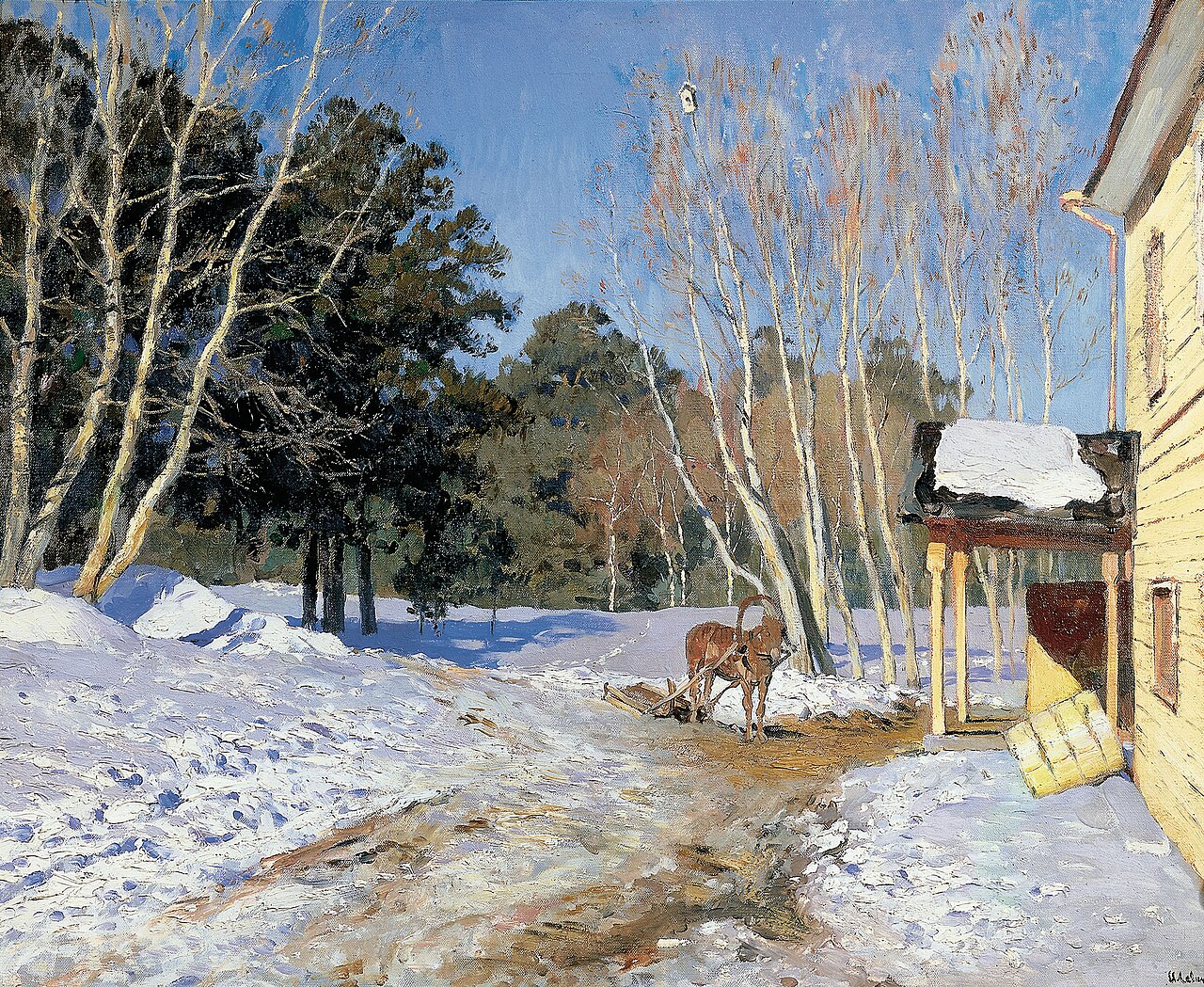
March is a landscape painting by the Russian artist Isaaс Levitan (1860–1900), created in 1895. It is now in the State Tretyakov Gallery in Moscow (Inventory 1489) and measures 60 × 75 cm (or 61 × 76 cm according to other sources). Levitan painted the picture in March 1895 while living in the Gorka estate, in the Vyshnevolotsky Uyezd of Tver Governorate.
The painting March was exhibited at the 24th exhibition of the Society for Travelling Art Exhibitions (Peredvizhniki) in February 1896 in Saint Petersburg. It was later moved to Moscow in March of the same year. March was exhibited at the All-Russia industrial and art exhibition 1896 in Nizhny Novgorod. In the same year, Pavel Tretyakov purchased the painting from the author.
Read on
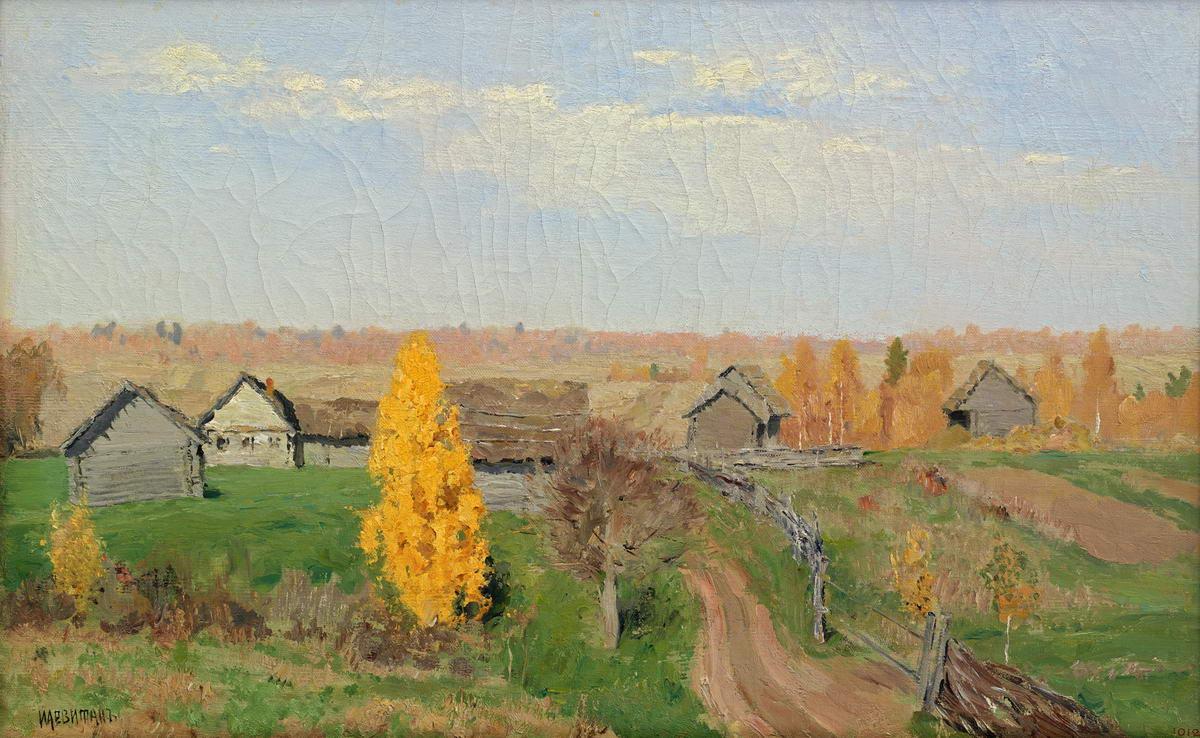
March is considered to be one of Levitan's 'life-affirming, cheerful works' from 1895 to 1897. This group also includes Golden Autumn (1895), Fresh Wind. Volga (1895), and Spring. Big Water (1897), among others. The painting March is widely regarded as one of Levitan's most famous and vivid landscape paintings. It also demonstrates the influence of Impressionism on the artist's oeuvre.
Artist Vasily Baksheev praised the painting, considering it not only one of Levitan's best works, but also one of the best works of the Russian school of painting. According to art historian Alexei Fedorov-Davydov, Levitan's painting March was a 'discovery in Russian landscape painting', combining a pictorial depiction of snow, spring sky, and trees. This motif later became a popular theme for many Russian landscape painters of the 20th century, including Igor Grabar and Konstantin Yuon. According to art historian Faina Maltseva, March is a 'inspired work in a major tone' that presents 'a whole and internally complete image, preserving at the same time all the immediacy and freshness of first impressions.'
Angaben
- Inventarnummer
- 1489
Quellen
- Tretjakow-Galerie: the museum's own open data · abgerufen vor 3 Tagen
- Bild: Tretjakow-Galerie — Museum open access
Derweil im Leben von Isaac Levitan
Das ganze Lebensummer 1894
A romance with Anna Turchaninova and the break with Kuvshinnikova
In summer 1894 Levitan and Sofia Kuvshinnikova are staying with the Ushakovs at the Ostrovno estate (he had met V. N. Ushakov a year earlier at Kurovo-Pokrovskoye); Anna Nikolaevna Turchaninova arrives at the neighbouring estate of Gorka with her two daughters, and Levitan begins an affair with her. The upset Kuvshinnikova returns to Moscow and never meets him again.
1894
Two paintings at the World Exhibition in London
He takes part in the World Exhibition in London with two works.
January 1895
Reconciliation with Chekhov at Melikhovo
Thanks to Tatiana Shchepkina-Kupernik, Levitan makes peace with Chekhov: on her way to Melikhovo she called at his Moscow studio to see the Udomlya studies and persuaded him to go with her; the friends met, embraced, and the friendship resumed.
21 June 1895
A suicide attempt
Overcome by severe melancholy, on 21 June 1895 Levitan makes an attempt on his life which, according to the doctor I. I. Troyanovsky, who found no trace of a wound, was rather a theatrical gesture — a “tragic comedy”.
after 21 June 1895
Chekhov comes to Gorka and stays five days
At Levitan's own request, and then Anna Turchaninova's, Chekhov comes to Gorka, satisfies himself that his friend's life is in no danger, stays five days and returns to Moscow shaken. After the visit he will write the story “The House with a Mezzanine” and the play “The Seagull”, which offend Levitan.
1896
Typhus again, and a heart aneurysm
After a second bout of typhus the symptoms of an aneurysm of the heart worsen; the illness becomes grave and incurable.