 Mansur
Painting
Darf man es sehen?
Empfängt derzeit nicht

Victoria and Albert Museum
London, Vereinigtes Königreich
Es gehört zur Sammlung, ist derzeit aber nicht ausgestellt.
- Geprüft
- vor 7 Tagen
- Unverändert seit
- 25. Sept. 2026
- Quelle
- Sammlungsdaten des Museums selbst
About the painting
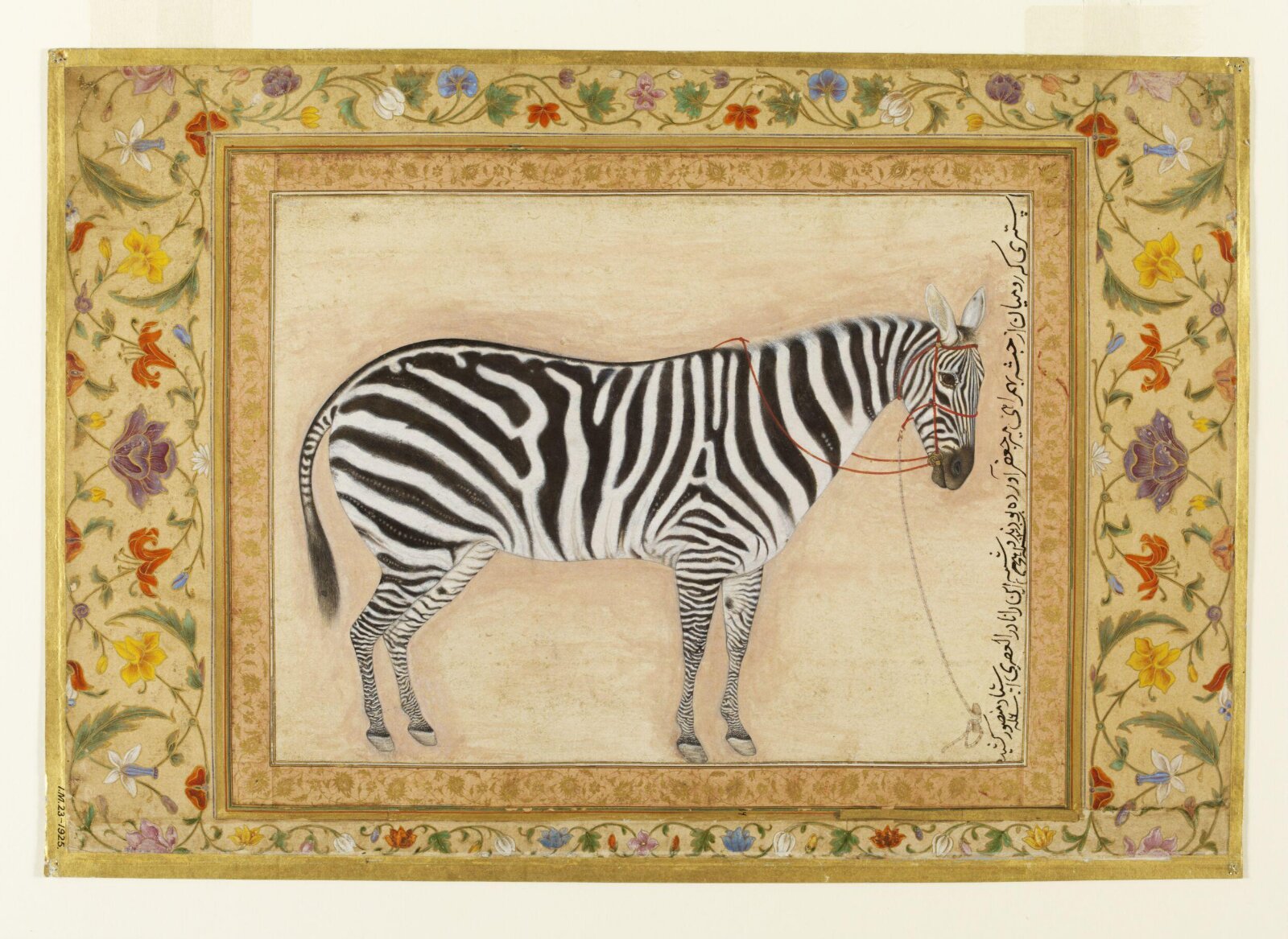
The zebra in this painting (Burchell's Zebra, Equus quagga burchelli) was presented to the Mughal emperor Jahangir (r. 1605-1627) by Mir Ja'far who had acquired it from Turks travelling to the Mughal empire from Ethopia. Jahangir wrote on the painting (in Persian, the court language) that it was: 'A mule which the Turks [rumiyan] in the company of Mir Ja'far had brought from Ethiopia [Habasha]. Its likeness was drawn by Nadir'ul-'asri [Wonder of the Age] Master Mansur. Year 1030 [ie 1620-21], [regnal] year 16'. Jahangir's memoirs, the Jahangirnama (Book of Jahangir) make it clear that the animal was presented to him during the extensive Nowruz, or New Year, festivities in March 1621.
Read on
When Jahangir had carefully examined it, and ensured that it was not, as some thought, a horse on which someone had painted stripes, he decided to send it to Shah Abbas of Iran, with whom he often exchanged rare or exotic presents. He does not mention ordering the animal to be depicted in a painting, and the inscription is the only evidence for Mansur's encounter with this exotic beast. The painting was almost certainly intended to be an illustration for his memoirs. No illustrated volume has survived, and it is likely that none was ever completed. Mansur, as his title indicates, was one of the leading artists of Jahangir's reign, but was already painting highly naturalistic studies of animals while in service to the emperor's father Akbar. A fine example of his work may be seen in the V&A's Akbarnama, the history of Akbar's reign (IS.2:55-1896), in a hunting scene dating to c. 1590-1595.
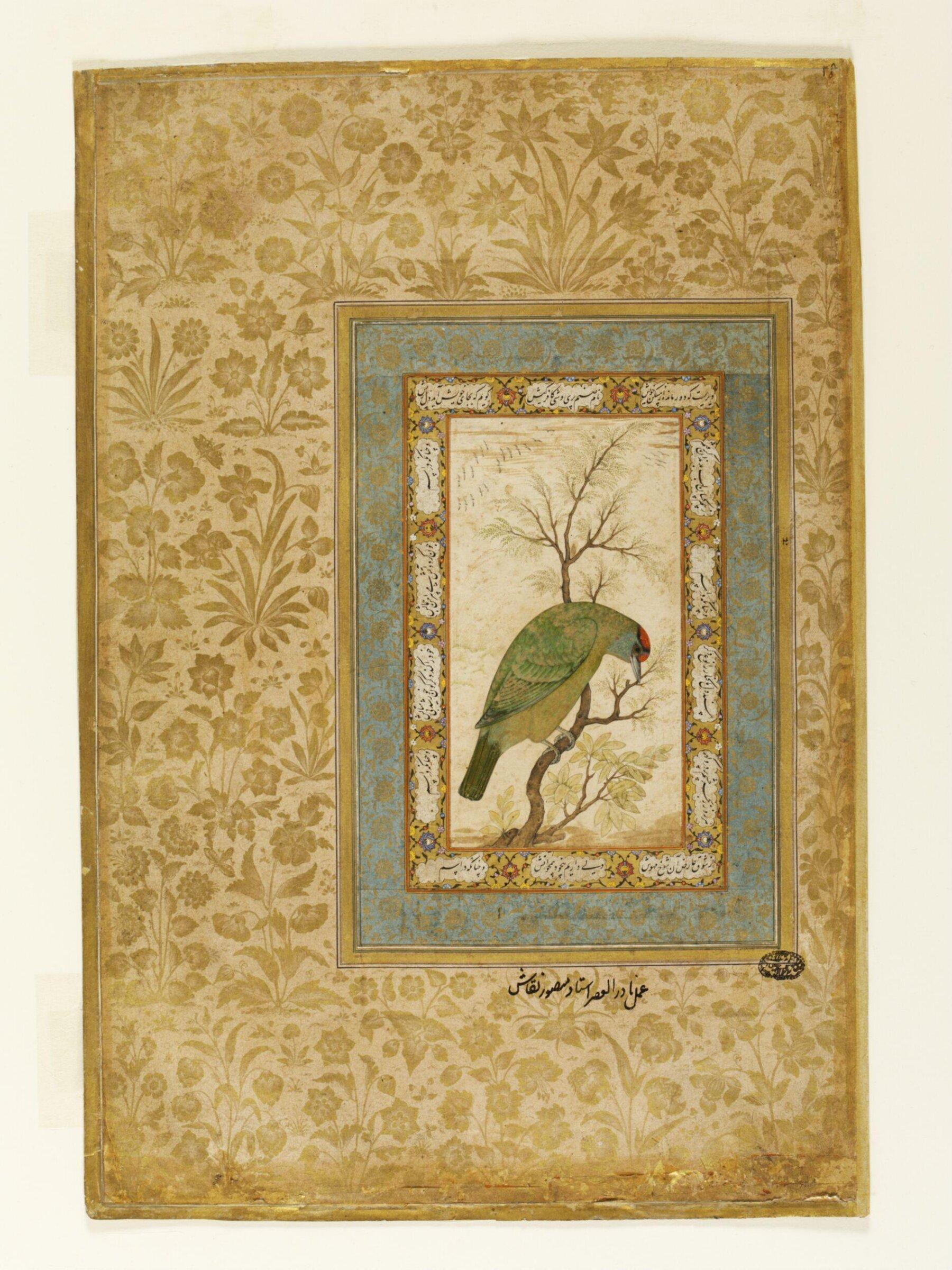
The painting later came into the possession of Jahangir's son, the emperor Shah Jahan (r. 1628-58) and was added to a royal album of paintings and calligraphies. The ornate borders of the painting, and on the reverse of the folio, framing illuminated calligraphy (IM.23A-1925) are additions of Shah Jahan's reign.
The folio belongs to a group of loose folios known as the Minto Album, now divided between the V&A and the Chester Beatty Library, Dublin. They were purchased at auction in London in 1925.
Victoria and Albert Museum
Angaben
- Inventarnummer
- IM.23-1925
What it shows
Im Katalog
Quellen
- Victoria and Albert Museum: the museum's own open data · abgerufen vor 7 Tagen
- Bild: Victoria and Albert Museum — © Victoria and Albert Museum, London