
 Mark RothkoVereinigte Staaten, 1903–1970
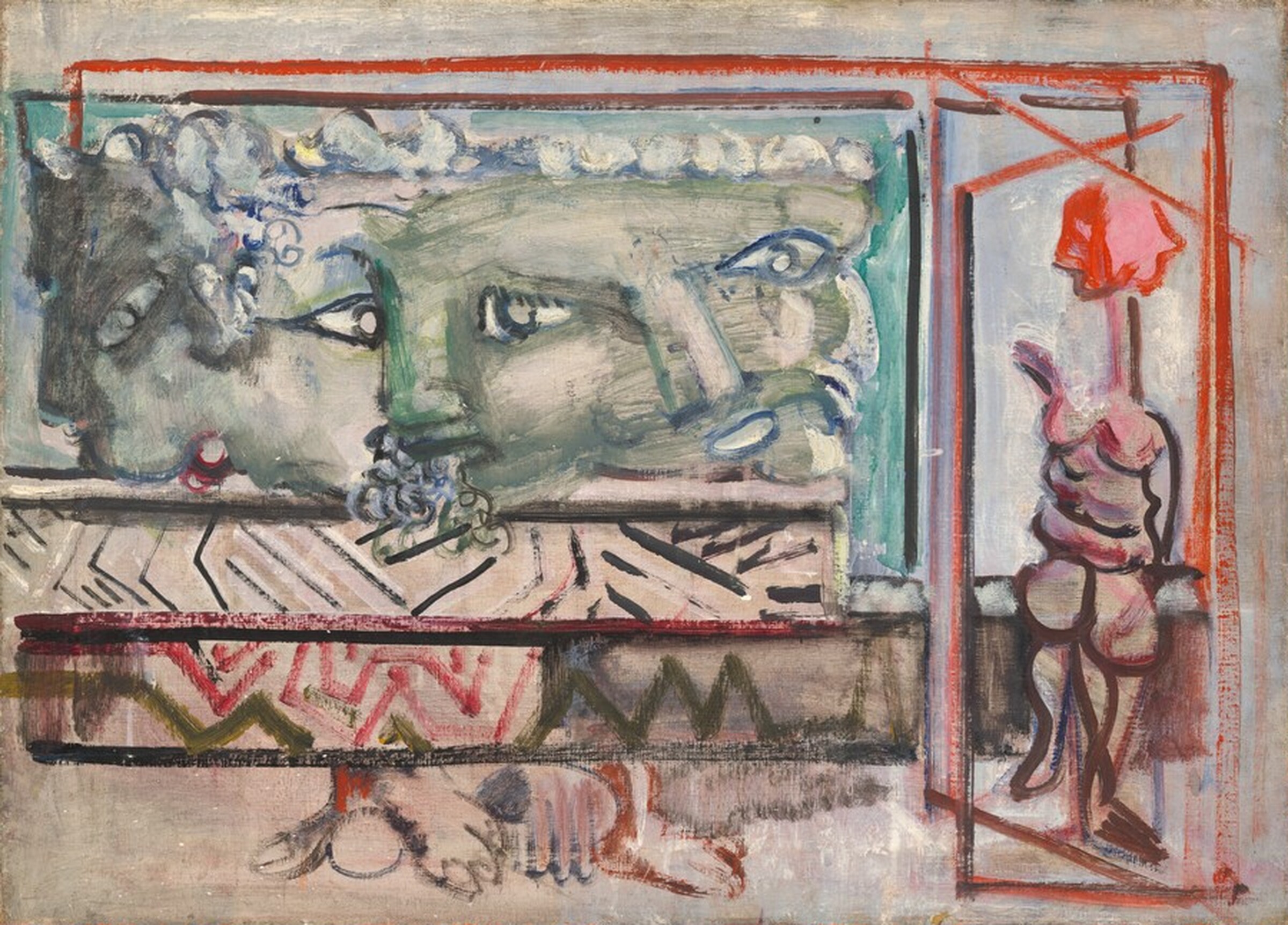
Thru the Window
Darf man es sehen?
Ja, es empfängt Besucher

National Gallery of Art
Saal615A · Ostgebäude, TurmWashington, D.C., Vereinigte Staaten
Öffentlich ausgestellt. Wer dafür bürgt, steht unten.
- Geprüft
- vor 14 Minuten
- Unverändert seit
- 19. Aug. 2026
- Quelle
- Sammlungsdaten des Museums selbst
Angaben
- Inventarnummer
- 1986.56.653
What it shows
Im Katalog
Quellen
- National Gallery of Art: the museum's own open data · abgerufen vor 3 Tagen
- Bild: National Gallery of Art — © the artist or rights holder
Derweil im Leben von Mark Rothko
Das ganze Leben1929–1952
Teaching children at the Brooklyn Jewish Center
From 1929 Rothko taught drawing, painting and clay sculpture part-time to schoolchildren at the Center Academy of the Brooklyn Jewish Center, where he remained until 1952.
1936
A group show at the Galerie Bonaparte
In 1936 Rothko’s group exhibited at the Galerie Bonaparte in France and drew favourable notice; one reviewer remarked that his paintings “display authentic coloristic values”.
1936
An unfinished book on children’s art
In 1936 Rothko began a book, never completed, on the similarities between children’s art and the work of modern painters; in the manuscript he noted that starting with drawing is an academic notion and that “we may start with color”.
21 February 1938
Becomes a US citizen
On 21 February 1938 Rothko received American citizenship, relieved: he had feared that the growing influence of the Nazis in Europe might lead to the sudden deportation of Jews without citizenship.
1940
Shortens his name to Mark Rothko
Concerned about rising antisemitism in Europe and America, Rothko shortened “Markus Rothkowitz” to “Mark Rothko” in 1940; “Roth” still sounded identifiably Jewish, so he settled on “Rothko”. All his works have been signed with that name since.
1940
A pause in painting for the study of myth
In 1940, it is said, Rothko stopped painting altogether to immerse himself in James Frazer’s The Golden Bough and Freud’s The Interpretation of Dreams; he later said his approach had been “reformed” by the study of the dramatic themes of myth.






![Scenes from the Passion of Christ: The Descent into Limbo [right panel], Andrea Vanni, 1380s](https://api.nga.gov/iiif/4205a539-eadd-4486-89a7-3cff9c1ba428/full/!2400,2400/0/default.jpg)


