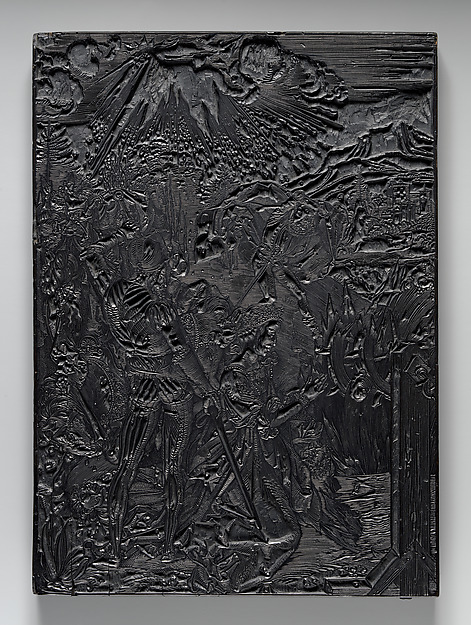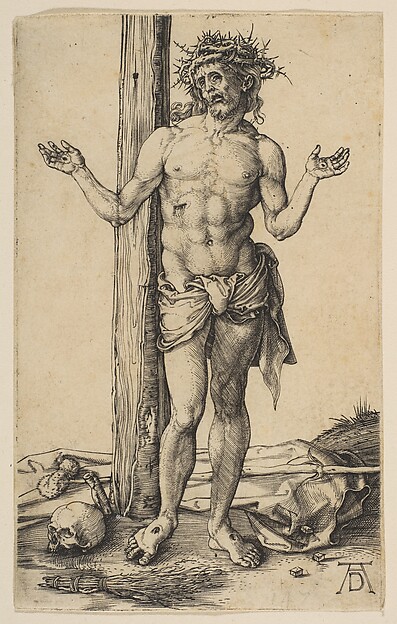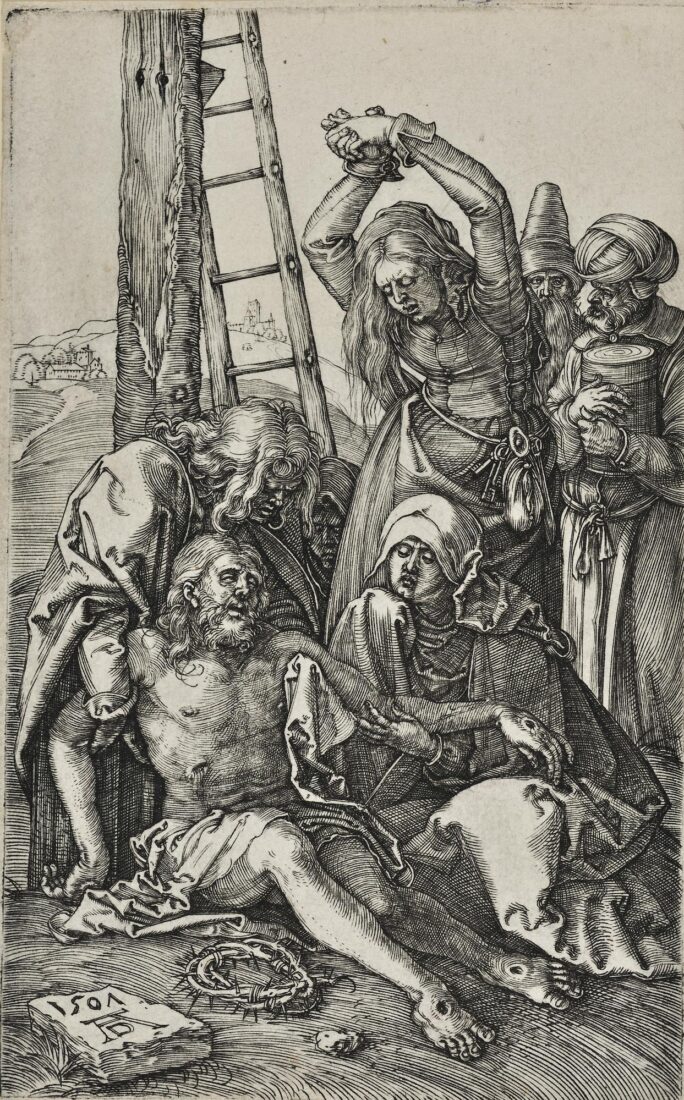
 Albrecht DürerGerman, 1471–1528
Η Αποκαθήλωση
May one see it?
Unknown: the museum keeps its counsel

National Gallery – Alexandros Soutsos Museum
Athens, Greece
The owner is known. Whether it is on view today, the museum does not say, and we were not trained to guess.
- In this state since
- Sep 27, 2026
- Source
- The museum's own collection data
Particulars
What it shows
Sources
- National Gallery – Alexandros Soutsos Museum: the museum's own open data · fetched 3 days ago
- Image: National Gallery – Alexandros Soutsos Museum — CC BY-NC-ND 4.0
Meanwhile, in the life of Albrecht Dürer
The whole life1505
Second journey to Italy
Dürer set off for Italy again — perhaps not only to earn money but also to stop Marcantonio Raimondi from copying his prints. His stay in Venice is known from ten surviving letters to Pirckheimer.
1505–1507
Paints the “Feast of the Rosary”
Commissioned by German merchants, Dürer painted the Feast of the Rosary altarpiece for the church of San Bartolomeo by the Fondaco dei Tedeschi. In his own words, it made those who thought him merely a successful engraver acknowledge him as a true painter; the Venetian council offered him 200 ducats a year to stay.
1505–1507
Friendship with Giovanni Bellini
Dürer considered Giovanni Bellini “the best in painting”, the only Venetian master with whom he became friends. The Madonna of the Siskin may have been painted at Bellini's request.
1505–1507
To Bologna for the secrets of perspective
Dürer travelled to the university city of Bologna, hoping to learn the secrets of geometric perspective from its scholars. He then meant to visit Mantegna in Padua but received news of his death, which he greatly regretted afterwards.
1505–1507 · Workplace
Venice
c. 1508
Draws the “Praying Hands”
The most famous of Dürer's many preparatory drawings, the Praying Hands, a study for an apostle in the altarpiece commissioned by Jakob Heller.
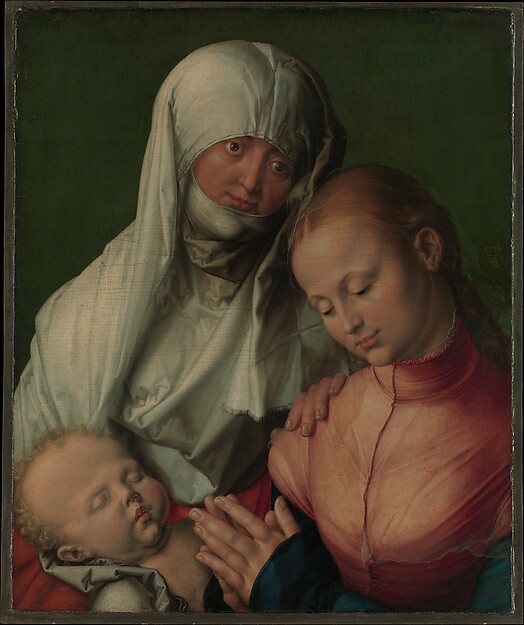
![Madonna and Child [obverse], Albrecht Dürer, c. 1496/1499](https://api.nga.gov/iiif/878db7e6-10ae-4cae-ba5d-6d6f5c413ae8/full/!2400,2400/0/default.jpg)
![Lot and His Daughters [reverse], Albrecht Dürer, c. 1496/1499](https://api.nga.gov/iiif/7565a449-f82a-414b-9bda-c93f55a51b4d/full/!2400,2400/0/default.jpg)