 Eugène DelacroixFrench, 1798–1863
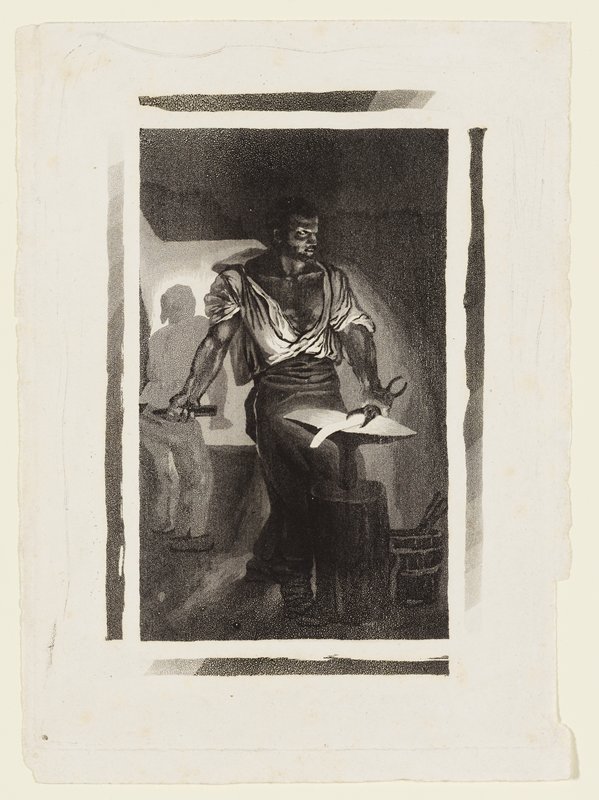
A Blacksmith
May one see it?
Not receiving at present

Minneapolis Institute of Art
Minneapolis, United States
It belongs to the collection, but is not on display at present.
- Checked
- 3 days ago
- In this state since
- Sep 25, 2026
- Source
- The museum's own collection data
About the work
Eugène Delacroix, the leader of the French Romantic school of painters, was also active as a printmaker. Blacksmiths were a recurrent theme for Romantic artists. They showed man as a modern-day Vulcan, harnessing the elements of fire and earth for god-like creation. Focusing tightly on the heroic individual, Delacroix emphasized the blacksmith’s powerful physique. Light emanating from the white-hot iron illuminates the man’s shirt and sets his skin aglow.
This is a superb example of one of the most desirable prints by Delacroix. It is an important addition to Mia's collection because of its rarity, quality, and pristine condition.
Minneapolis Institute of Art
Particulars
- Accession number
- 2013.69
In the catalog
Sources
- Minneapolis Institute of Art: the museum's own open data · fetched 3 days ago
- Image: Minneapolis Institute of Art — public domain
Meanwhile, in the life of Eugène Delacroix
The whole life1831
"Liberty" at the Salon of 1831
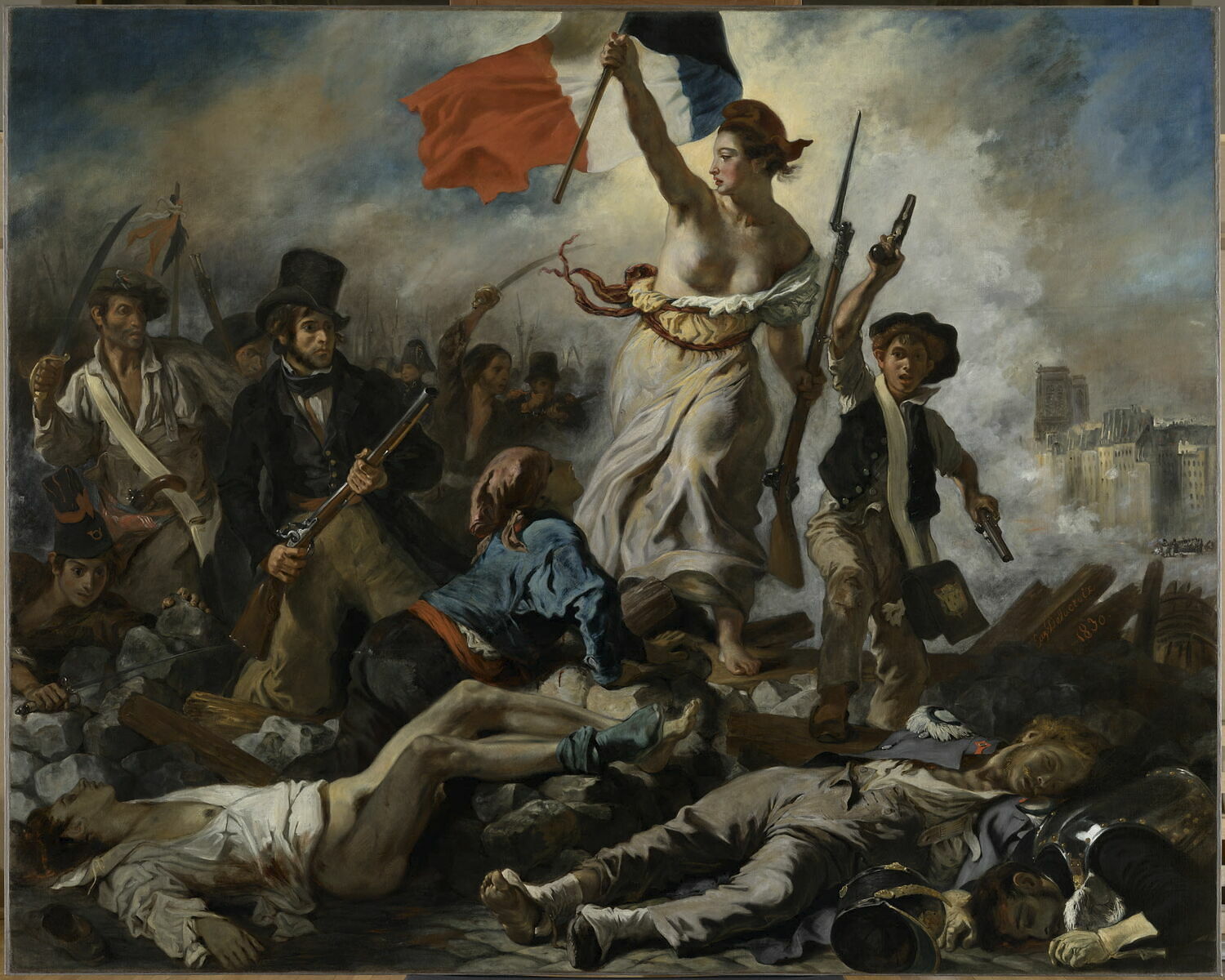
Liberty Leading the People was enthusiastically received by the public at the Salon of 1831 and immediately acquired by the state for 3,000 francs for the throne room of the Luxembourg Palace.
14 March 1831 · Award
Knight of the Legion of Honour
1832
Journey to Spain and North Africa
As part of the diplomatic mission of Charles-Edgar de Mornay, Delacroix traveled to Morocco shortly after the French conquest of Algeria. The journey proved a turning point: he made dozens of sketches, and his impressions of North Africa nourished his art for the rest of his life.
1832
"Liberty" Removed from Public Display
By 1832 officials had deemed the painting's glorification of liberty too provocative and removed it from public display; nevertheless Delacroix continued to receive state commissions.
1833–1837
Decoration of the Salon du Roi in the Palais Bourbon
From 1833 Delacroix received numerous commissions to decorate the public buildings of Paris; the first was his work on the Salon du Roi in the Chamber of Deputies at the Palais Bourbon, completed in 1837.
1835
Serious Throat Illness Discovered
In 1835 Delacroix was found to have a serious throat ailment which, alternately subsiding and flaring up, eventually brought him to his grave.