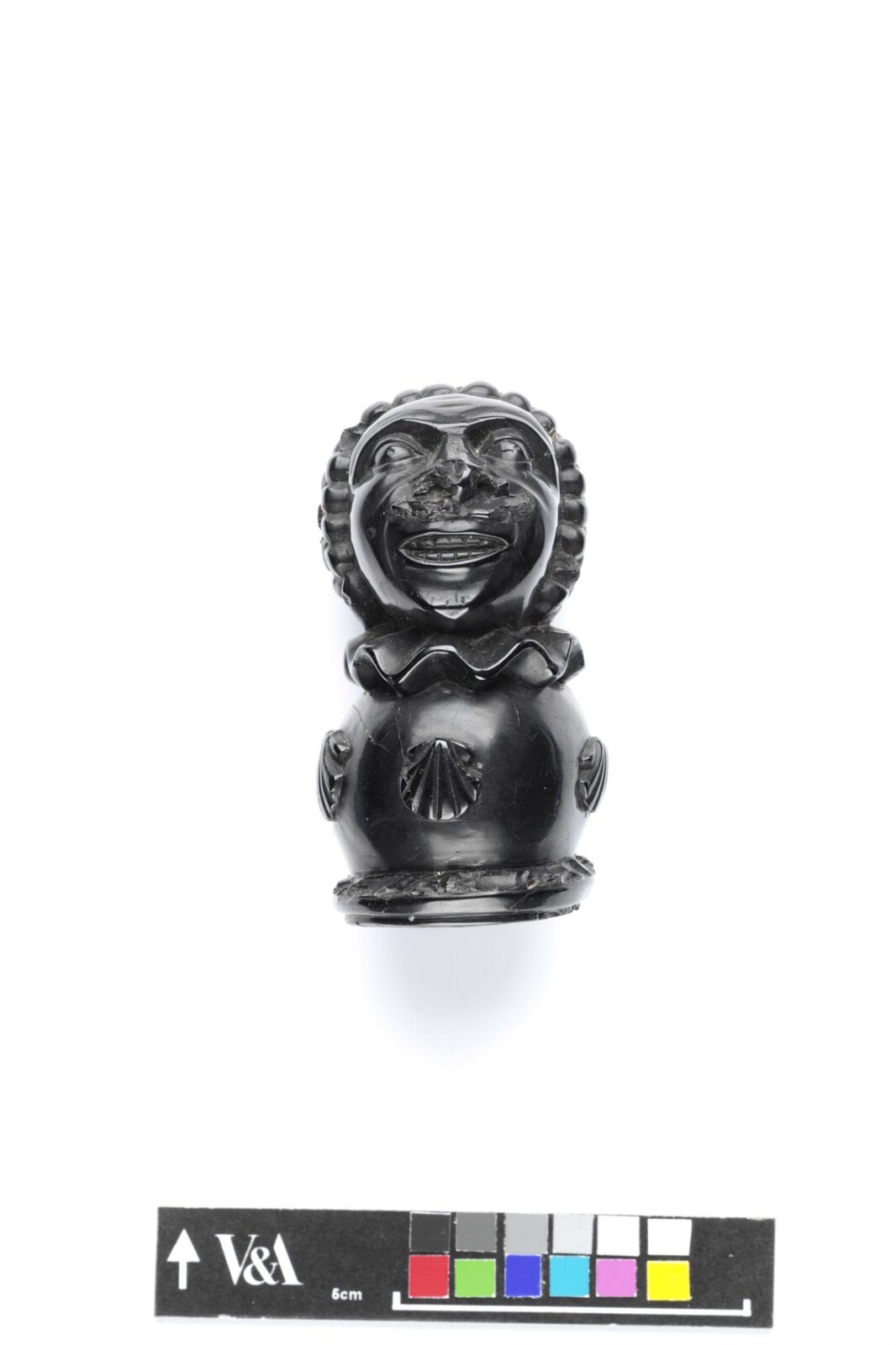
A Fool's Head
May one see it?
Not receiving at present

Victoria and Albert Museum
London, United Kingdom
It belongs to the collection, but is not on display at present.
- Checked
- 7 days ago
- In this state since
- Sep 25, 2026
- Source
- The museum's own collection data
About the sculpture
The prime function of jets seems to have been to signify that pilgrims had completed their journeys, and reached the shrine of St James (the patron Saint of Spain) at the Cathedral of Santiago de Compostela, which pilgrims did over the course of six hundred years, from the twelfth to the eighteenth century. Many seem to have formed beads of rosaries. In structure jet is a particularly dense type of coal, and can be carved and polished. Medicinal and indeed magical qualities were thought to be inherent in the substance from earliest times. Jet is found in different parts of Europe (as well as North America), but the two richest regions are the Asturias in northern Spain, and Whitby, Yorkshire, in North East England.
Read on
This piece represents a fool's head and it's precise function is uncertain. It is possible that it was the pommel of a jester's stick. It may have been connected somehow with the Feasts of Fools when 'the holiest offices and orders were made matters of the lightest jesting'. References to such festivities occur from the thirteenth to the seventeenth century.
Victoria and Albert Museum
Particulars
- Accession number
- A.19-1953
What it shows
In the catalog
Sources
- Victoria and Albert Museum: the museum's own open data · fetched 7 days ago
- Image: Victoria and Albert Museum — © Victoria and Albert Museum, London