BasawanIndian
Akbar
May one see it?
Not receiving at present

Victoria and Albert Museum
London, United Kingdom
It belongs to the collection, but is not on display at present.
- Checked
- 7 days ago
- In this state since
- Sep 25, 2026
- Source
- The museum's own collection data
About the painting
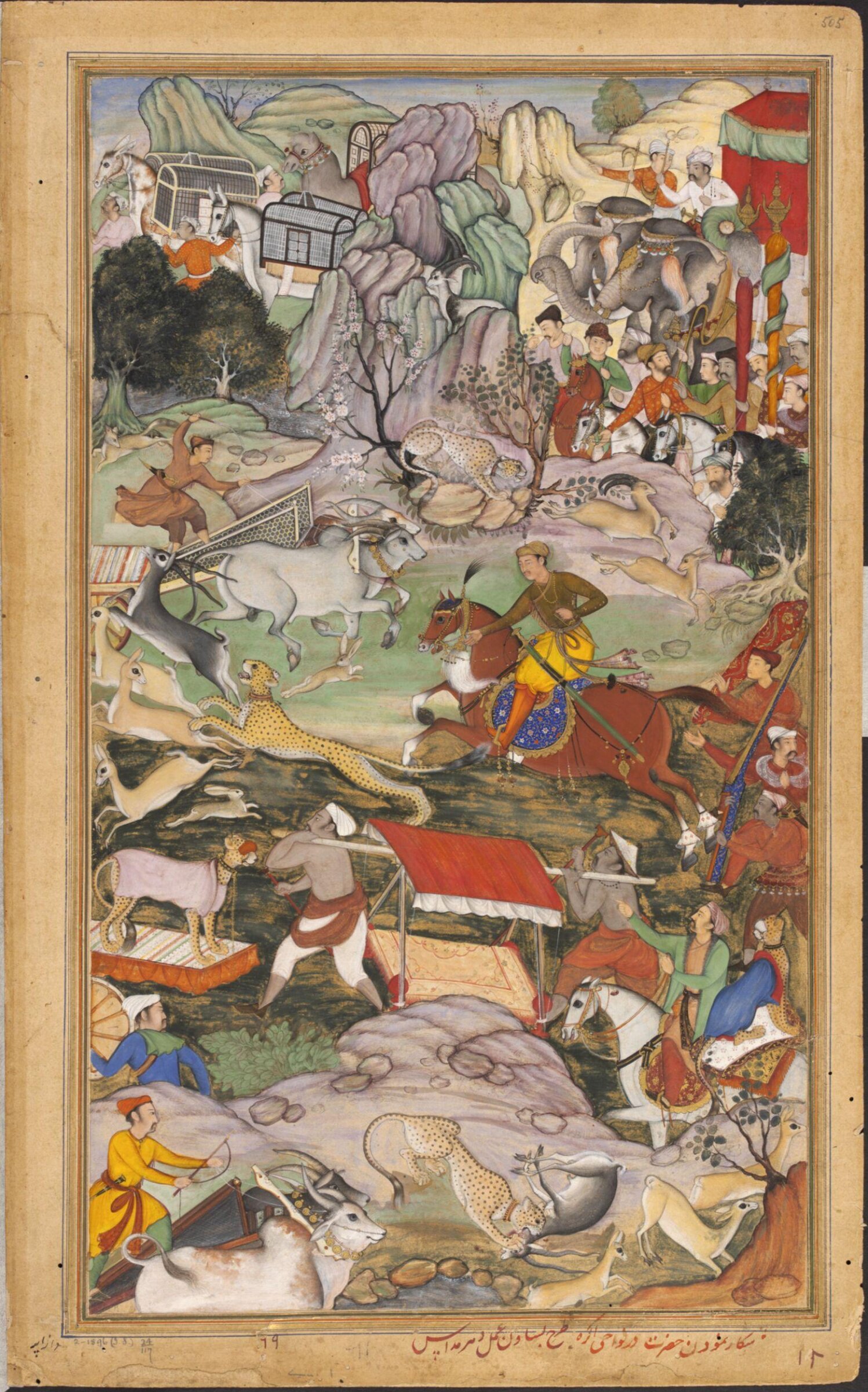
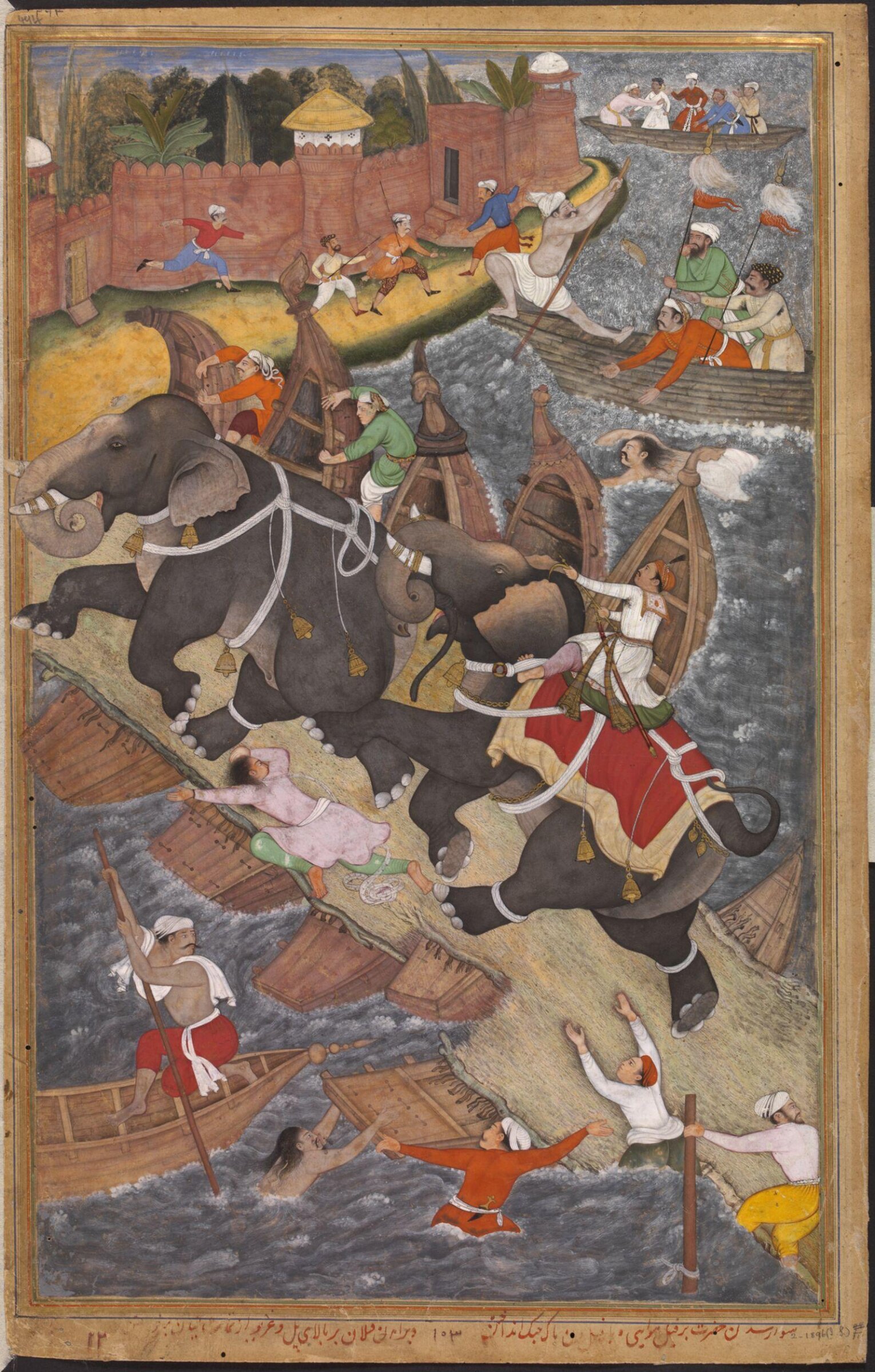
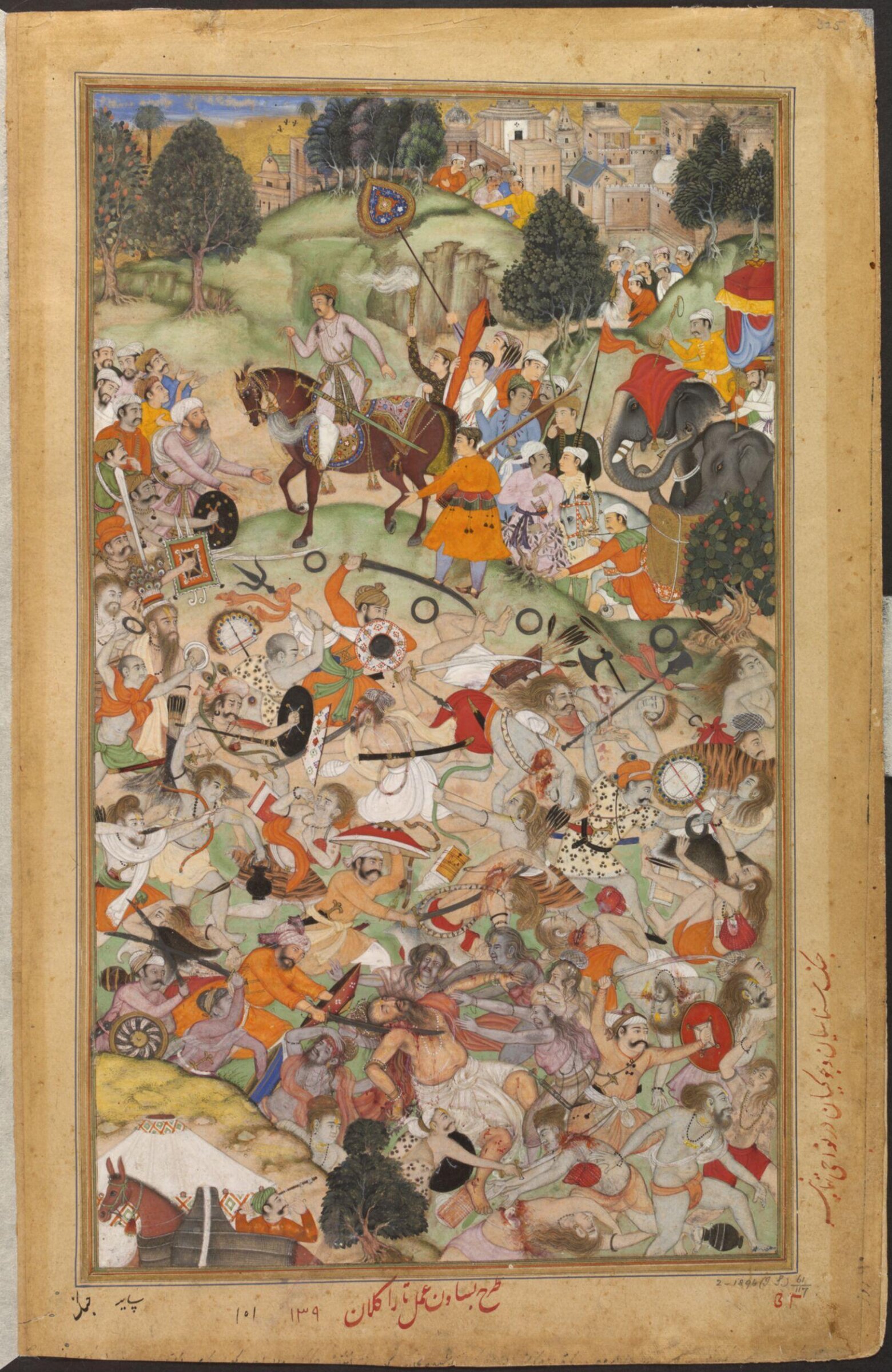
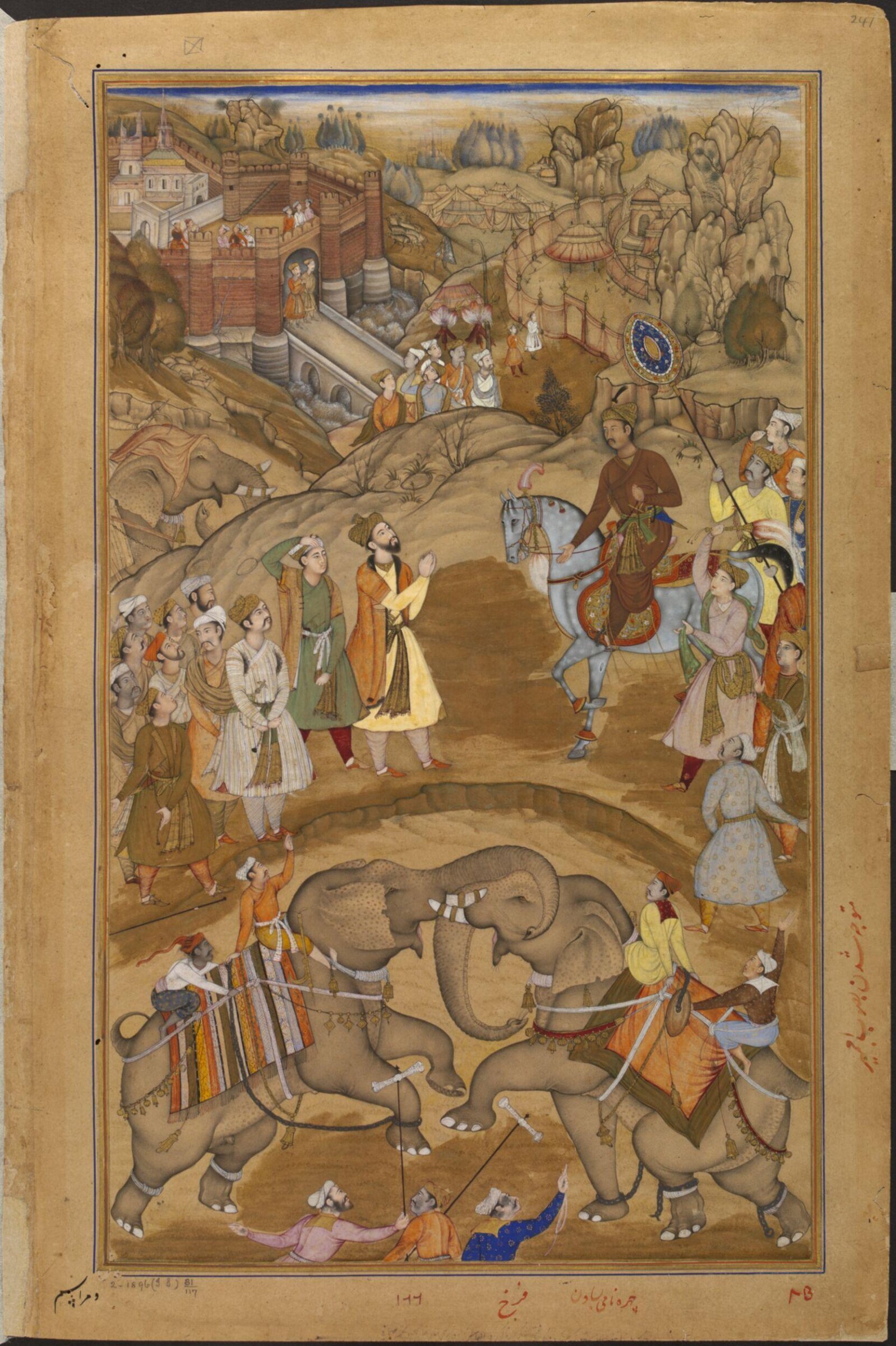
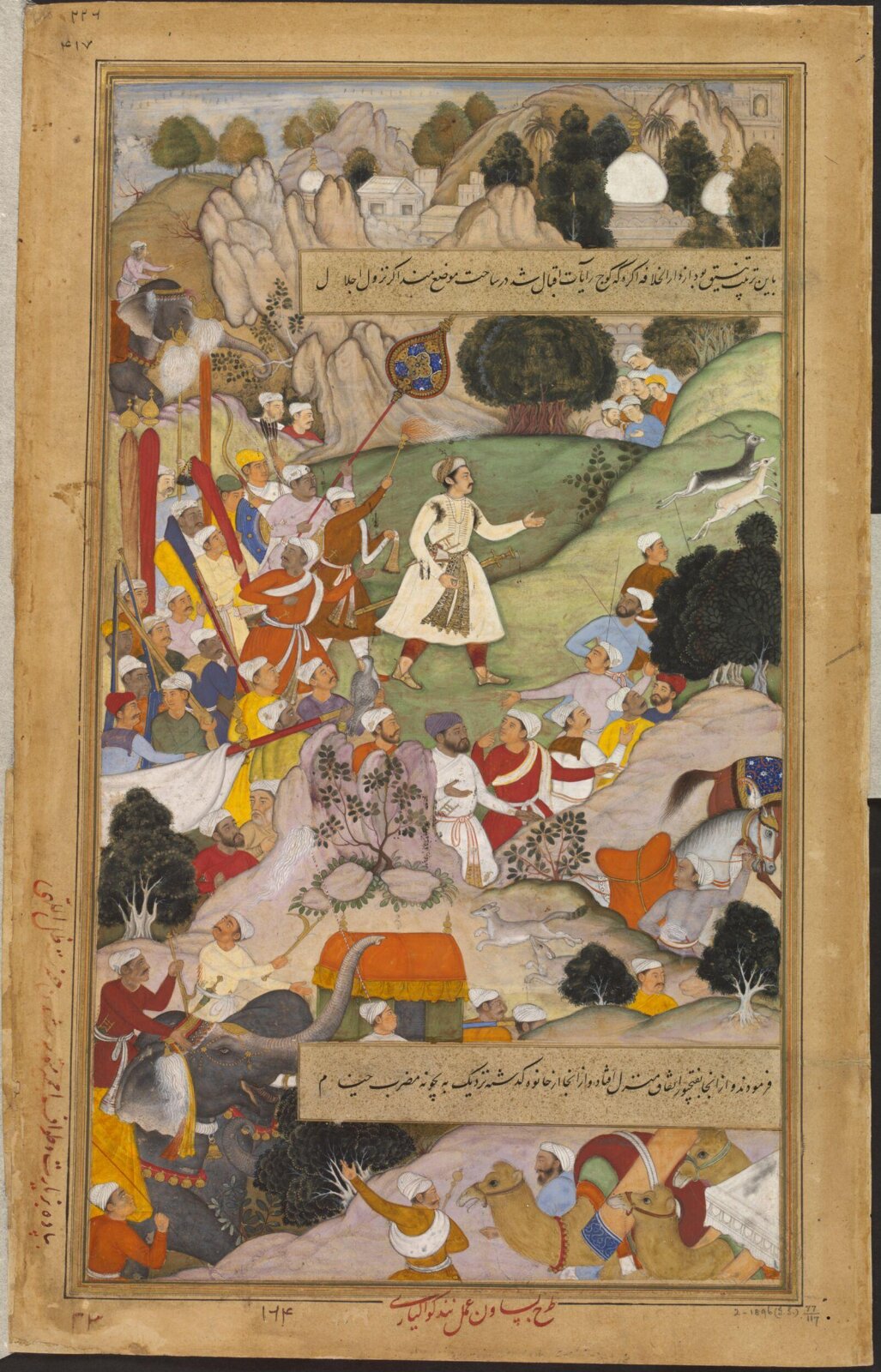
This painting from the Akbarnama (Book of Akbar) depicts an incident from the life of the Mughal emperor Akbar (r. 1556-1605). Akbar had vowed that if he should be blessed with a son, he would walk to the shrine of the founder of the Chishti order, Shaikh Mu'in ad-Din Chishti, at Ajmer to offer his prayers. He left Agra in January 1570, and swiftly covered the 370 or so kilometers. He is depicted here accompanied by servants carrying emblems of royalty. Abu’l Fazl, in the A’in-i Akbari, the third volume of his history of the reign entitled the Akbarnama, notes that whenever the emperor went out in a formal context, five standards would be carried next to him, as well as the qur, a collection of flags and other insignia. These were all wrapped in red cloth, the colour of royalty.
Read on
The aftabgir, a shade held over the emperor’s head and seen here, was also on Abu’l Fazl’s list of royal emblems. While in Ajmer, Akbar distributed alms at the shrine, visited other local sacred places, and ordered the construction of new mosques. When a second son, Murad, was born at Sikri some months later to another wife, Akbar returned to Ajmer and had the fort enlarged, new mansions built and gardens laid out for the elite of the court. From then until 1579 he made annual pilgrimages to the city. The composition (tarh) of the painting was designed by Basawan, and the "work" ('amal), or painting, was done by Nand Gwaliari. [Akbarnama, English translation: Beveridge, vol. II, pp. 510-11]
The Akbarnama was commissioned in 1589 by the emperor Akbar as the official chronicle of his reign. It was written by his court historian and biographer Abu'l Fazl between 1590 and 1596 and is thought to have been illustrated between about 1592 and 1594. At least 49 different artists from Akbar's Ketabkhana, or "House of Books", where manuscripts were stored as well as created, worked on the illustrations. After Akbar's death in 1605, the incomplete manuscript remained in the library of his son, Jahangir (r. 1605-1627) who recorded his ownership on the flyleaf, and later Shah Jahan (r.1628-1658). The Victoria and Albert Museum purchased it in 1896 from Mrs Frances Clarke, the widow of Major-General John Clarke, who bought it in India while serving as Commissioner of Oudh between 1858 and 1862.
Victoria and Albert Museum
Particulars
- Accession number
- IS.2:77-1896
What it shows
In the catalog
Sources
- Victoria and Albert Museum: the museum's own open data · fetched 7 days ago
- Image: Victoria and Albert Museum — © Victoria and Albert Museum, London