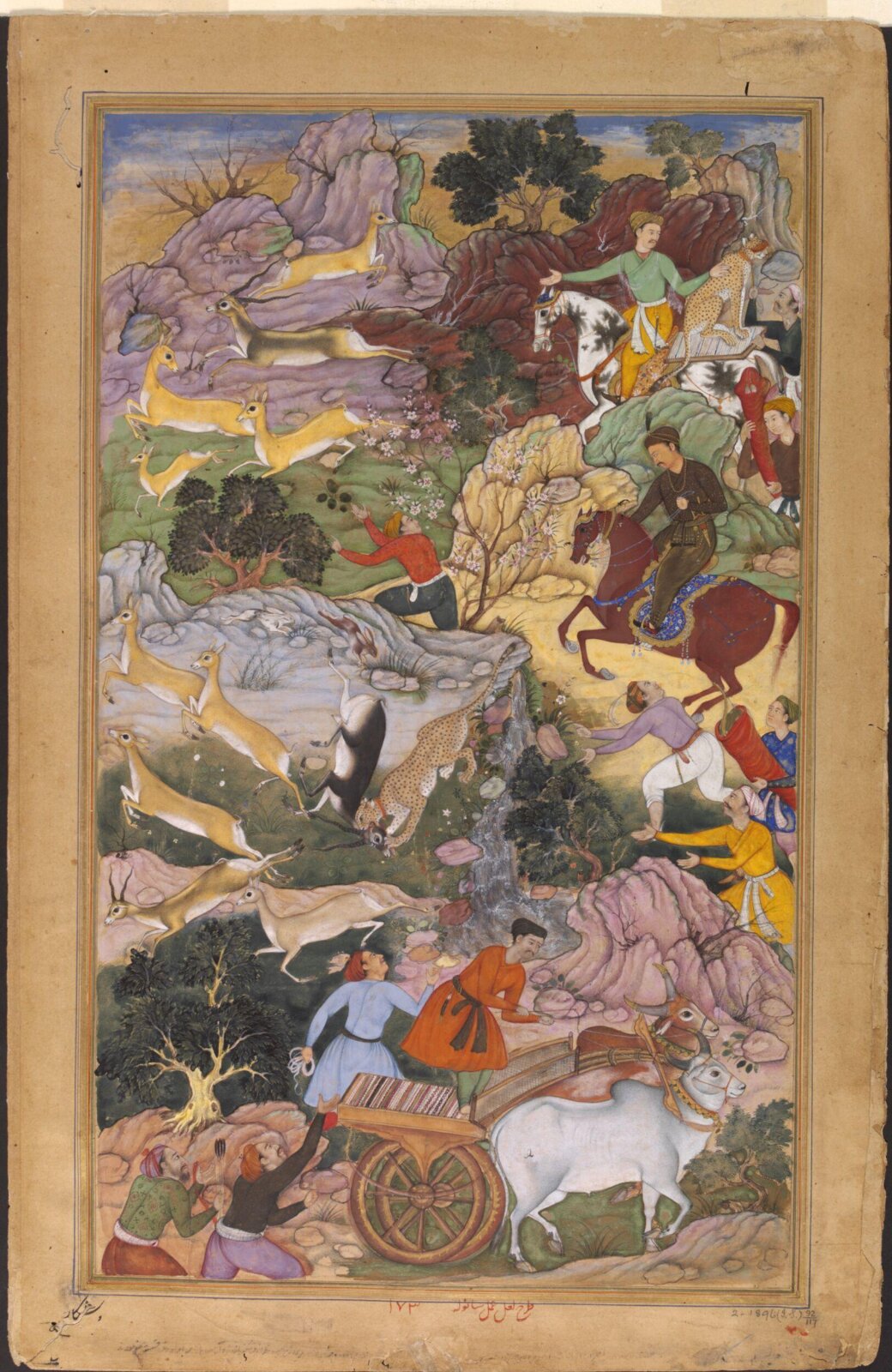
 La'lIranian, 1510–1555
Akbar
May one see it?
Unknown: the museum keeps its counsel

Victoria and Albert Museum
London, United Kingdom
The owner is known. Whether it is on view today, the museum does not say, and we were not trained to guess.
- In this state since
- Sep 25, 2026
- Source
- The museum's own collection data
About the painting
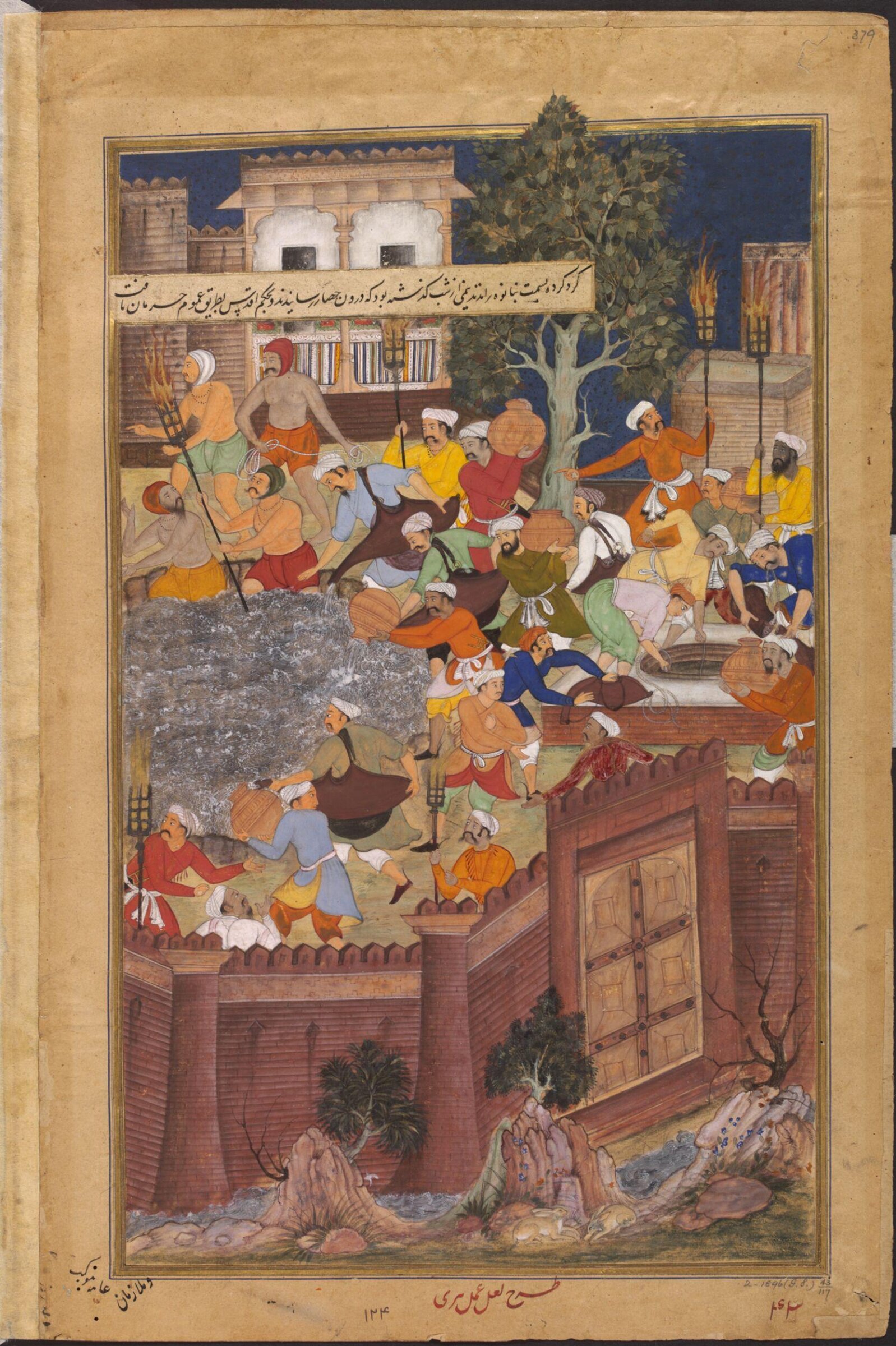
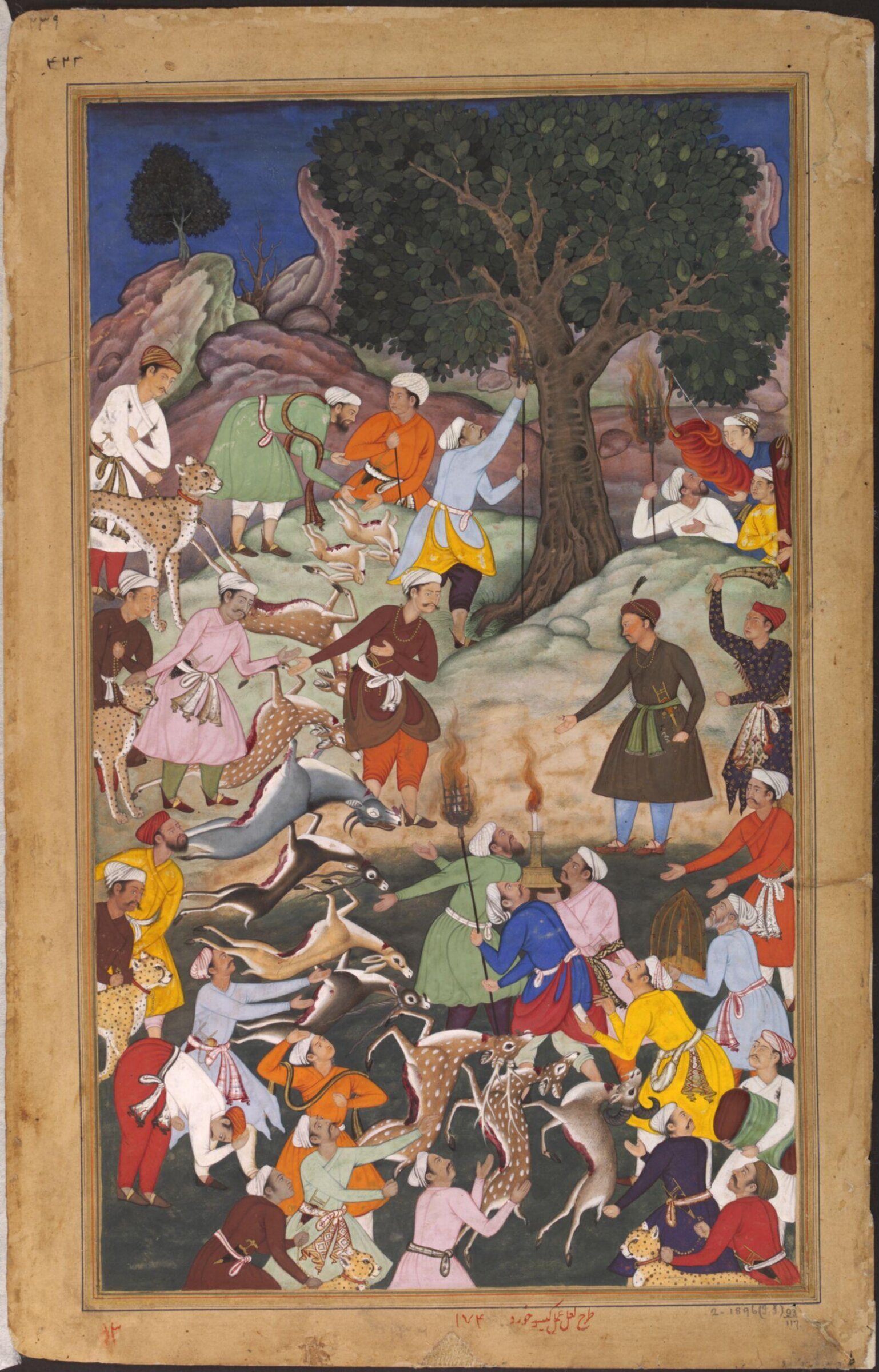
This painting by the Mughal court artists La’l and Sanwala depicts the Mughal emperor Akbar (r.1556–1605) hunting for black buck using his trained cheetahs in 1572. It is an illustration to the Akbarnama (Book of Akbar), commissioned by Akbar as the official chronicle of his reign in 1589,with paintings probably done between 1592 and 1595. Here, Akbar restrains the horse he would have chosen to ride in order to be able to follow the hunt swiftly. The cheetah has been released from the empty bullock cart in the foreground and now brings down a fully grown male blackbuck. A second cheetah is still blindfolded and held by its keeper in the upper right of the composition. Eight females are included in the painting, with two other cheetahs identified by the naturalist Divyabhanusinh as 'sub-adult males' from their barely black appearance.
Read on
The Akbarnama was written in Persian by Akbar’s court historian and biographer, Abu’l Fazl, between 1590 and 1596, with the illustrations being produced concurrently. The V&A’s partial copy of the manuscript is thought to be the first of several contemporary manuscripts of the text. It drew upon the expertise of the best royal artists of the time. Many of these are listed by Abu’l Fazl in the third volume of theAkbarnama, entitled the A’in-i Akbari, and some of these names appear in the V&A illustrations, written in red ink beneath the pictures, showing that this was a royal copy made for Akbar himself. After the death of the emperor, the manuscript remained in the library of his son Jahangir, from whom it was subsequently inherited by Shah Jahan.
The V&A purchased the manuscript in 1896 from Frances Clarke, the widow of Major General John Clarke, who bought it in India while serving as Commissioner of Oudh between 1858 and 1862.
Victoria and Albert Museum
Particulars
- Accession number
- IS.2:92-1896
What it shows
In the catalog
Sources
- Victoria and Albert Museum: the museum's own open data · fetched 3 days ago
- Image: Victoria and Albert Museum — © Victoria and Albert Museum, London