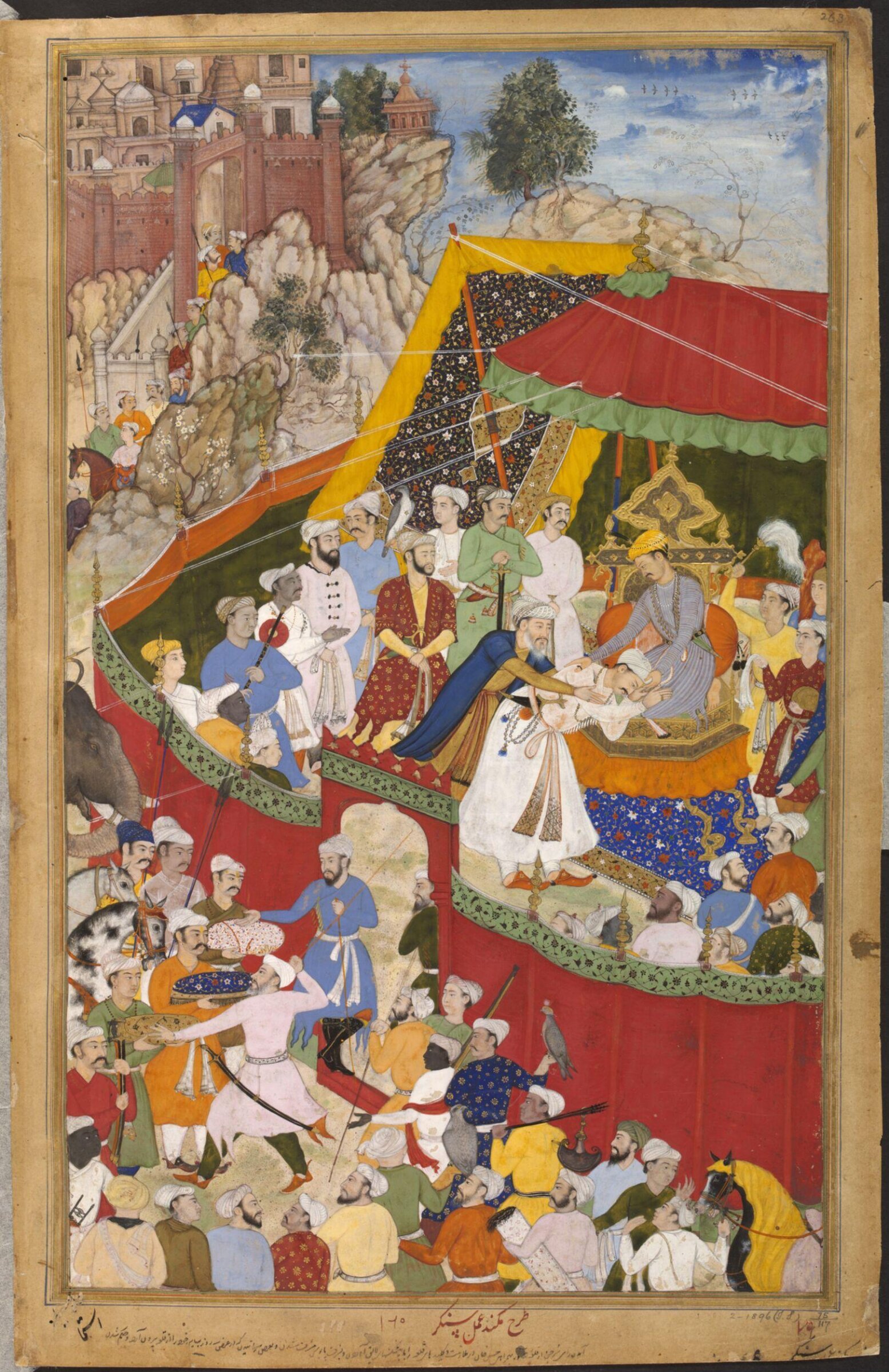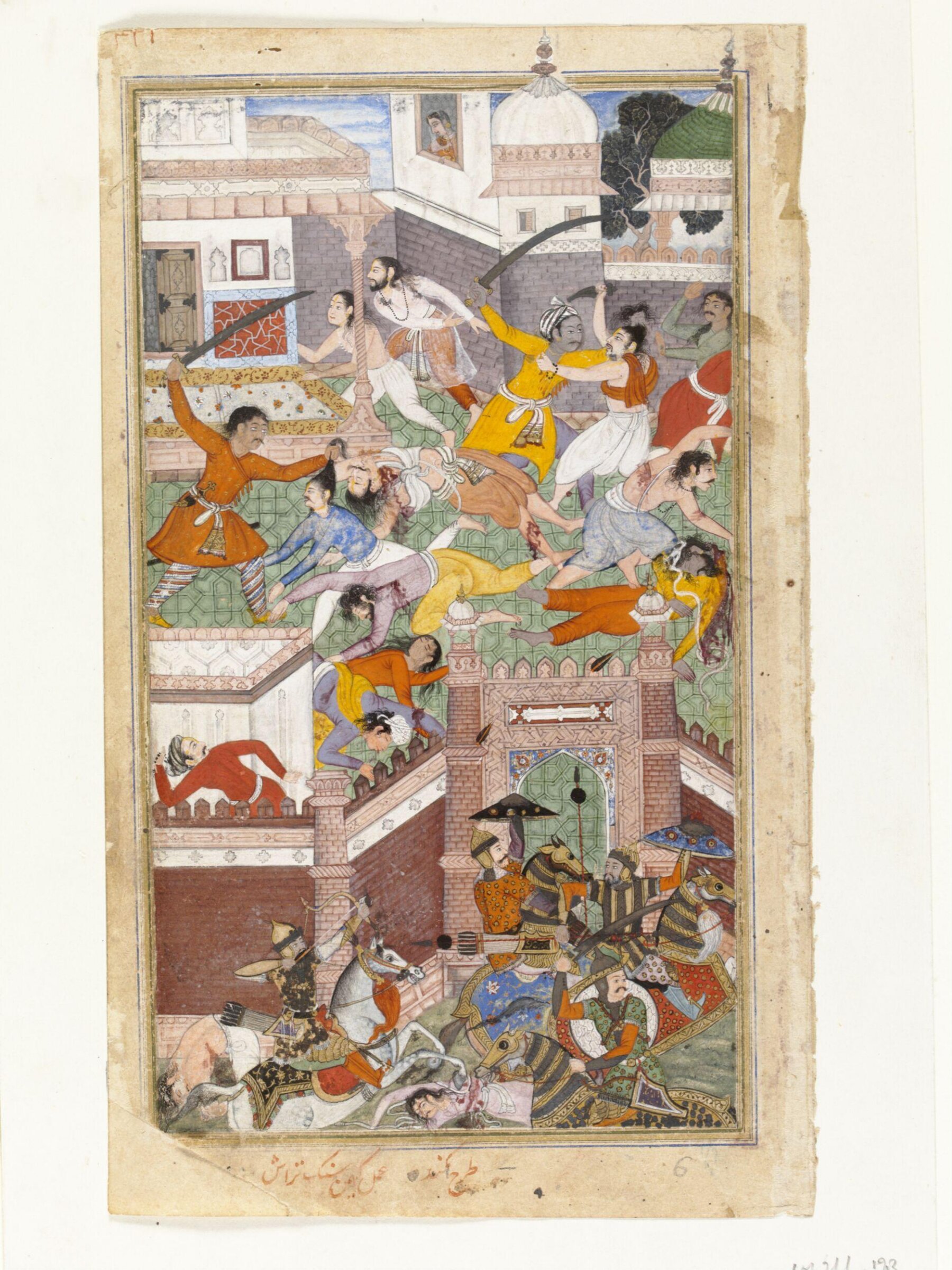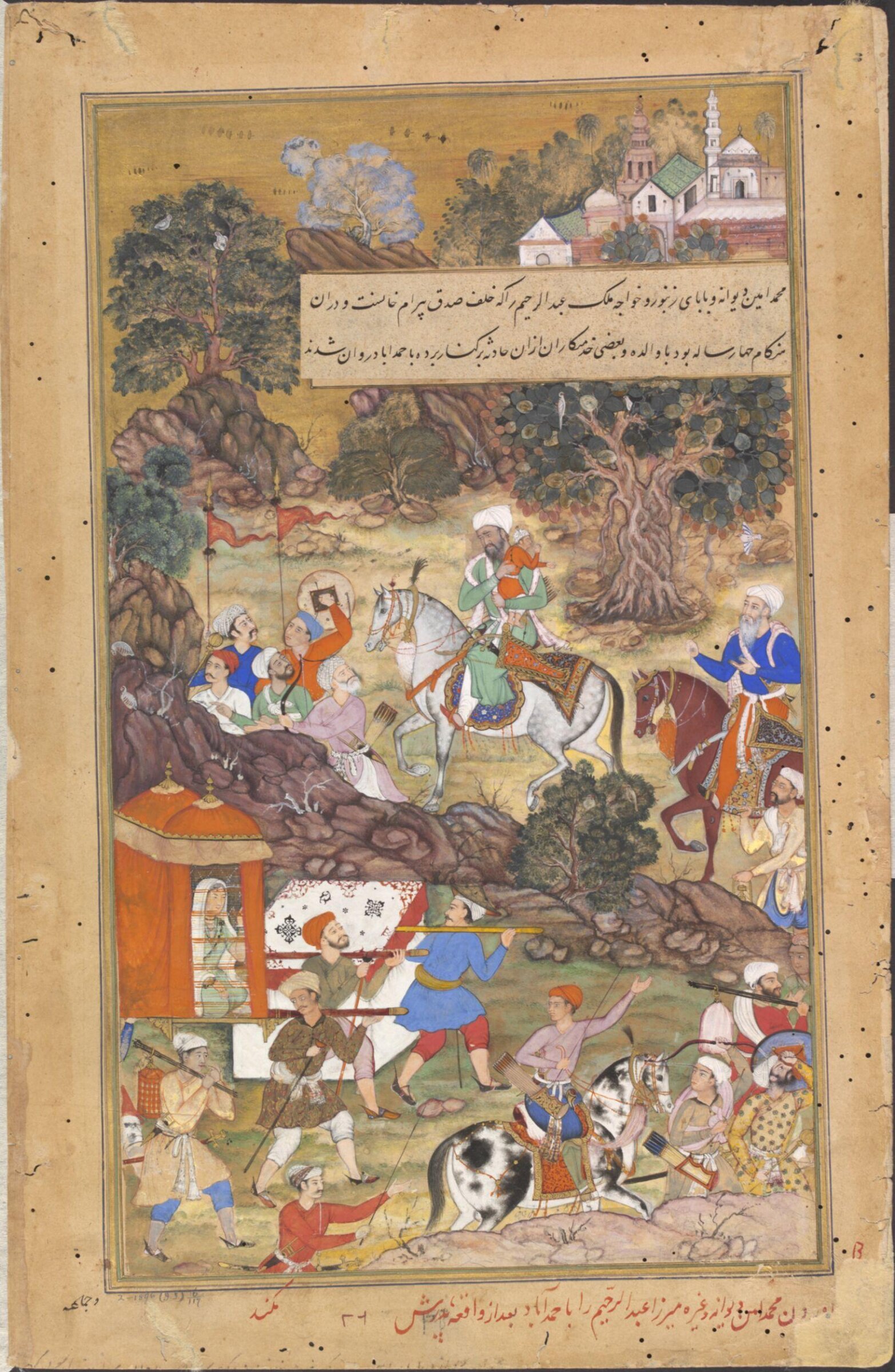
Mukund
Akbar
May one see it?
Not receiving at present

Victoria and Albert Museum
London, United Kingdom
It belongs to the collection, but is not on display at present.
- Checked
- 7 days ago
- In this state since
- Sep 25, 2026
- Source
- The museum's own collection data
About the painting
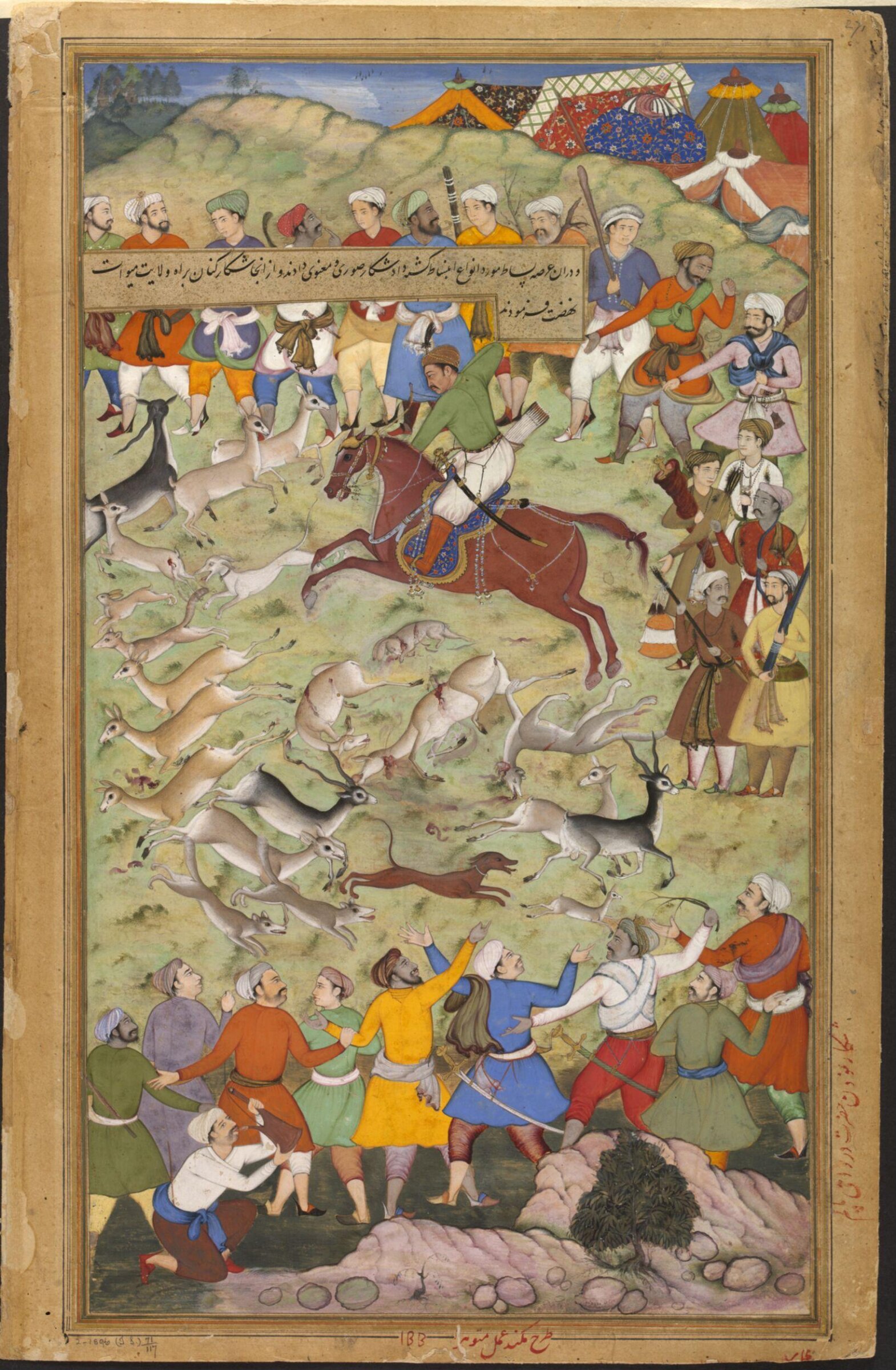
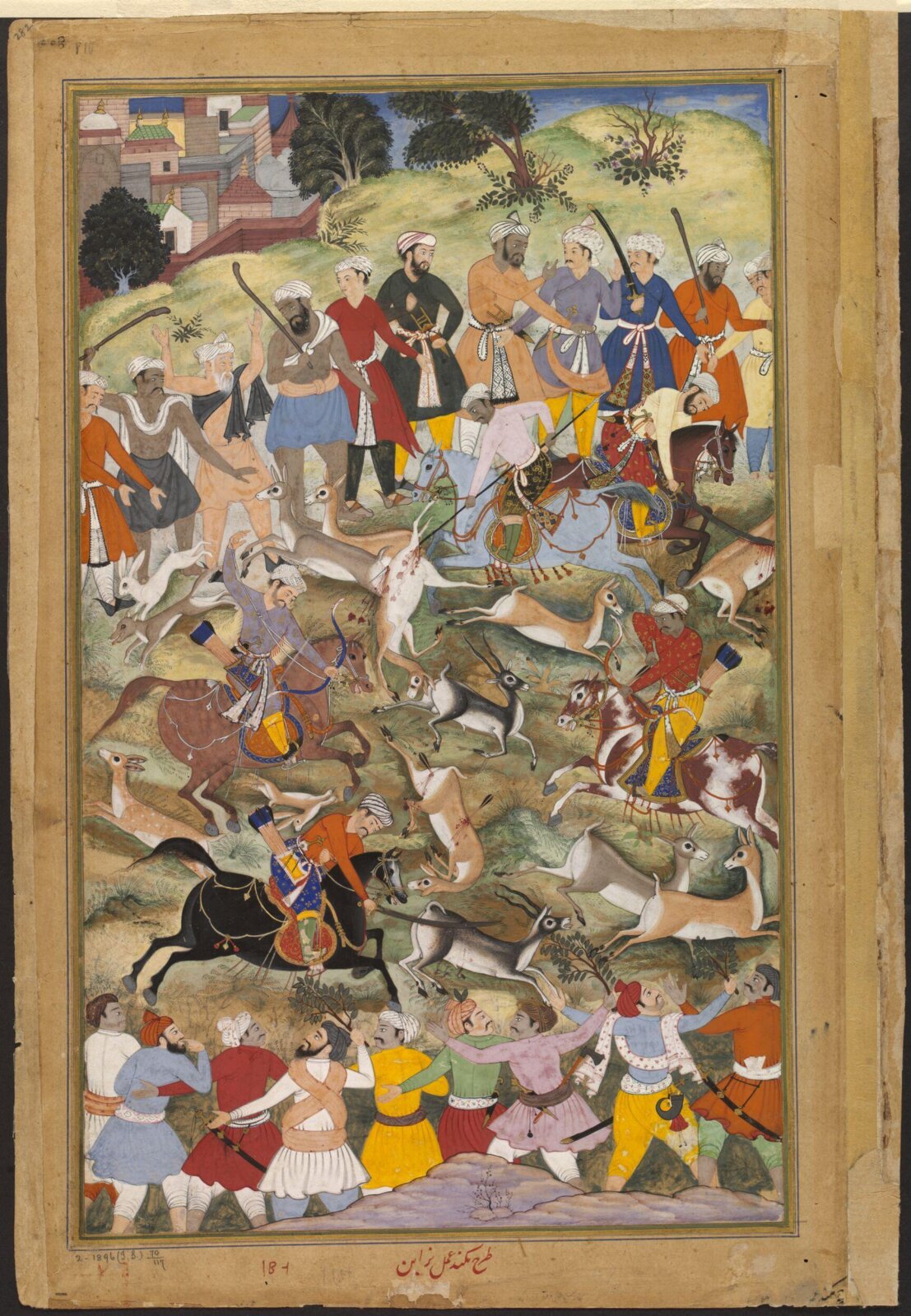
This illustration to the Akbarnama (Book of Akbar) depicts the Mughal emperor Akbar (r.1556–1605) hunting at Palam, near Delhi, and is half of a double-page composition (with IS.2:71-1896). The event takes place after the great Mughal victory over the seemingly impregnable Rajput fortress of Chitor in February 1568. The Hindu forces defending Chitor had put up fierce resistance, for which Akbar made them pay a heavy price: on his orders nearly 30,000 men were killed, and many prisoners were taken. No other campaign would be concluded in the same way, and these extremely harsh reprisals made other rulers capitulate quickly in subsequent conflicts. Later that year, the emperor set out from Agra to attack the similarly daunting fort at Ranthambhor, but paused en route at Delhi. Here, he visited holy shrines and hunted at nearby Palam.
Read on
The author of the Akbarnama, Abu'l Fazl, describes the different purposes served by hunting. A primary aim was to provide an opportunity for the emperor to assess the qualities of his men when under pressure and in danger, which allowed him to deploy them to best advantage in battle. Hunting provided a pretext for Akbar to arrive without warning in different parts of his domains to see for himself that they were being administered fairly. It also allowed him to move large numbers of armed men into areas of potential rebellion as a silent threat, which was often enough to avoid a military confrontation. Abu'l Fazl mentions this hunt only briefly in his text, but records that it took the elaborate form of a 'qamargah, in which beaters were sent out over a huge area and then moved back towards its centre, trapping the animals within a circular space.
It was the emperor’s prerogative to hunt them, and the elite of the court could only participate at his invitation. The qamargah was a Timurid form of hunting, and it may be significant that Akbar chose to follow this model practised by his ancestors just before his imminent major campaign against Ranthambhor. The designer of the composition (tarh) was Mukund, whom Abu'l Fazl included in his list of the greatest painters of the age. On this folio, the colours were added by Narayan.
The Akbarnama was commissioned in 1589 by Akbar as the official chronicle of his reign, and was written in Persian by Abu’l Fazl between 1590 and 1596. The V&A’s partial copy of the manuscript is thought to have been illustrated between about 1592 and 1595 and is considered to be the earliest illustrated version of the text. It drew on the expertise of some of the best royal artists of the time. Many of these are listed by Abu’l Fazl in the third volume of the text, the A’in-i Akbari, and some of these names appear in the V&A illustrations, written in red ink beneath the pictures, showing that this was a royal copy made for Akbar himself. After his death, the manuscript remained in the library of his son Jahangir, from whom it was inherited by Shah Jahan.
The V&A purchased the manuscript in 1896 from Frances Clarke, the widow of Major General John Clarke, who acquired it in India while serving as Commissioner of Oudh between 1858 and 1862.
Victoria and Albert Museum
Particulars
- Accession number
- IS.2:70-1896
What it shows
In the catalog
Sources
- Victoria and Albert Museum: the museum's own open data · fetched 7 days ago
- Image: Victoria and Albert Museum — © Victoria and Albert Museum, London