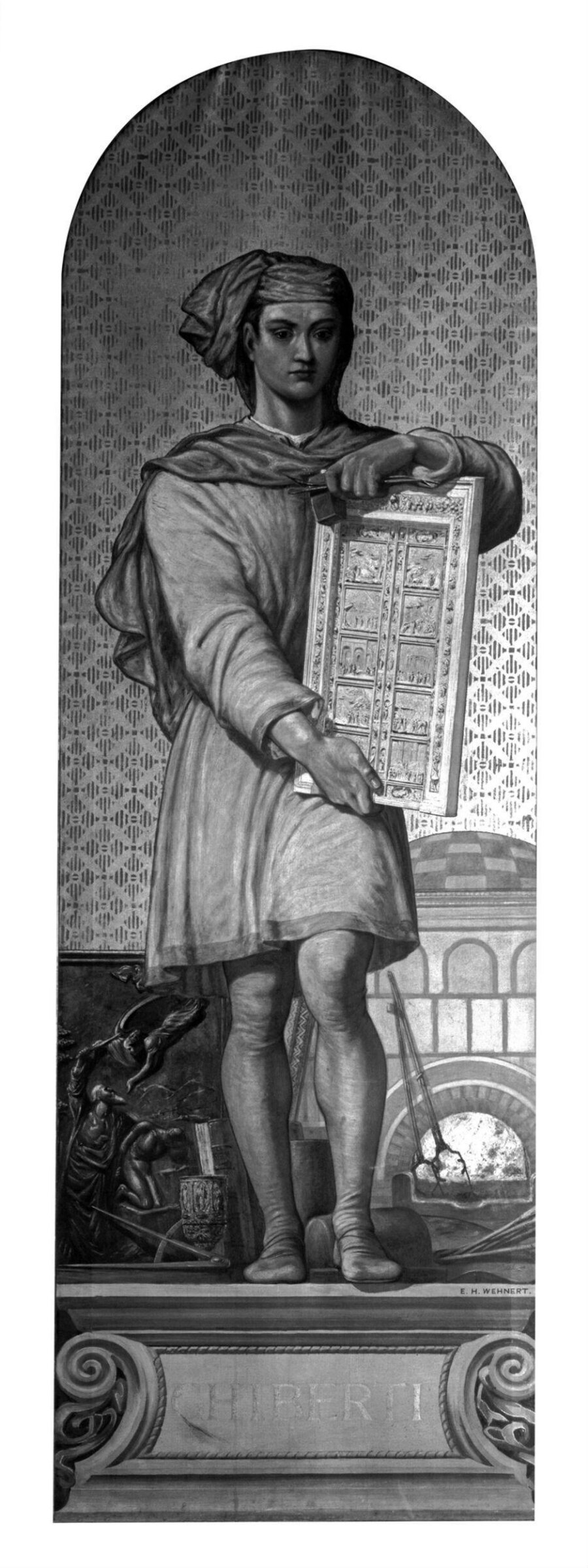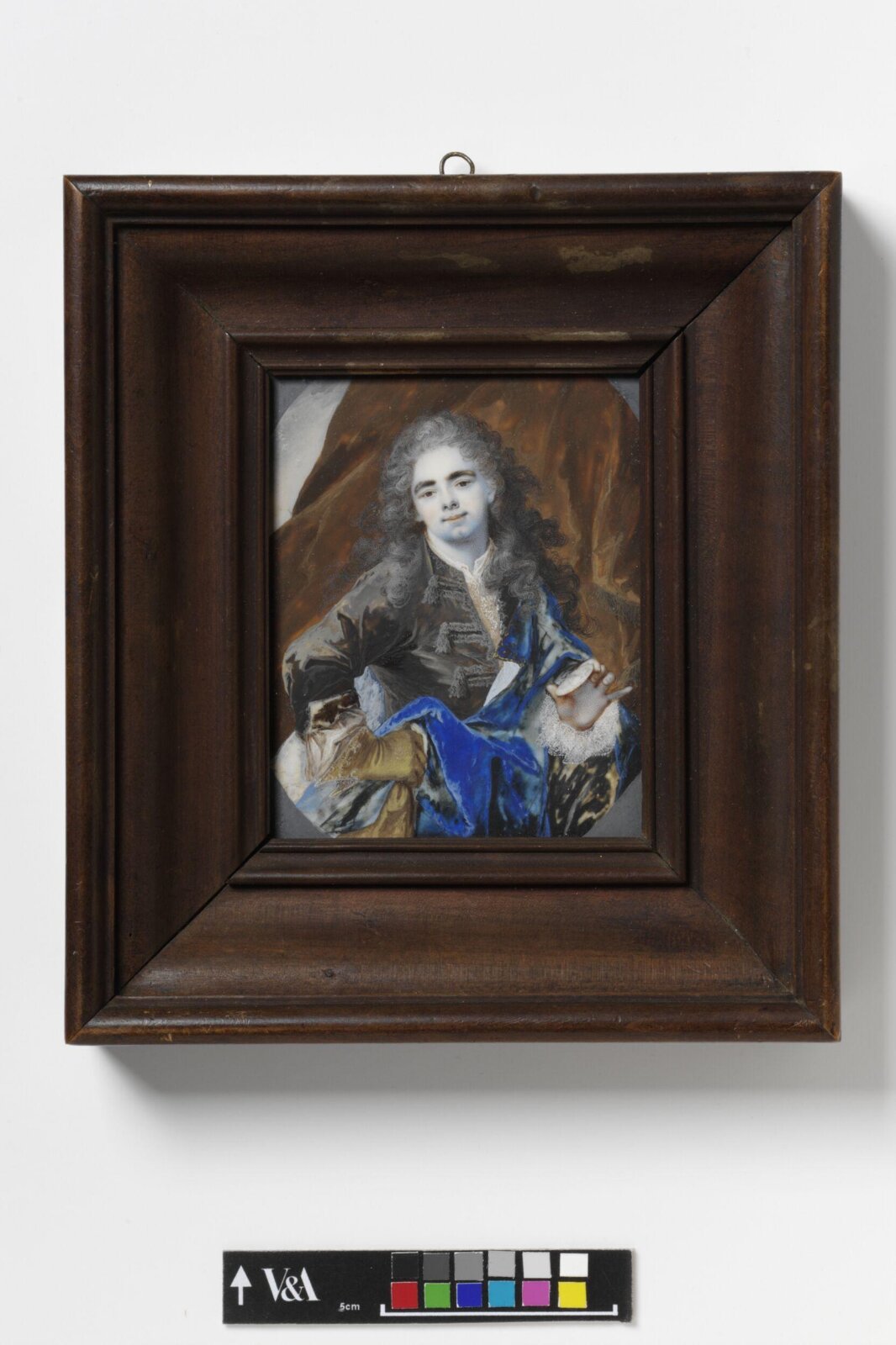
An Unknown man holding a miniature
May one see it?
Not receiving at present

Victoria and Albert Museum
London, United Kingdom
It belongs to the collection, but is not on display at present.
- Checked
- 7 days ago
- In this state since
- Sep 25, 2026
- Source
- The museum's own collection data
About the painting
Miniature painting originally referred to the art of painting in watercolour on vellum (fine animal skin). It developed in the early 16th century out of the tradition of illuminating manuscripts (hand-written books). In England, miniature was predominantly a portrait art. It was practised by specialist miniature painters, such as Nicholas Hilliard (1547-1619). On the Continent, miniature painting as a portrait art had a few great practitioners, such as the French painter Jean Clouet (1516?-1572). But not even Clouet was a specialist. Like Hans Holbein, he worked both in miniature and in large in oil.
In France, it was not until the 1770s that a notable school of portrait miniaturists emerged. It was only then that they were able to rival English ones, such as Richard Cosway (1742-1821) and John Smart (1742-1811). Like Cosway and Smart, these French artists worked in watercolour on ivory.
Read on
In the early 18th century ivory began to replace vellum as a support for miniature painting. It was introduced by Rosalba Carriera (1675-1757), a Venetian artist. Its use developed in distinct ways in England and on the Continent. In continental Europe, and especially in France, Carriera's method of using opaque 'gouache' (watercolour mixed with white) was influential. She exploited the ivory primarily by leaving the face transparent. In contrast, by the 1770s artists of the English School tended towards transparent pigments. They very rarely used gouache.
Victoria and Albert Museum
Particulars
- Accession number
- P.8-1946
What it shows
In the catalog
Sources
- Victoria and Albert Museum: the museum's own open data · fetched 7 days ago
- Image: Victoria and Albert Museum — © Victoria and Albert Museum, London