 Edouard Lanteri1848–1917
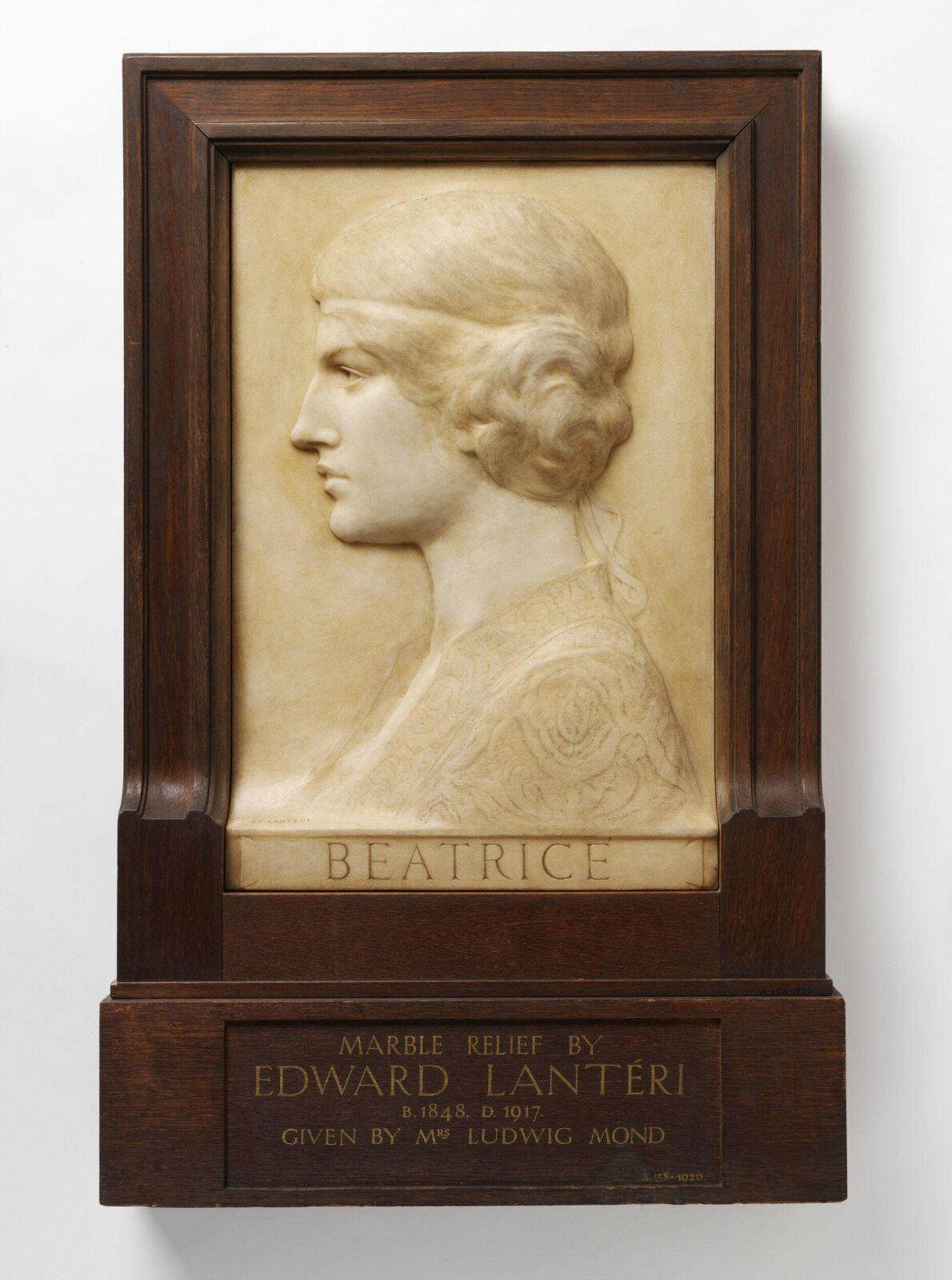
Beatrice
May one see it?
Not receiving at present

Victoria and Albert Museum
London, United Kingdom
It belongs to the collection, but is not on display at present.
- Checked
- 7 days ago
- In this state since
- Sep 25, 2026
- Source
- The museum's own collection data
About the sculpture
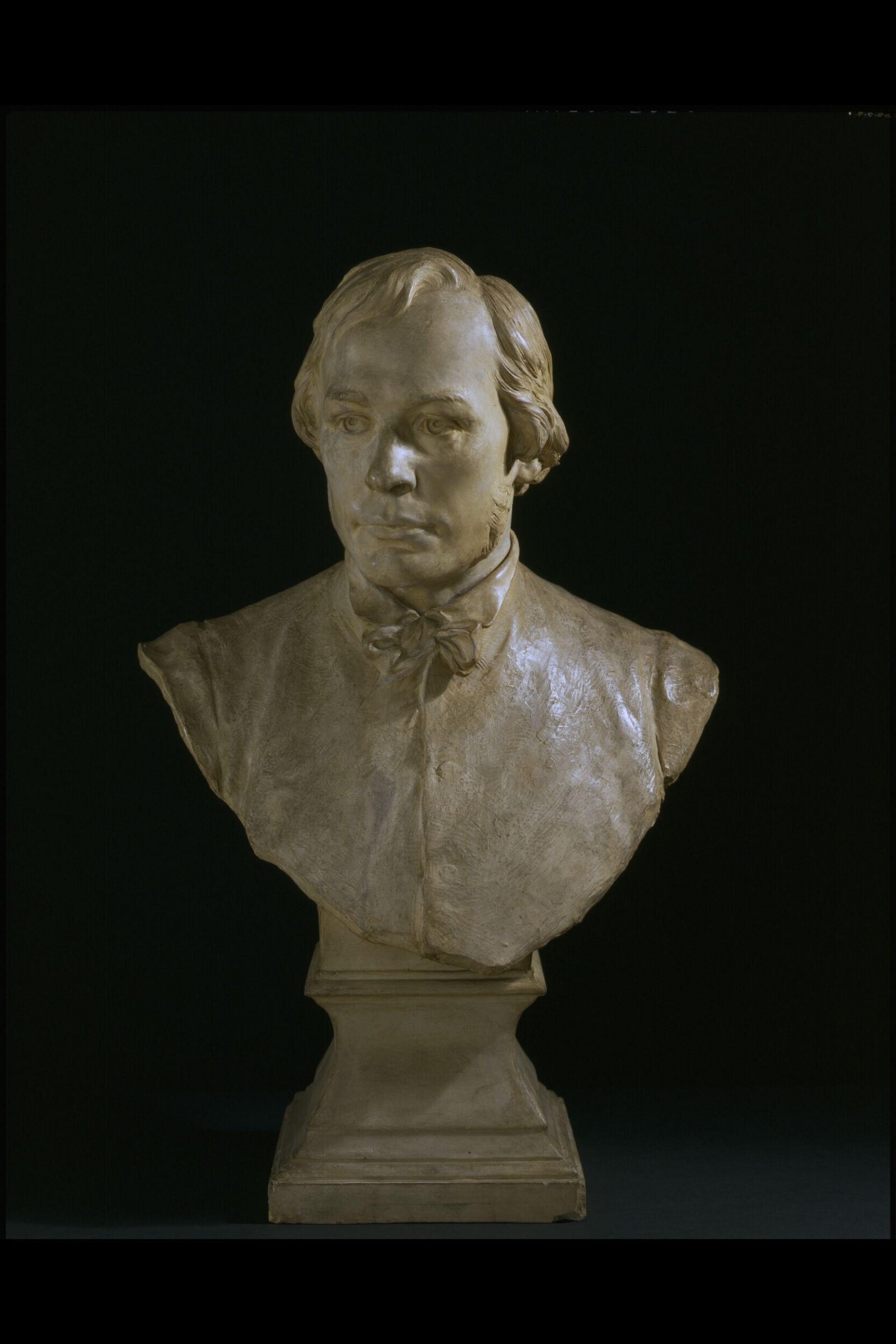
This marble relief was made by Edouard Lanteri between 1885 and 1904. It depicts an imaginary portrait of Dante's Beatrice. Beatrice was the inspiration for the poetic masterpiece 'The Divine Comedy', written in the early 14th century. In Book II of the poem she leads the poet up the mountain of Purgatory, and in Book III she leads him to Paradise. She was in part based on a real woman whom Dante apparently knew and fell in love with in Florence, but she also symbolised divine love and redemption.
Read on
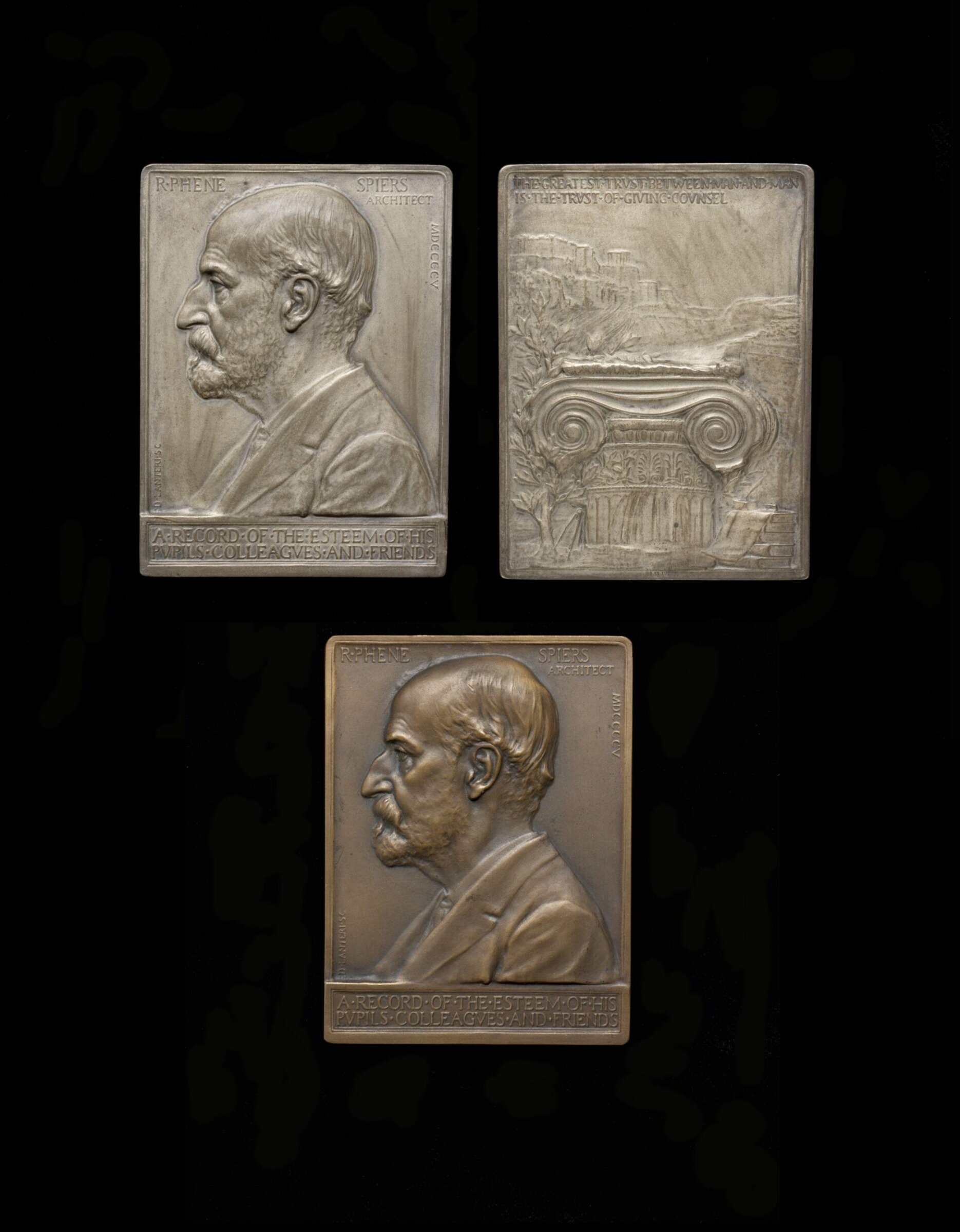
Lanteri (1848-1917), a sculptor and medallist, was a native of Burgundy. He initially trained under Aimé Millet (1819-1891), Horace Lecoq de Boisbaudran (1802-1897) at the 'Petite Ecole', and later at the École des Beaux-Arts under Eugène Guillaume (1822-1905) and Pierre-Jules Cavalier. On his former teacher Jules Dalou's recommendation, Lanteri settled in England from 1872, and was naturalised in 1901. At the age of 23 he became chief assistant to Sir Joseph Edgar Boehm, a position he held until Boehm's death in 1890. In 1880 Lanteri succeeded Dalou as Master of Modelling at the National Art Training School (now Royal College of Art), and in 1900 became the first Professor of Modelling. During 1905/6 he supervised students working on the figures of Fame, Sculpture and Architecture for the Exhibition Road façade of the Museum. Using his teaching notes as the basis Lanteri wrote a three-volume text 'Modelling: a Guide for Teachers and Students' (published in 1902, 1904 and 1911) which soon became the standard work in the field.
Victoria and Albert Museum
Particulars
- Accession number
- A.158-1920
What it shows
In the catalog
Sources
- Victoria and Albert Museum: the museum's own open data · fetched 7 days ago
- Image: Victoria and Albert Museum — © Victoria and Albert Museum, London