 Édouard ManetFrench, 1832–1883
Boating
May one see it?
Yes, receiving visitors

The Metropolitan Museum of Art
Room818New York, United States
On public display.
- Checked
- 3 days ago
- In this state since
- Sep 26, 2026
- Source
- The museum's own collection data
About the painting
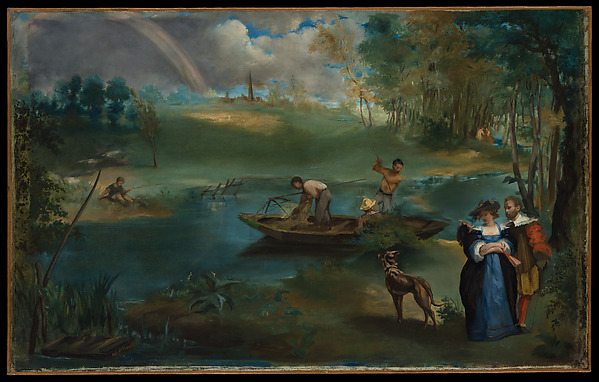
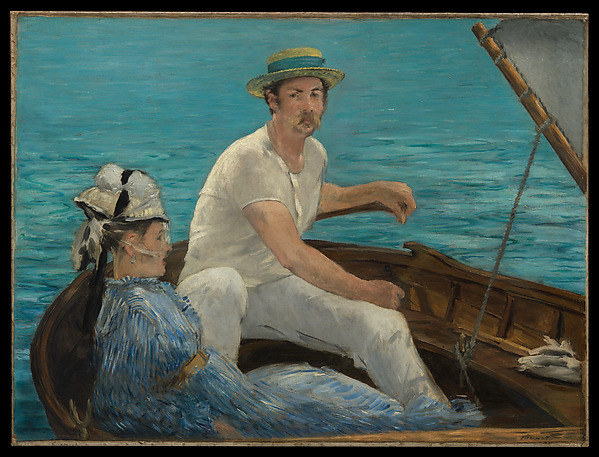
Boating is an oil-on-canvas painting by French artist Édouard Manet. The painting depicts a man and woman on a sailboat during the summertime. It was painted in the summer of 1874, during which time Manet was staying on his family's property in Gennevilliers. Art historians have suggested that the woman may be Camille Monet, while the man has often been identified as Manet's brother-in-law Rodolphe Leenhoff.
Boating is often cited as Manet's foray into Impressionism based on its brushwork and subject matter. While Manet did not call himself an Impressionist, he often showed his paintings in galleries with other Impressionists. He was friends with many artists of time who did consider themselves to be a part of the impressionist movement.
Read on
The work was shown in the Salon of 1879. Mary Mathews Gedo, a former clinical psychologist turned art historian, has described Boating as "quintessentially Monet Esque". It is currently displayed at the Metropolitan Museum of Art in New York City in Gallery 818.
Particulars
- Accession number
- 29.100.115
What it shows
Sources
- The Metropolitan Museum of Art: the museum's own open data · fetched 3 days ago
- Image: The Metropolitan Museum of Art — Open Access (CC0)
Meanwhile, in the life of Édouard Manet
The whole life1870s
Refuses to exhibit with the Impressionists
Although his own work influenced and anticipated the Impressionist style, Manet resisted involvement in Impressionist exhibitions: he did not wish to be seen as the representative of a group identity and held that modern artists should seek to exhibit at the Salon.
1873
“Le Bon Bock”: a huge success
In his new studio in 1873 Manet painted “Le Bon Bock”, which became famous: for the first time in almost fifteen years he had a huge success, yet he did not turn into a fashionable, opportunistic painter.
1874
“The Railway”: ridicule at the Salon of 1874
“The Railway”, painted in 1873, puzzled visitors and critics at the Salon of 1874: its subject seemed baffling, its composition incoherent and its execution sketchy; caricaturists ridiculed it, and only later was it recognised as a symbol of modernity. The model was Victorine Meurent, for the last time.
1874
Morisot marries Manet's brother
In 1874 Berthe Morisot married Manet's brother Eugène and became his sister-in-law; it has been speculated that there was a repressed love between Manet and Morisot, exemplified by the numerous portraits he made of her before her marriage.
1874–1876
The Salon jury rejects his paintings again
In 1874 the jury rejected “Masked Ball at the Opera”, and in 1876 both paintings Manet sent. Independent exhibitions in those years brought nothing but public censure and the mockery of critics.
1875
Lithographs for Poe's “The Raven” in Mallarmé's translation
In 1875 a book-length French edition of Edgar Allan Poe's “The Raven” appeared, with lithographs by Manet and a translation by his friend Stéphane Mallarmé.