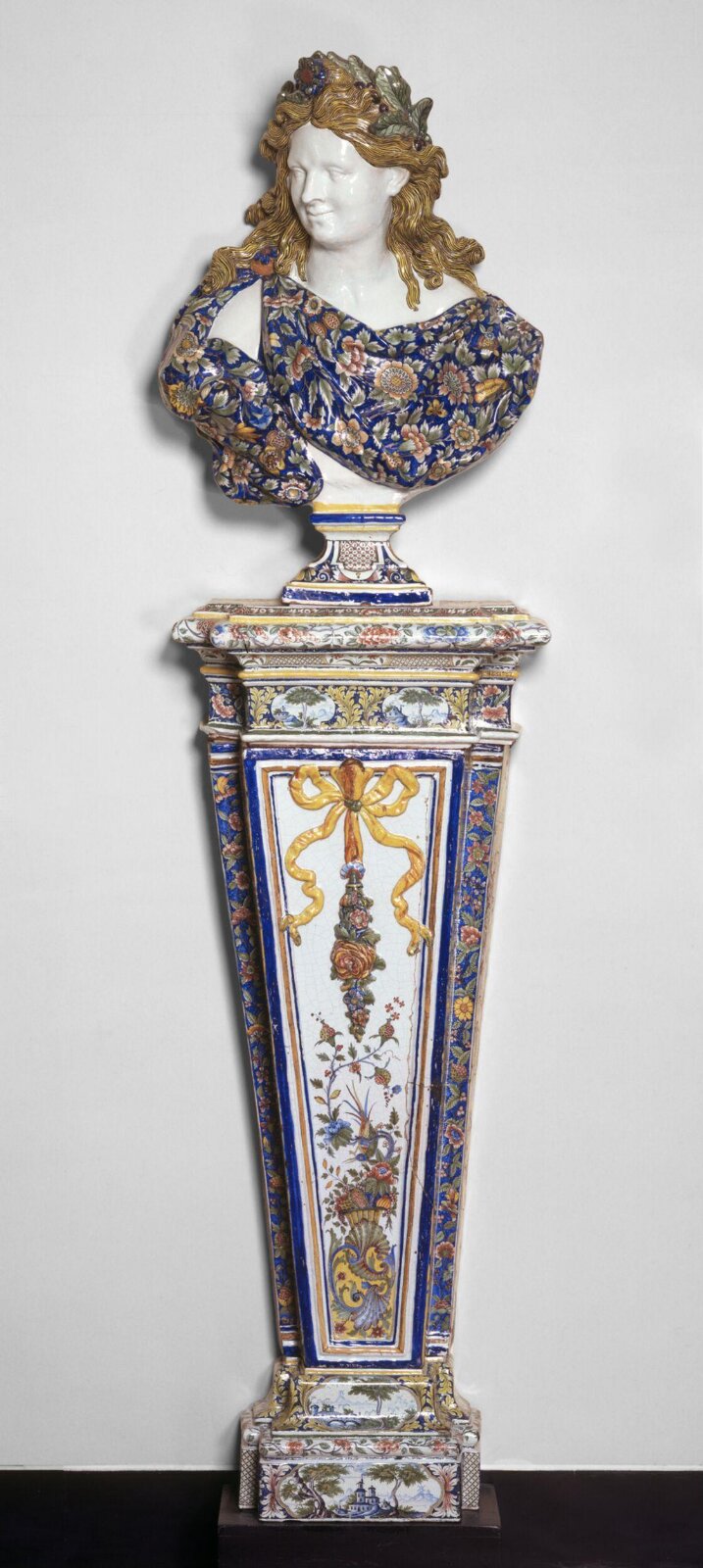
Bust
May one see it?
Yes, receiving visitors

Victoria and Albert Museum
RoomCeramics, Room 144, The Headley Trust GalleryLondon, United Kingdom
On public display.
- Checked
- 7 days ago
- In this state since
- Sep 25, 2026
- Source
- The museum's own collection data
About the sculpture
The manufacture of tin-glazed earthenware, known in French as 'faience', was introduced from Italy and established in Rouen in 1644 with a 50-year royal privilege, protecting it from competition. The high status of this material was confirmed by Louis XIV's order for a pavilion (the 'Trianon de Porcelaine') clad in faience tiles for his mistress Madame de Montespan. Demand from the nobility increased dramatically after the edict of 1709, which commanded the melting down of all silver plate to pay for the wars of the Grand Alliance and the Spanish Succession. Although the production of porcelain began in France in the 1690s, faience continued to enjoy a large and courtly market well in to the eighteenth century.
Read on
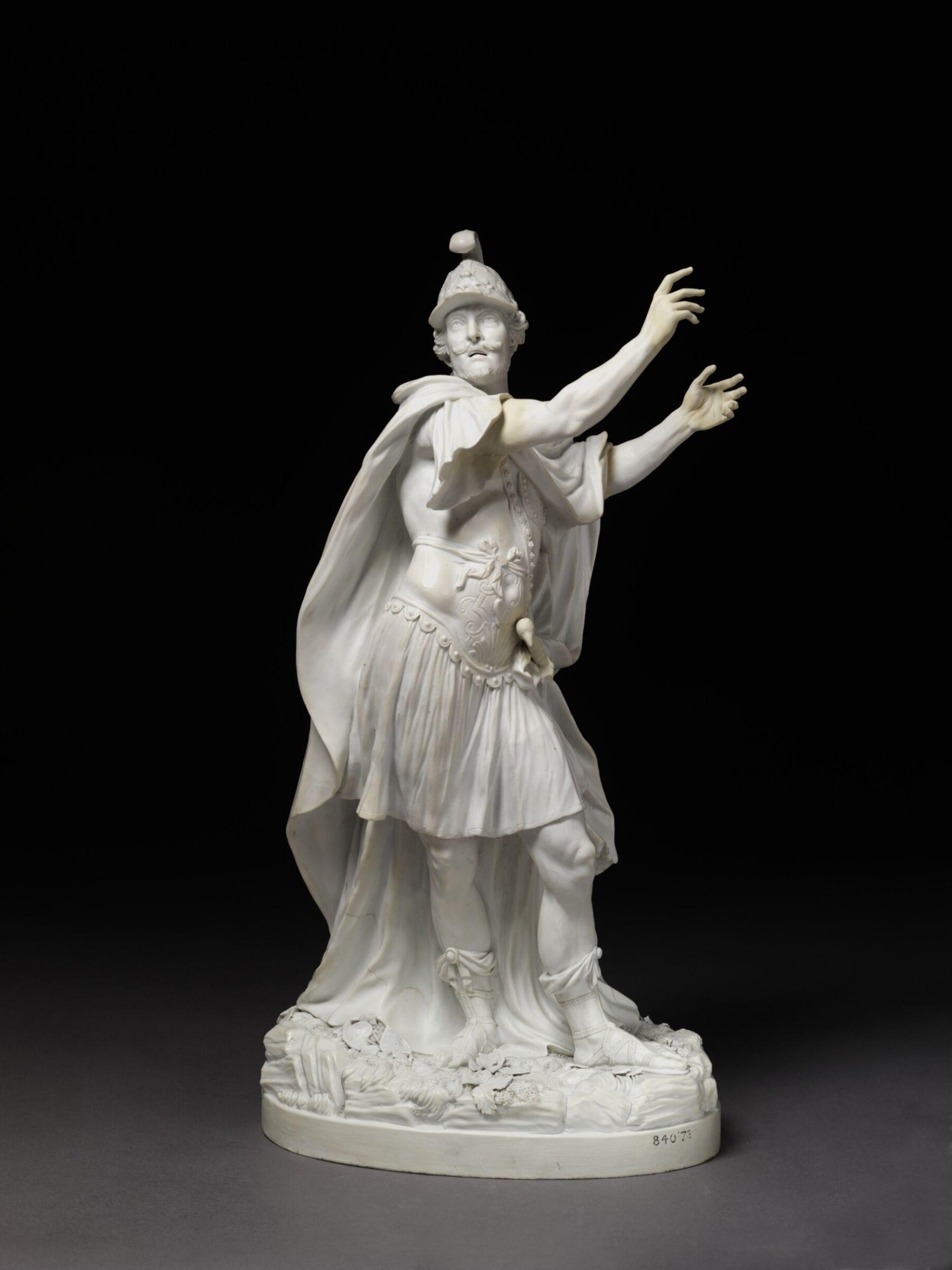
This bust depicts the Roman sun god, Apollo. Originally, it presided over four others, depicting each of the Seasons. The series forms the culmination of the development of large-scale ceramic sculpture at Rouen and is recorded as having stood in the office of Nicolas Fouquay, who acquired the Rouen factory in 1720, where they served as advertisements to potential clients. The size and convincing classicism of the pieces demonstrates the very great skill of the craftsmen and reflects the prestigious market to which high quality faience was supplied. In the seventeenth and early eighteenth centuries, Apollo was directly associated with Louis XIV and the glories of his reign. The inclusion of the god, therefore, adds a courtly magnificence to the series. The fashionably decorated pedestal is similar in shape to those made by the celebrated contemporary furniture maker, Andre Charles Boulle.
Victoria and Albert Museum
Particulars
- Accession number
- 4551-1857
In the catalog
Sources
- Victoria and Albert Museum: the museum's own open data · fetched 7 days ago
- Image: Victoria and Albert Museum — © Victoria and Albert Museum, London