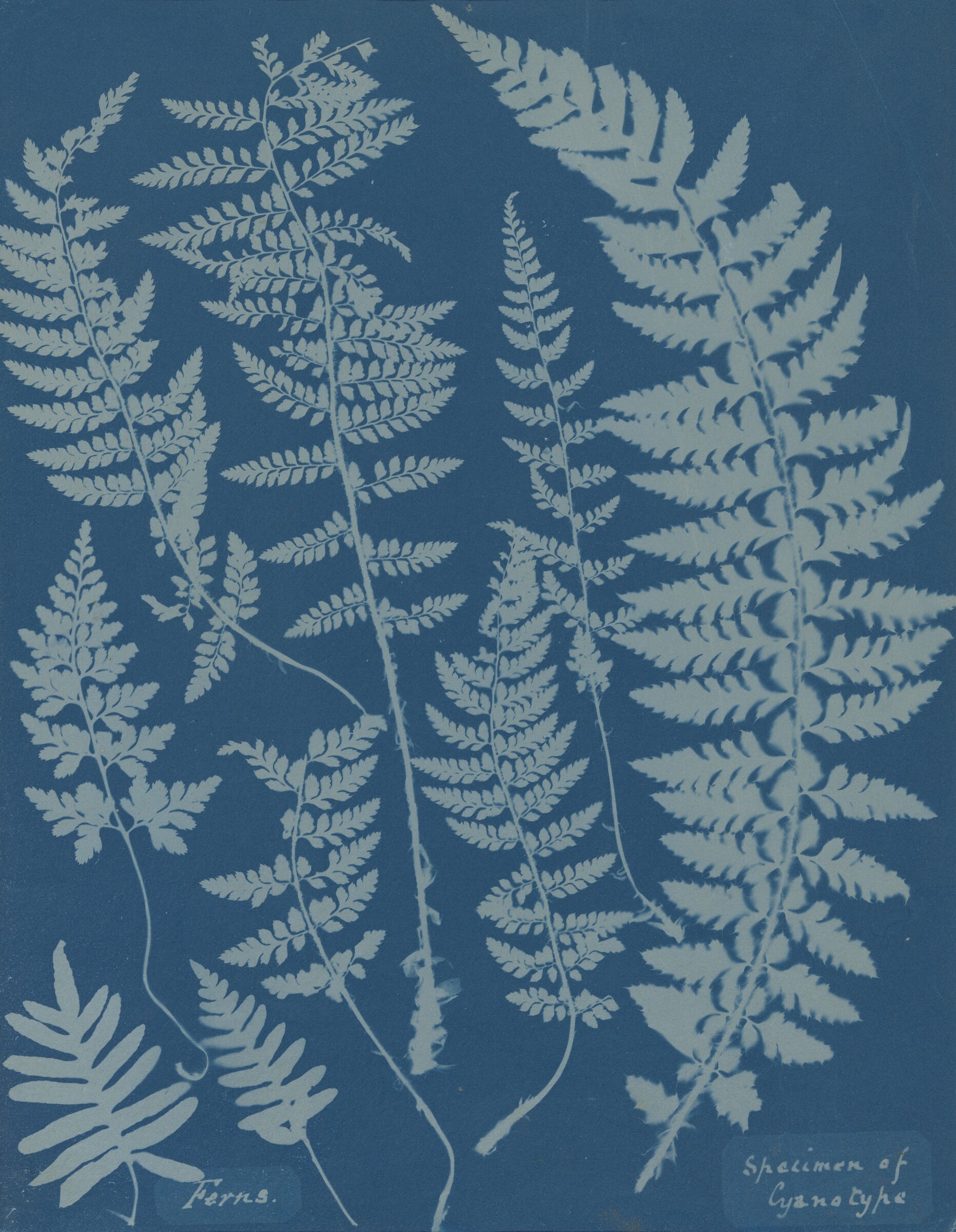
Anna AtkinsBritish, 1799–1871
Conferva rectangularis
May one see it?
Unknown: the museum keeps its counsel

Rijksmuseum
Amsterdam, Netherlands
The owner is known. Whether it is on view today, the museum does not say, and we were not trained to guess.
- Source
- The museum's own collection data
Particulars
- Accession number
- RP-F-2016-133-121
What it shows
Sources
- Rijksmuseum: the museum's own open data · fetched 4 days ago
- Image: Rijksmuseum — public domain
Meanwhile, in the life of Anna Atkins
The whole lifeby 1841
A camera and lessons from Fox Talbot
Anna's father and husband were friends of William Henry Fox Talbot, and she learned about “photogenic drawing” and the calotype from Talbot himself; she is known to have had a camera by 1841. She is sometimes called the first woman photographer, but no camera photographs by her survive, so the rival claim of Constance Fox Talbot may never be settled.
1842–1843
Takes up Herschel's cyanotype
The family friend Sir John Herschel invented the cyanotype in 1842 (1839 by other accounts), and within a year Atkins applied it to algae, contact-printing dried specimens laid directly on the cyanotype paper.
October 1843
Publishes “Photographs of British Algae: Cyanotype Impressions”
The first instalment, self-published in a small run with handwritten text, was meant to illustrate William Harvey's “A Manual of British Algae” (1841) and is considered the first book illustrated with photographs. Talbot's “The Pencil of Nature”, the first commercially published photographically illustrated book, began to appear eight months later, in June 1844.
1843–1853
Three volumes of “British Algae”
Over ten years Atkins produced three volumes, presenting them to the British Museum through J. E. Gray. Seventeen copies are known (other accounts say twelve were made in all); the Royal Society's copy, with 389 plates, is thought to be the only one as she intended it.
1853
Publishes a memoir of her father
“Memoir of J. G. Children”, a memoir of her father John George Children including unpublished poetry by him and by his father, came out in London from John Bowyer Nichols and Sons.