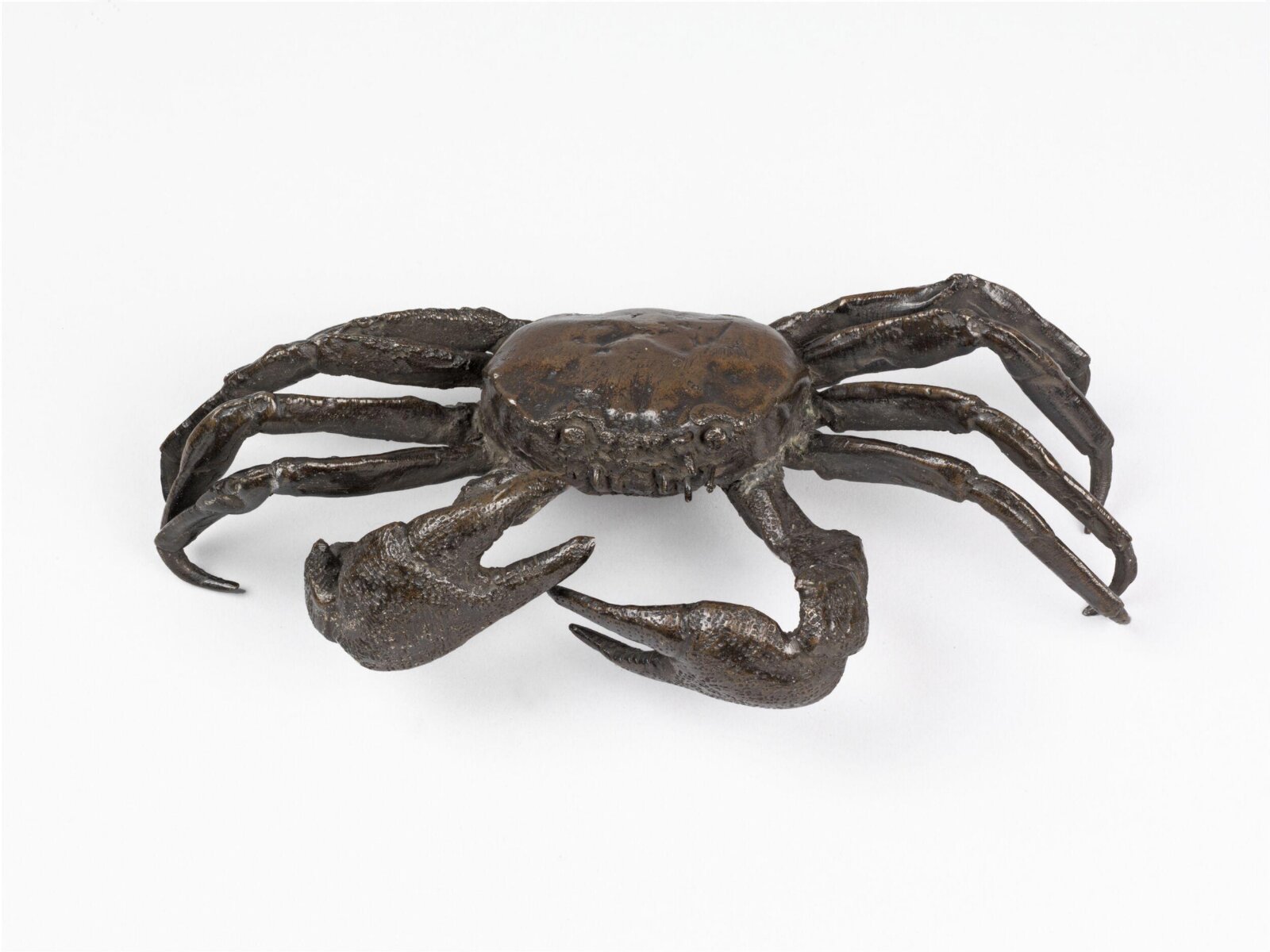
Crab
May one see it?
Not receiving at present

Victoria and Albert Museum
London, United Kingdom
It belongs to the collection, but is not on display at present.
- Checked
- 7 days ago
- In this state since
- Sep 25, 2026
- Source
- The museum's own collection data
About the sculpture
This bronze is a life-cast taken from a Chinese mitten crab (or Eriocheir), an edible variety of crab which lives in fresh water, but returns to the sea to breed. It is distinguished by its 'hairy' mittens on the claws (chela). The origins of the bronze are unclear, but it is most likely a Japanese cast of the nineteenth or twentieth century. It may have been made using the ‘burn out’ method of casting whereby the dead animal is encased in a clay-based mould material and heated to high temperature. The carcass is burnt out, and the space left is filled with molten bronze, which cools and hardens to create a realistic replica of the animal. However, as it is not a particularly refined cast of a specimen, indicating that it may instead have been cast from moulds that were taken from a crab, allowing replicas to be cast. The use of poor moulds or possibly moulds that were worn might explain the poor definition of some areas of the crab's features.
Victoria and Albert Museum
Particulars
- Accession number
- A.98-1919
What it shows
Sources
- Victoria and Albert Museum: the museum's own open data · fetched 7 days ago
- Image: Victoria and Albert Museum — © Victoria and Albert Museum, London