.jpg?width=96) Vincent van GoghDutch, 1853–1890
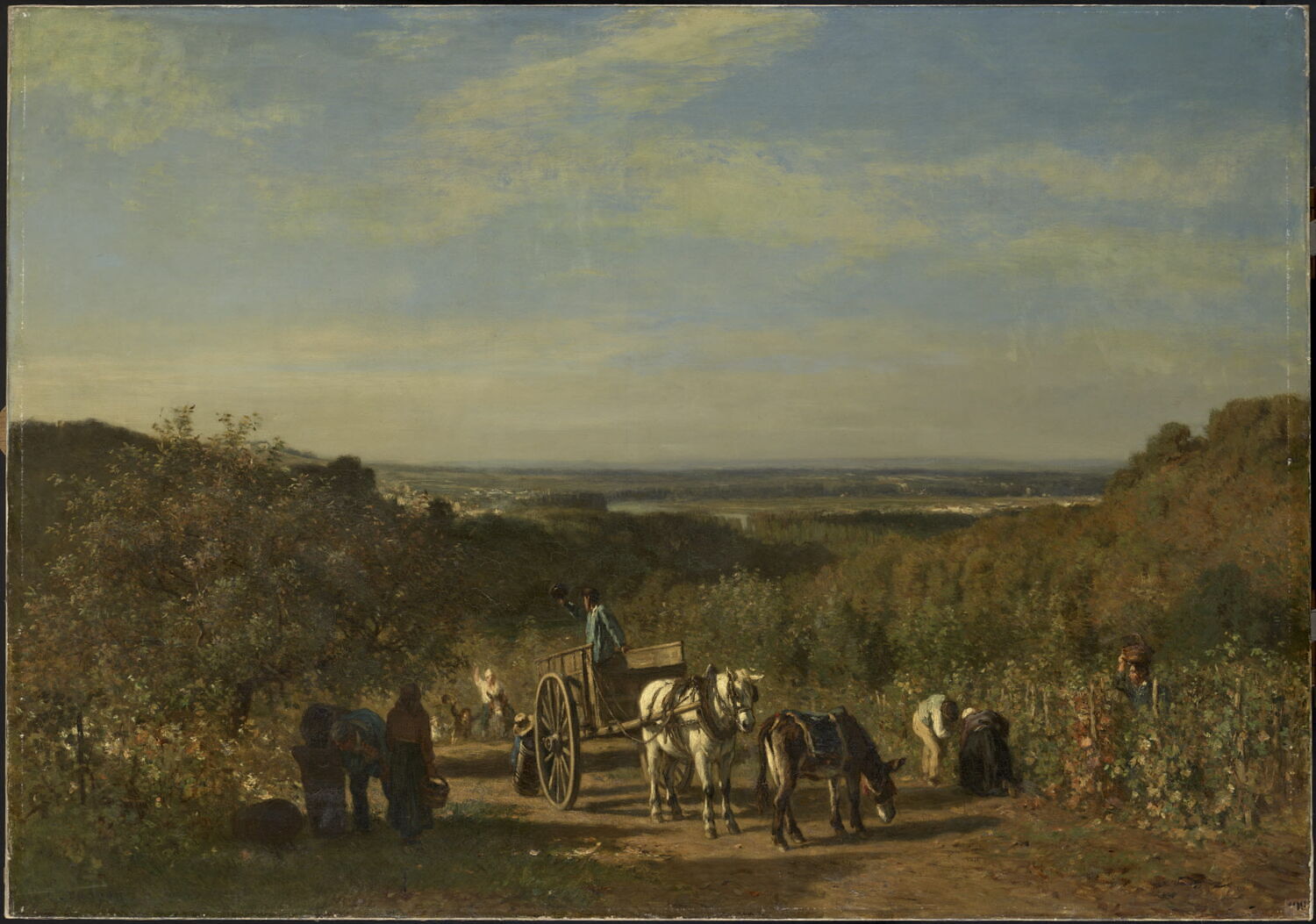
Vincent van GoghDutch, 1853–1890Dance Hall in Arles
May one see it?
Unknown: the museum keeps its counsel

Musée d'Orsay
Paris, France
The owner is known. Whether it is on view today, the museum does not say, and we were not trained to guess.
- In this state since
- Sep 29, 2026
- Source
- The museum's own collection data
Particulars
- Accession number
- RF 1950 9
Sources
- Wikidata · fetched 3 days ago
- Image: Musée d'Orsay — Vincent van Gogh · Public domain · Wikimedia Commons
Meanwhile, in the life of Vincent van Gogh
The whole lifeFebruary 1886
Moves to Paris to join his brother Theo
Van Gogh left Antwerp to join his brother Theo, an art dealer, in Paris. So began a very fruitful and eventful Paris period: he painted some two hundred and thirty pictures there, more than anywhere else.
1888
Paints “Sunflowers”
Preparing for Gauguin's arrival, Van Gogh painted four versions of “Sunflowers” in one week. “In the hope of living in a studio of our own with Gauguin,” he wrote to Theo, “I'd like to do a decoration for the studio. Nothing but large Sunflowers.”
February 1888
To Arles, dreaming of a “Studio of the South”
The public still neither accepted nor bought his paintings, and in February 1888 Van Gogh left for Arles in the south of France to found a “Studio of the South”, a brotherhood of like-minded artists in which he gave Gauguin the leading role. Theo backed the plan with money.
23 October 1888
Gauguin arrives in Arles
After much pleading Gauguin arrived in Arles, and in November the two painted together: Gauguin portrayed Van Gogh in “The Painter of Sunflowers”, and their first joint outing was to the Alyscamps. At Gauguin's suggestion Vincent painted from memory, producing “Memory of the Garden at Etten”.
23 December 1888
The severed ear
After an altercation on the evening of 23 December, Van Gogh, seemingly hearing voices, severed his left ear, wholly or in part, with a razor and delivered it, wrapped in paper, to a woman at a brothel. Next morning a policeman found him unconscious; in hospital he was diagnosed with “acute mania with generalised delirium”.
29 July 1890
Died