 Joseph BeuysGerman, 1921–1986
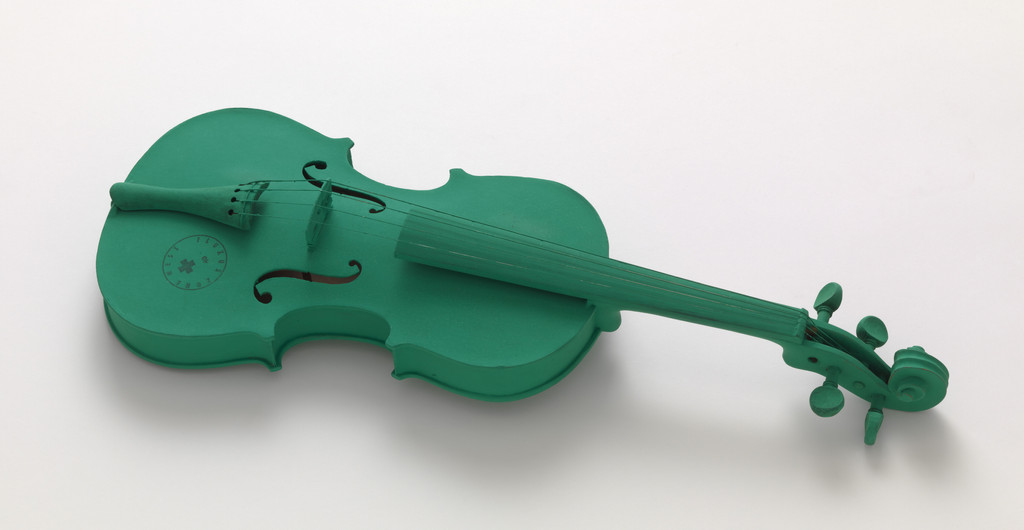
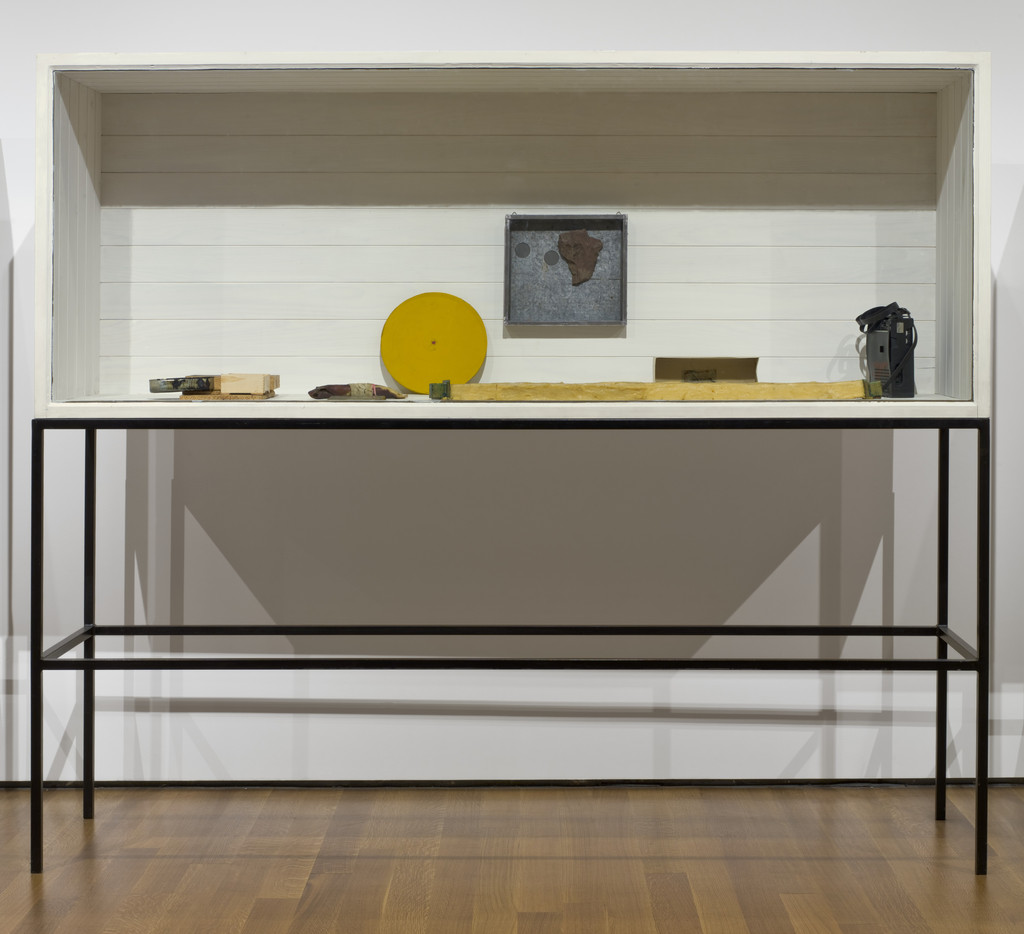
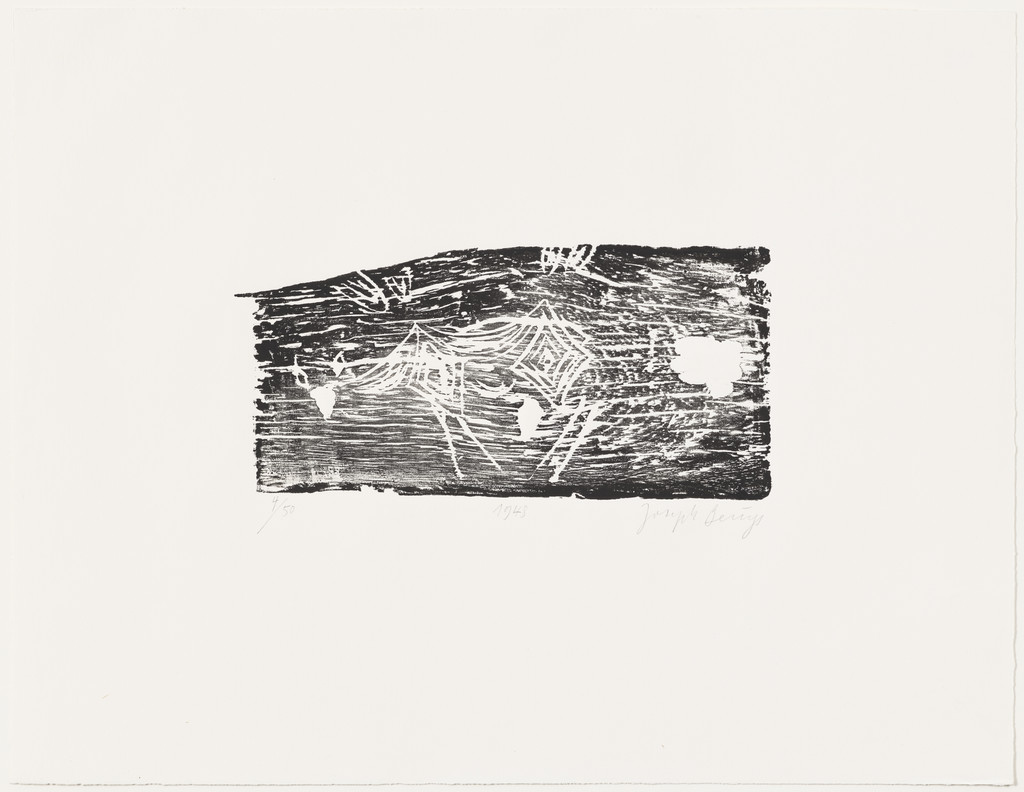
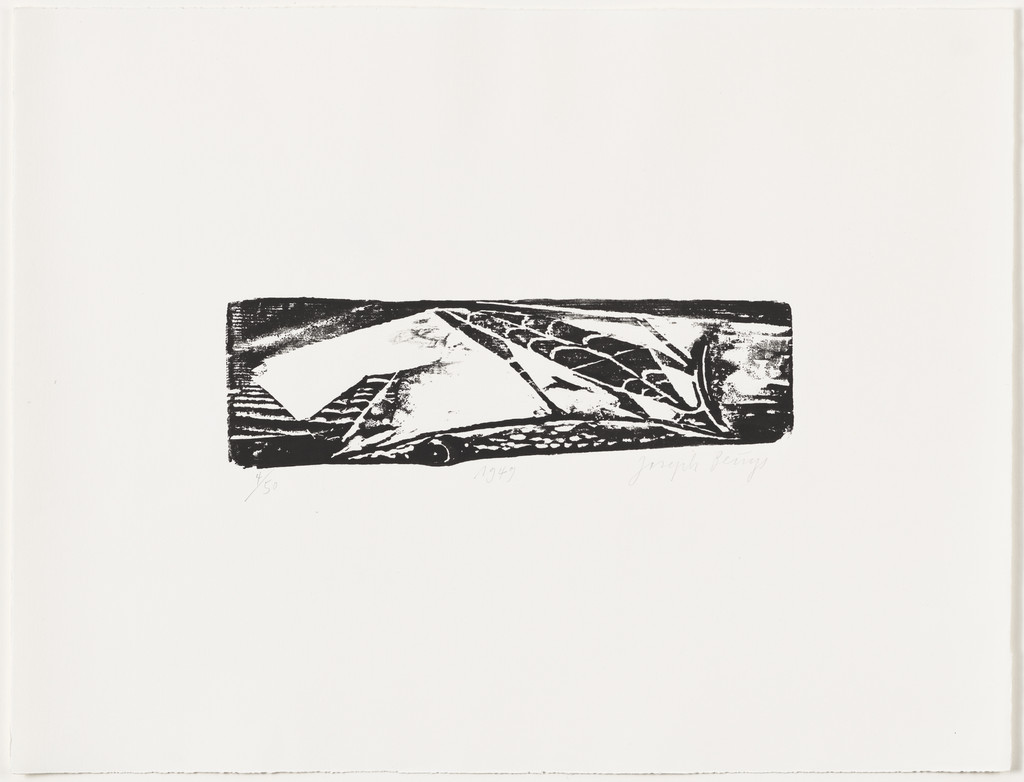
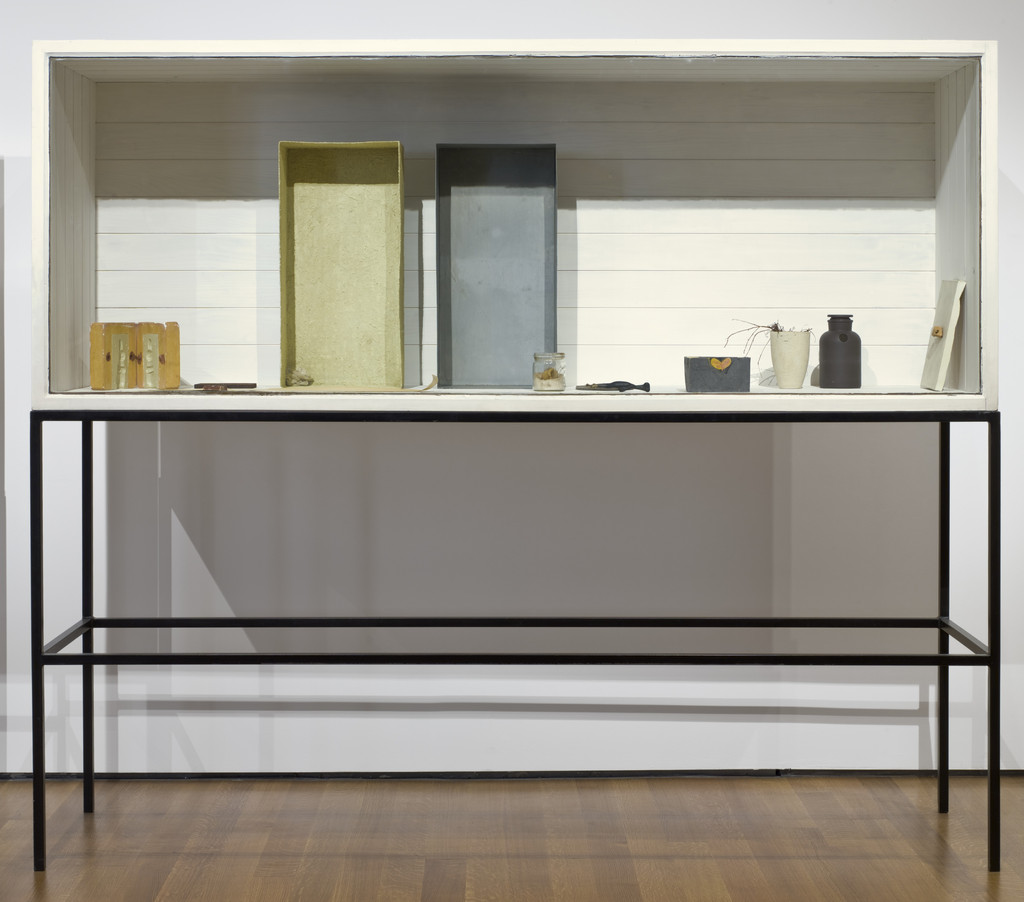
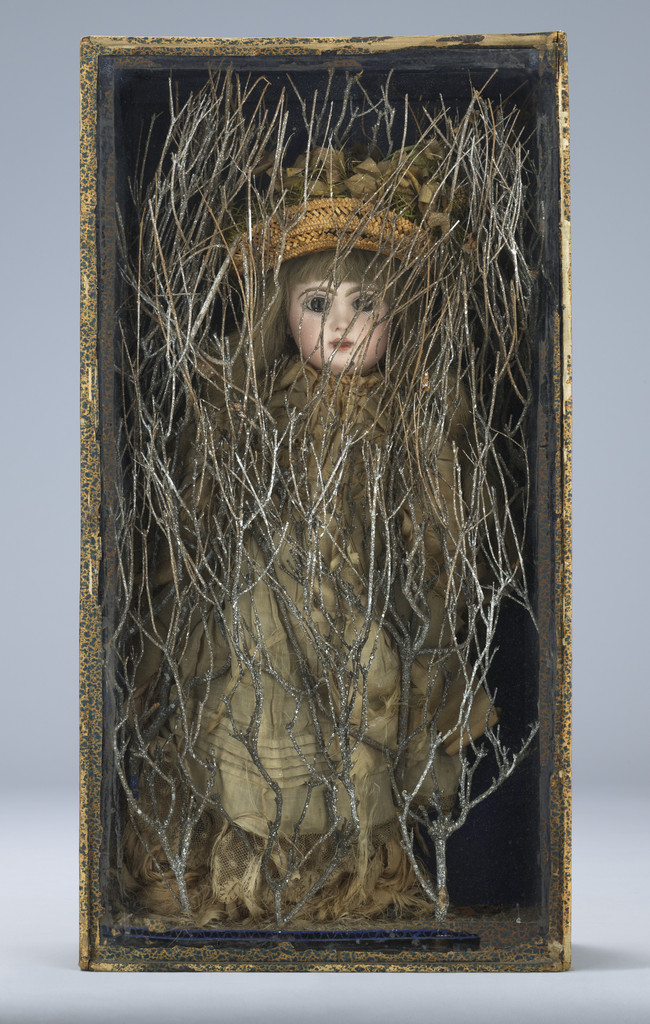
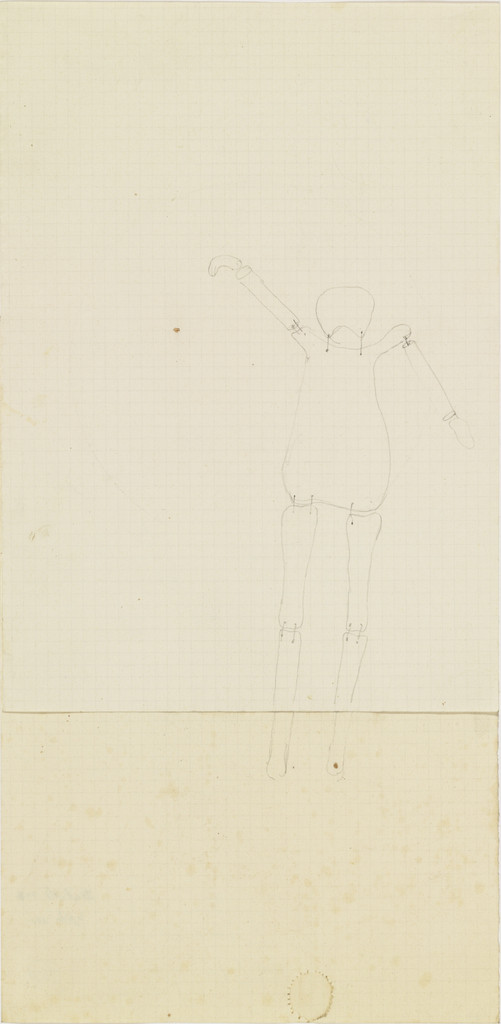
Doll (Puppe)
May one see it?
Not receiving at present

The Museum of Modern Art
New York, United States
It belongs to the collection, but is not on display at present.
- Checked
- 10 days ago
- Source
- The museum's own collection data
Particulars
- Accession number
- 1282.2005
Sources
- The Museum of Modern Art: the museum's own open data · fetched 10 days ago
- Image: The Museum of Modern Art — © the artist or rights holder
Meanwhile, in the life of Joseph Beuys
The whole life1945–1960
First exhibitions: Kleve, Kranenburg, Wuppertal
In his early years Beuys showed watercolours and sketches at the Kleve Artists Association's annual exhibition in the Villa Koekkoek, had a solo show at the home of Hans and Franz Joseph van der Grinten in Kranenburg, and took part in a show at the Von der Heydt Museum in Wuppertal.
1958
A design for the Auschwitz-Birkenau memorial
In 1958 Beuys took part in the international competition for the Auschwitz-Birkenau memorial; his proposal did not win and was never realised.
1959
Marries Eva Wurmbach
In 1959 Beuys married Eva Wurmbach; the couple had two children.
1960s
Forms the idea of “social sculpture”
Drawing on Novalis and Schiller and on Rudolf Steiner's ideas of social threefolding, Beuys developed the concept of social sculpture: society as a whole is one great work of art to which everyone can contribute creatively (“everyone is an artist”).
1961
Professor of monumental sculpture in Düsseldorf
In 1961 Beuys was appointed professor of monumental sculpture at the Düsseldorf Kunstakademie; his students included Jörg Immendorff, Blinky Palermo, Sigmar Polke and Katharina Sieverding.
1962
Friendship with Nam June Paik and first steps in Fluxus
In 1962 Beuys befriended his Düsseldorf colleague Nam June Paik, a member of Fluxus, which began his brief formal involvement with the movement; he viewed art's economic and institutional framework differently from the others, however.