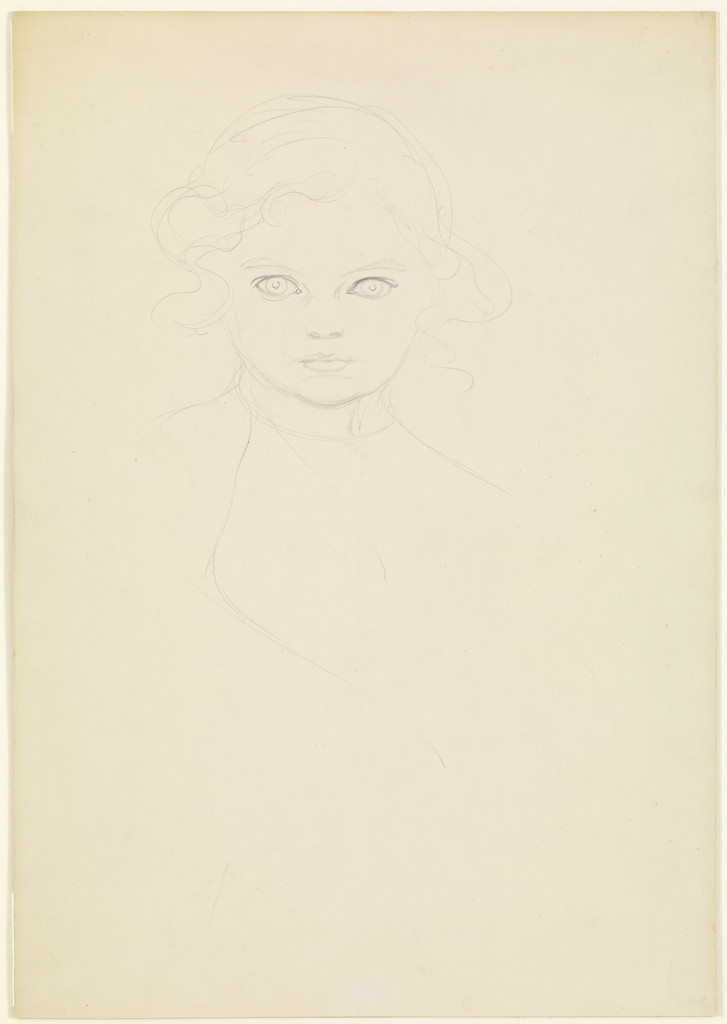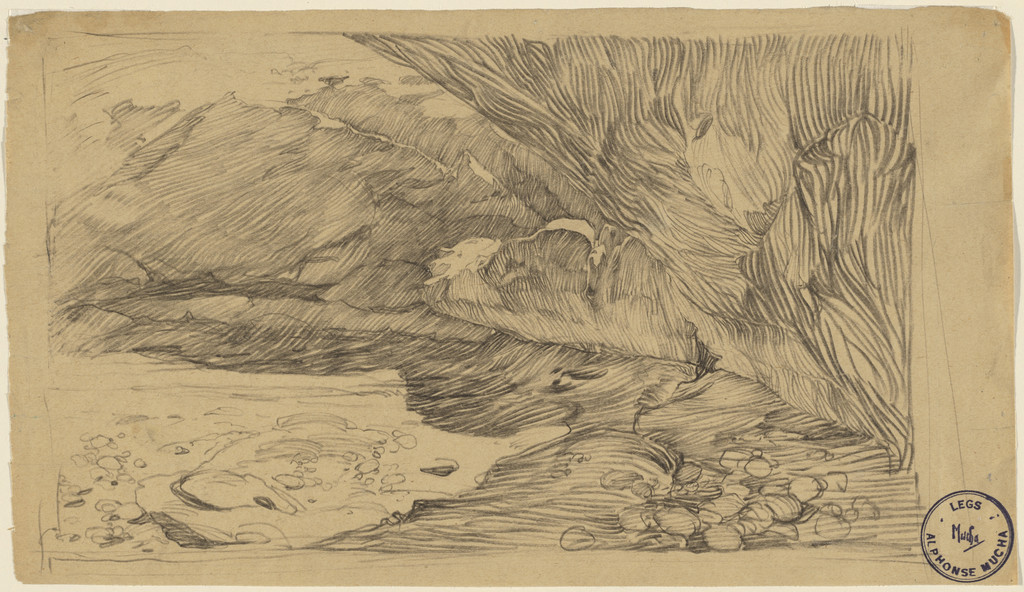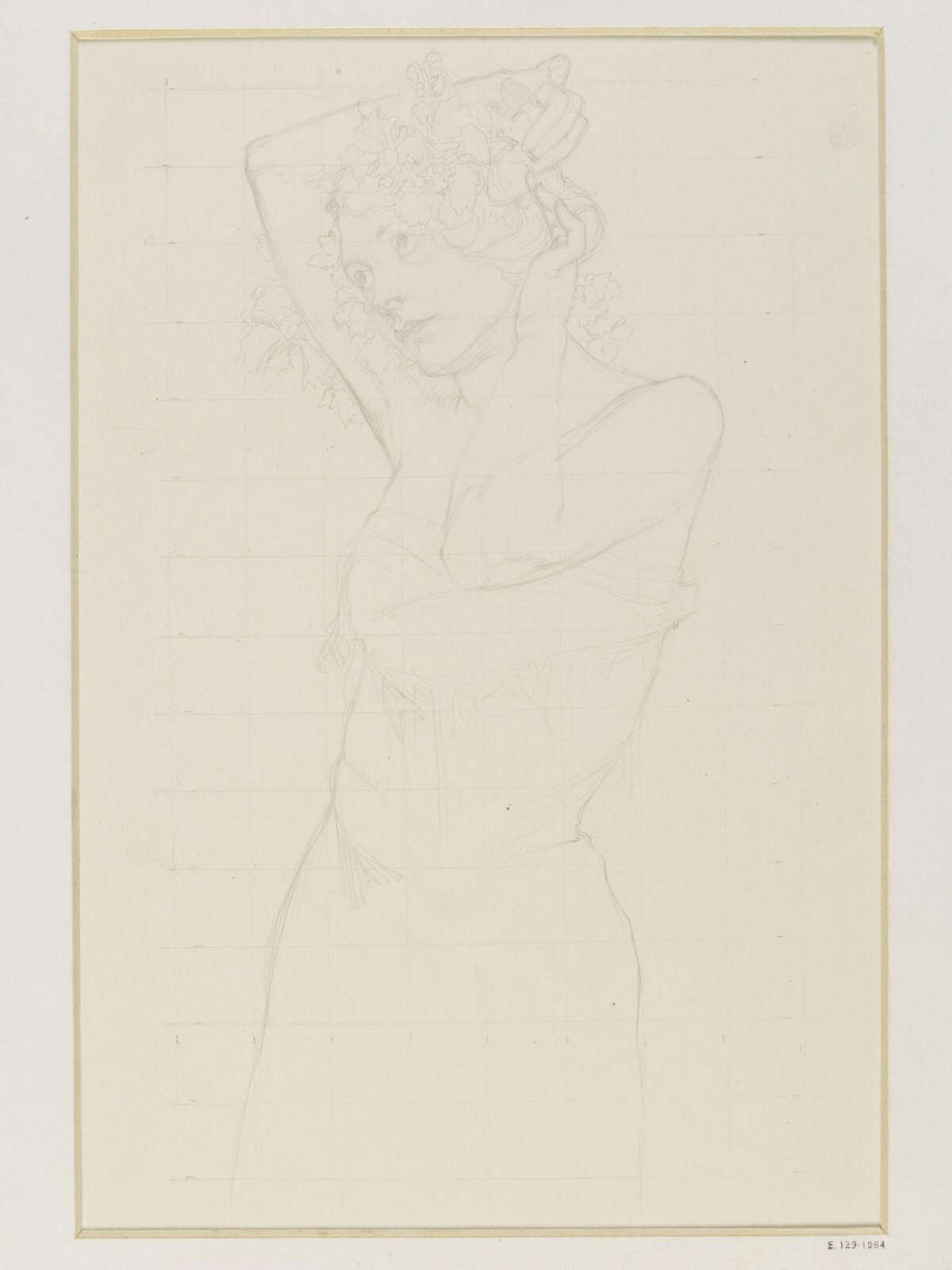
 Alphonse MuchaCzech, 1860–1939
Drawing
May one see it?
Not receiving at present

Victoria and Albert Museum
London, United Kingdom
It belongs to the collection, but is not on display at present.
- Checked
- 7 days ago
- In this state since
- Sep 25, 2026
- Source
- The museum's own collection data
Particulars
- Accession number
- E.129-1964
What it shows
Sources
- Victoria and Albert Museum: the museum's own open data · fetched 7 days ago
- Image: Victoria and Albert Museum — © Victoria and Albert Museum, London
Meanwhile, in the life of Alphonse Mucha
The whole life1904–1909
Meeting his patron Charles Crane
At a Pan-Slavic banquet in New York City he met Charles Richard Crane, a wealthy businessman and philanthropist and a passionate Slavophile who shared his enthusiasm for a series of monumental paintings on Slavic history and became Mucha’s most important patron.
1910
Return to his homeland: the move to Prague
Offered a commission in 1909 to paint murals in the interior of the new Prague city hall, he decided to return to his old country, then still part of the Austrian Empire, and in 1910 moved to Prague, writing to his wife that he would be able to do something really good, not just for the art critic but for Slav souls.
February 1910
Crane agrees to fund “The Slav Epic”
Mucha completed his plans for “The Slav Epic” in 1908 and 1909, and in February 1910 Charles Crane agreed to fund the project.
1910–1911
The Lord Mayor’s Hall in Prague’s Municipal House
The commission quickly became controversial, because local Prague artists resented the work being given to an outsider; by a compromise Mucha decorated only the Lord Mayor’s Hall, with murals for the domed ceiling and walls showing athletic figures in heroic poses, celebrating the contribution of Slavs to European history and Slavic unity, while other artists decorated the remaining rooms. The hall was finished in 1911.
after 1911
A studio in Zbiroh Castle
For the enormous canvases, six by eight metres, he rented an apartment and a studio in Zbiroh Castle in western Bohemia, where he lived and worked until 1928.
1912–1926
The twenty canvases of “The Slav Epic”
He created the twenty canvases — ten devoted to the history of the Czechs and ten to other Slavic peoples and the Balkans, including the Orthodox monasteries of Mount Athos — in egg tempera, which, according to his research, dried more quickly, was more luminous and would last longer. He worked throughout the First World War despite wartime restrictions that made canvas hard to obtain.