Copeland & Garrett
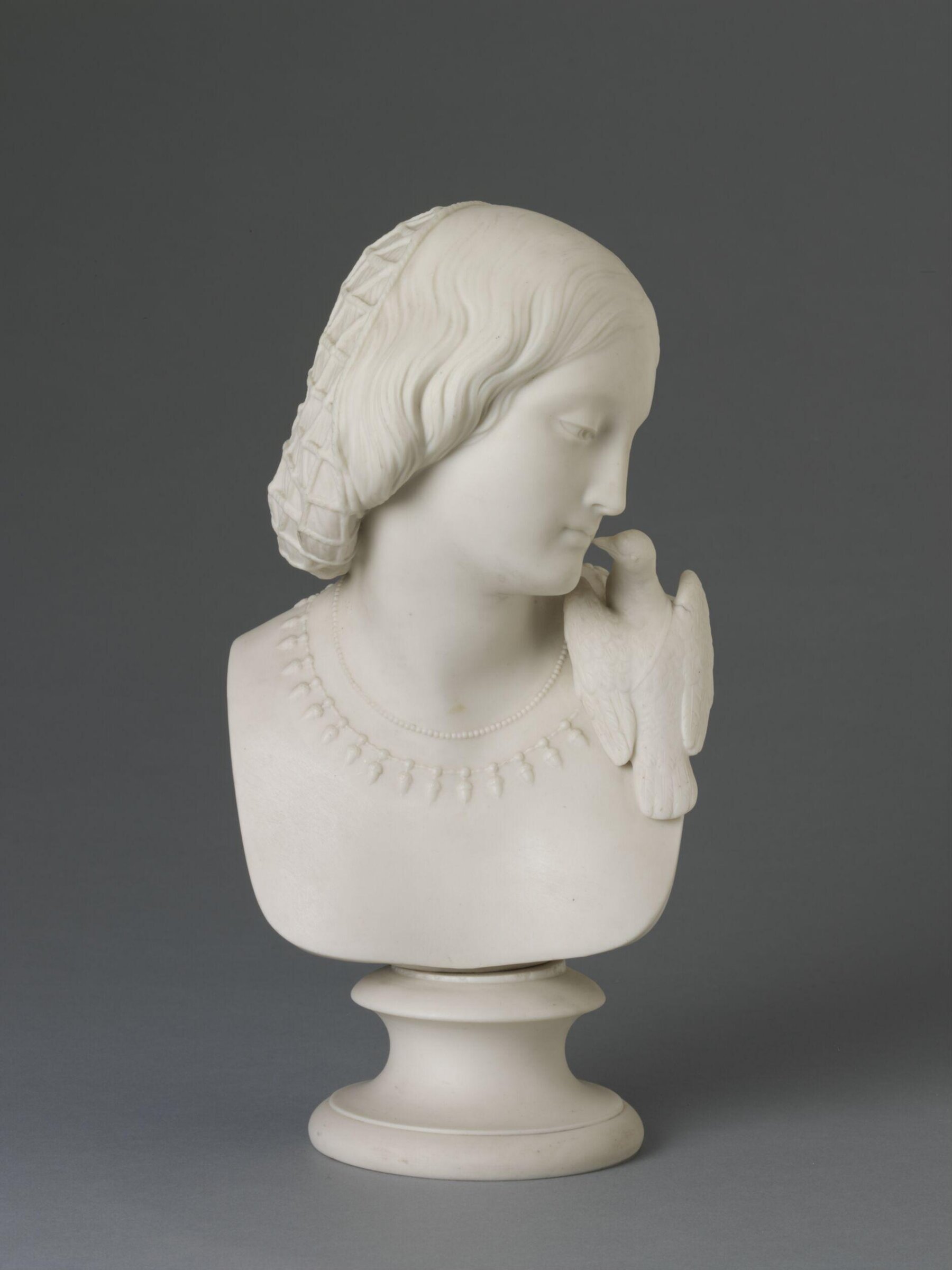
Enid
May one see it?
Not receiving at present

Victoria and Albert Museum
London, United Kingdom
It belongs to the collection, but is not on display at present.
- Checked
- 7 days ago
- In this state since
- Sep 25, 2026
- Source
- The museum's own collection data
About the sculpture
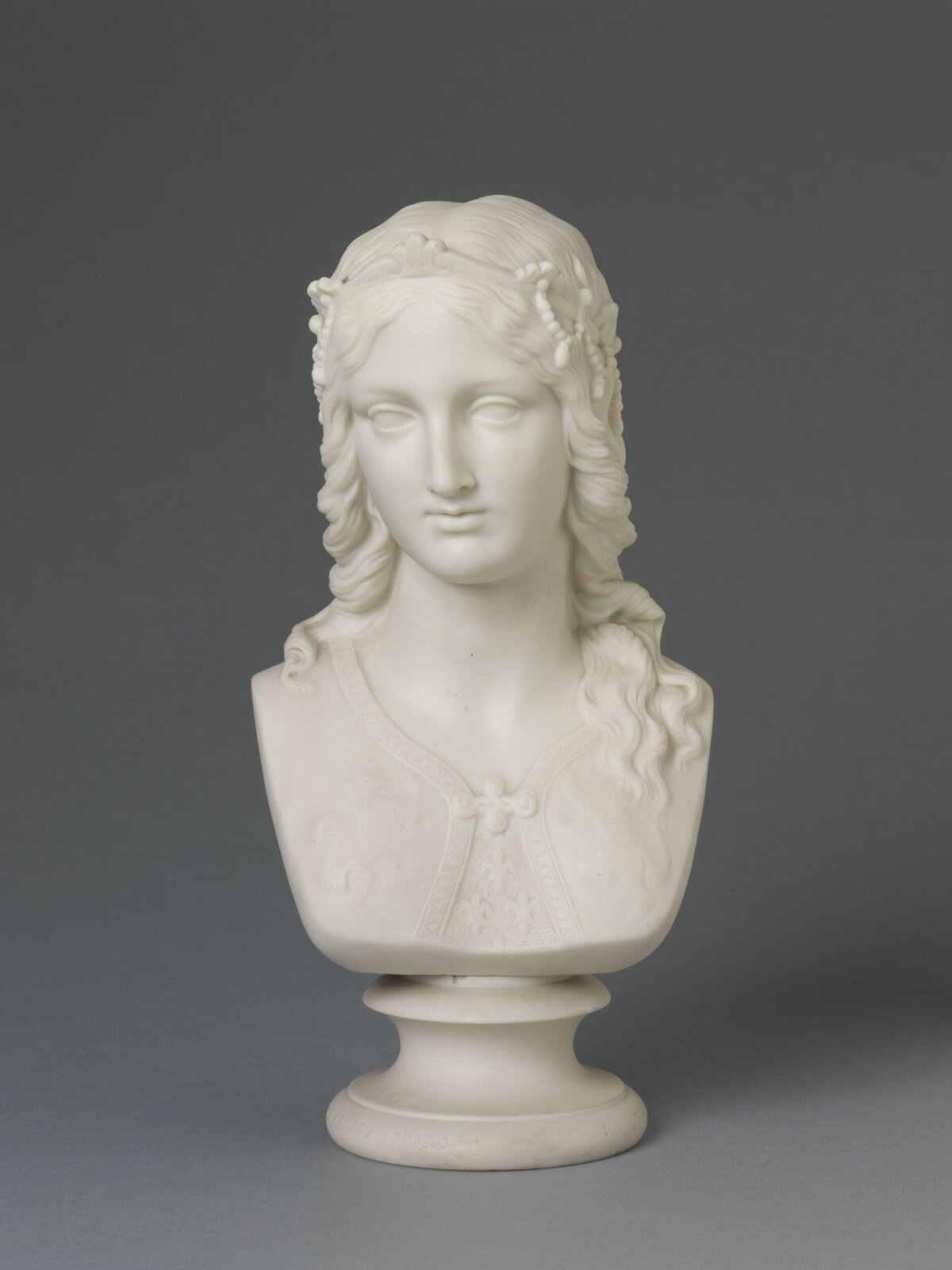
Parian is a type of porcelain developed in the 1840s that used to produce sculptures on a reduced scale. It was ideally suited to scultpure due to its marble-like appearance, and provided an opportunity for the growing middle classes to express their artistic tastes by acquiring inexpensive sculptures to show in their homes. The question of who first developed the material has long been disputed, however there is now some consensus that it originated at the Spode factory of Copeland and Garrett, where this bust was made.
The success of Parian was largely down to the involvement of the Art Unions, who desired to 'advance civilisation by the improvement of Art', and who regularly commissioned Parian busts and sculptures for their annual distributions of art. This bust of Enid was sculpted by F.M Miller and produced in 1861, sponsored by the Crystal Palace Art Union.
Read on
This bust depicts Enid (Oenid) 'The fair and the good'. The character of Enid originally appeared in the Arthurian romantic legend 'Eric and Enide' written by Chrétien de Troye c.1170-90. Here she plays the role of a damsel in distress rescued by Eric. The story reappears later in Tennyson's 'Idylls of the King' under the book 'Enid', although this time the rescuer is Geraint. It is likely to have been this book of poems which inspired the bust.
Victoria and Albert Museum
Particulars
- Accession number
- C.24:1,2-2018
In the catalog
Sources
- Victoria and Albert Museum: the museum's own open data · fetched 7 days ago
- Image: Victoria and Albert Museum — © Victoria and Albert Museum, London