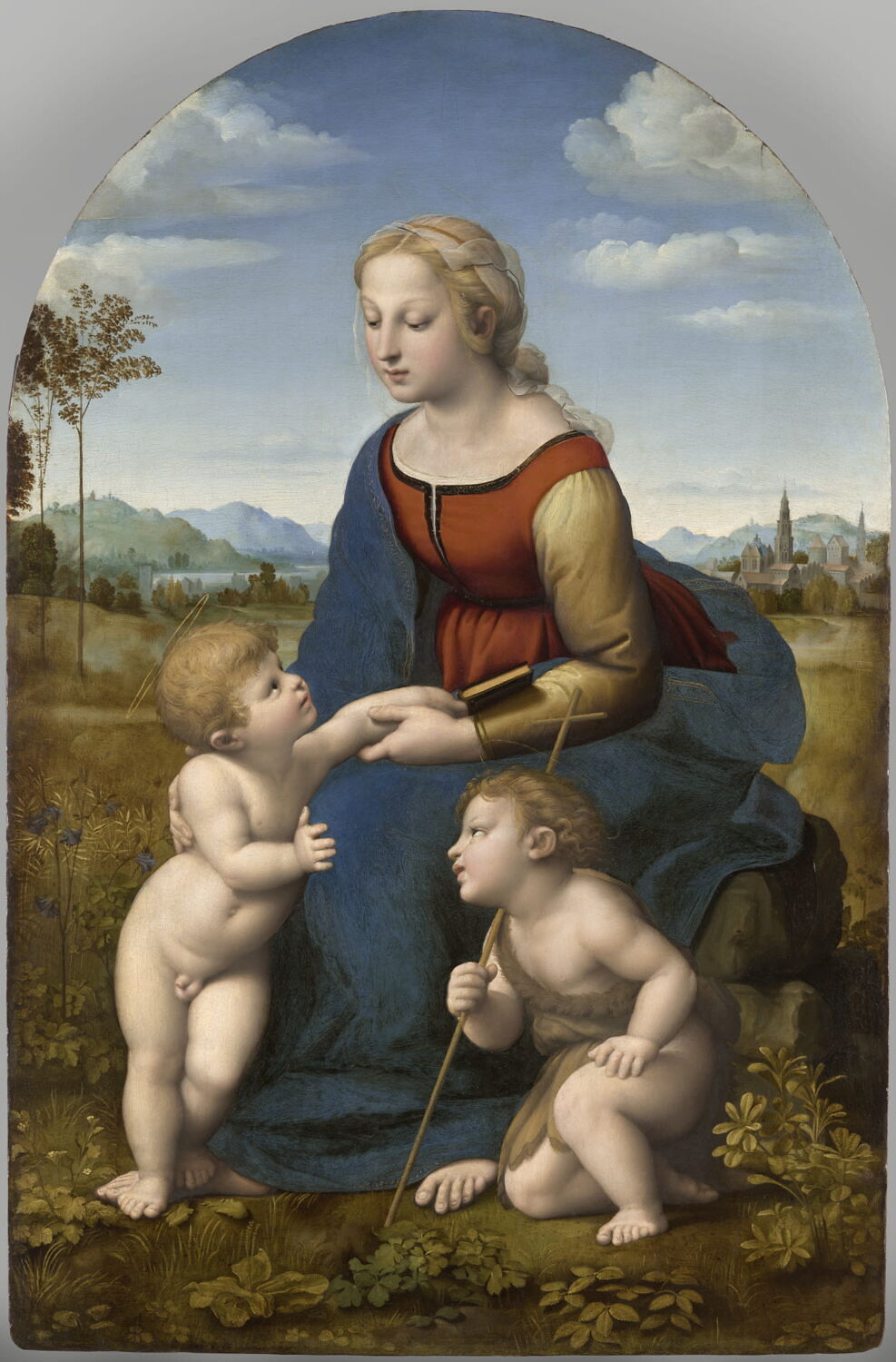
RaphaelItalian, 1483–1520
Galatea
May one see it?
Unknown: the museum keeps its counsel

Albertina
Vienna, Austria
The owner is known. Whether it is on view today, the museum does not say, and we were not trained to guess.
- In this state since
- Sep 27, 2026
- Source
- The museum's own collection data
Particulars
Sources
- Albertina: the museum's own open data · fetched 3 days ago
- Image: Albertina — Public Domain Mark 1.0
Meanwhile, in the life of Raphael
The whole life1512–1513
Paints the “Sistine Madonna”
Raphael painted the huge canvas (265 × 196 cm) for the altar of the church of San Sisto in Piacenza, commissioned by Pope Julius II, who died in 1513; the pope himself was the model for Saint Sixtus. The later legend that the artist's beloved, La Fornarina, sat for the Madonna is not supported by documents.
1513
Leo X becomes pope
The death of Julius II did not interrupt the work: his successor, the Medici Pope Leo X, became Raphael's last and even closer patron, and Raphael's friend Cardinal Bibbiena was a close friend and adviser of the new pope.
1514
Chief architect of St Peter's
After Bramante's death Raphael became chief architect of the new St Peter's and continued Bramante's construction of the Vatican Loggias, whose vaults his pupils painted.
1516–1520
Paints “The Transfiguration”
Raphael's last masterpiece: above, the Transfiguration of Christ on Mount Tabor before the apostles Peter, James and John; below, the apostles and the possessed boy, a part completed by Giulio Romano from the master's sketches. The unfinished painting stood at the head of the dead artist's bed.
1520
His last illness and a fatal bloodletting
Vasari blamed Raphael's death on debauchery, but modern researchers attribute it to a respiratory illness with high fever. A medical error proved fatal: doctors sent by the pope misdiagnosed him and tried to bring down the fever by bloodletting.
6 April 1520
Died