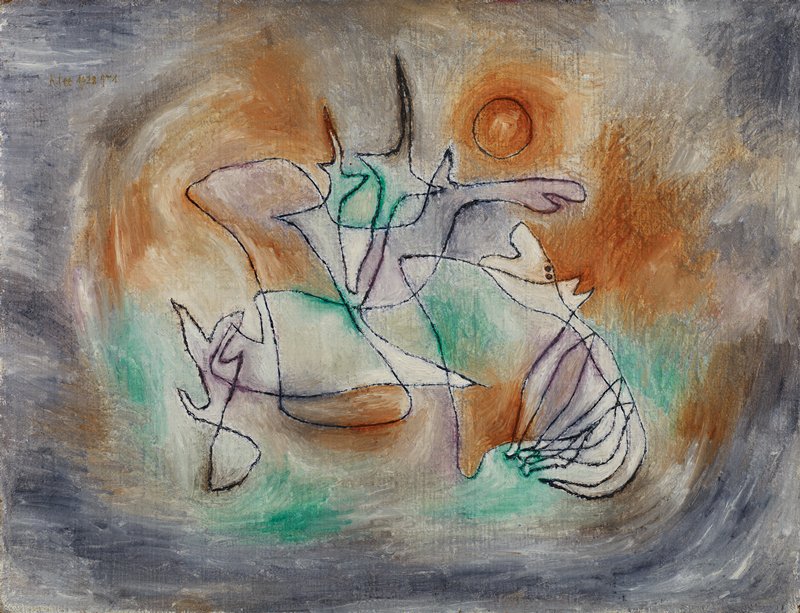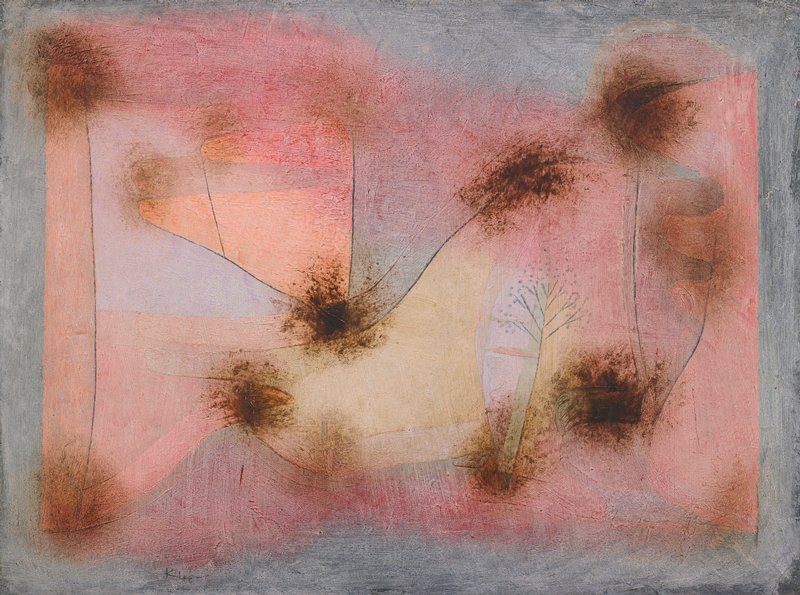
 Paul KleeGerman, 1879–1940
Hardy Plants
May one see it?
Yes, receiving visitors

Minneapolis Institute of Art
RoomG376Minneapolis, United States
On public display.
- Checked
- 3 days ago
- In this state since
- Sep 25, 2026
- Source
- The museum's own collection data
Particulars
- Accession number
- 64.44.2
In the catalog
Sources
- Minneapolis Institute of Art: the museum's own open data · fetched 3 days ago
- Image: Minneapolis Institute of Art — © Minneapolis Institute of Art
Meanwhile, in the life of Paul Klee
The whole life1933
Nazi harassment, a house search and dismissal
When the Nazis came to power a campaign of persecution was launched against Klee: the press called him a “typical Galician Jew”, his flat in Dessau was searched, and in Düsseldorf he was barred from work until he produced documents proving Aryan descent. He was forced to give up his professorship.
late 1933
Emigration to Switzerland
At the end of 1933, at his wife’s insistence, Klee left Germany and returned to Bern. He applied for Swiss citizenship, but a positive answer came only after his death.
1933–1934
Shows in London and Paris, and a meeting with Picasso
In 1933–34 Klee had shows in London and Paris and finally met Pablo Picasso, whom he greatly admired.
1935
A large exhibition in Bern: 273 works
A large Klee exhibition in Bern showed 273 works.
1935
The first signs of scleroderma
In 1935, two years after moving to Switzerland, signs of scleroderma were found in Klee — an autoimmune disease that hardens connective tissue; it later proved fatal and made swallowing very difficult. The pain he endured seems to be reflected in his late works.
1936–1939
From 25 works in 1936 to 1,254 in 1939
After falling ill Klee turned to simpler, larger designs with heavier lines, geometric forms and fewer, larger blocks of colour, and his output rose: about 25 works in 1936, 264 in 1937, 489 in 1938 and 1,254 in 1939, a career high. His health recovered somewhat and he was encouraged by a visit from Kandinsky and Picasso.