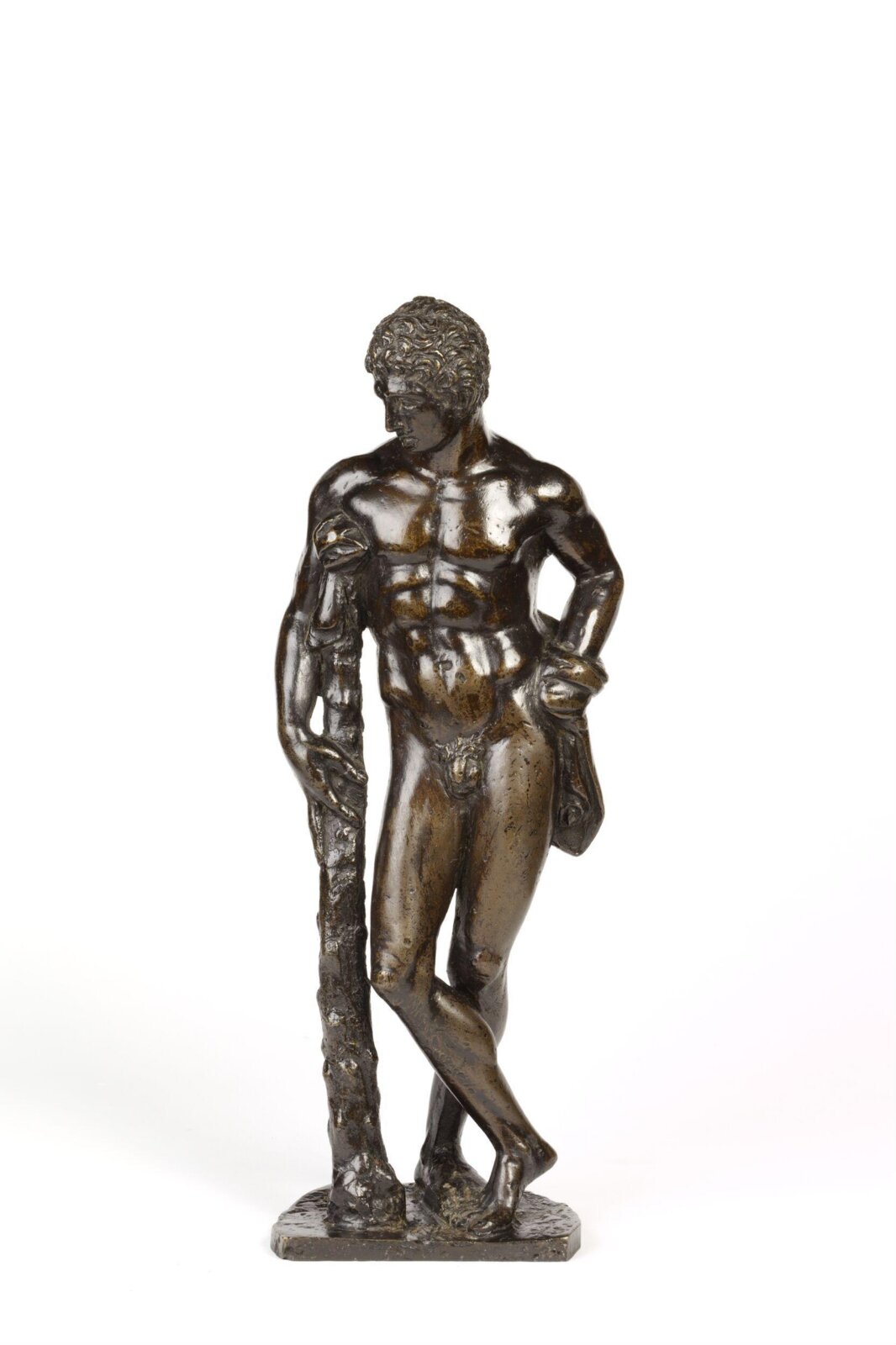
Hercules Resting
May one see it?
Yes, receiving visitors

Victoria and Albert Museum
RoomSculpture, Room 111, The Gilbert Bayes GalleryLondon, United Kingdom
On public display.
- Checked
- 7 days ago
- In this state since
- Sep 25, 2026
- Source
- The museum's own collection data
About the sculpture
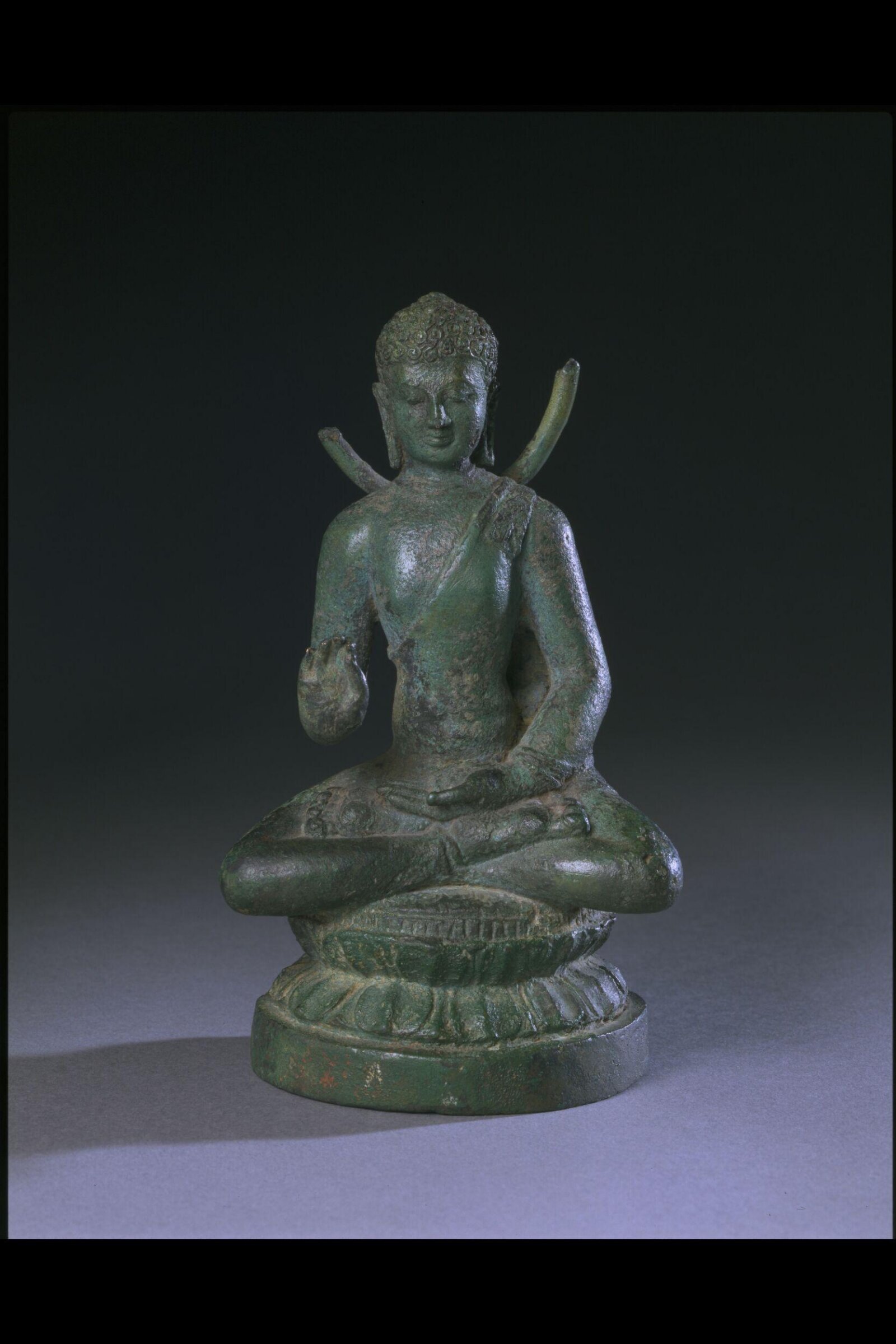
The surface finish of a bronze often disguises how it was made. It is only when you study it closely – sometimes only by taking X-rays that allow you to see what has happened inside the bronze – that you can discover what casting method was used. At first glance these three bronzes look similar, but each one was made using a different technique.
This statuette is solid bronze. It was cast from a solid wax model using the ‘direct’ lost-wax method. This technique is simpler than the ‘indirect’ method and creates a lively, unique work. However, it uses more bronze and is more likely to suffer casting flaws while cooling. Also, the model is also lost in the process.
Read on
The figure is based on the antique Farnese Hercules one of the most famous ancient sculptures which dates from the 3rd century AD. It came into the collection of Cardinal Alessandro Farnese (1520-1589), the granson of Pope Paul III, who was a great patron of the arts and assembled one of the biggest collections of ancient sculpture. The statue was displayed for generations in the Palazzo Farnese in Rome.
The Farnese statue was moved to Naples in 1787 and is now displayed in the Museo Archeologico Nazionale.
Hercules (Greek name is Heracles) is one of the most important heroes in Greek mythology and represents the characteristics of masculinity, strength, courage and sexual prowess.
He was the son of Jupiter and Alcmena, a Theban princess. He is regarded as the embodiment of physical strength and courage.
His two main attributes are the club and the lion’s skin, which he won at his first labour. He had to undertake 12 labours as a penance for slaying his own children in an act of madness.
Victoria and Albert Museum
Particulars
- Accession number
- A.137-1910
What it shows
In the catalog
Sources
- Victoria and Albert Museum: the museum's own open data · fetched 7 days ago
- Image: Victoria and Albert Museum — © Victoria and Albert Museum, London