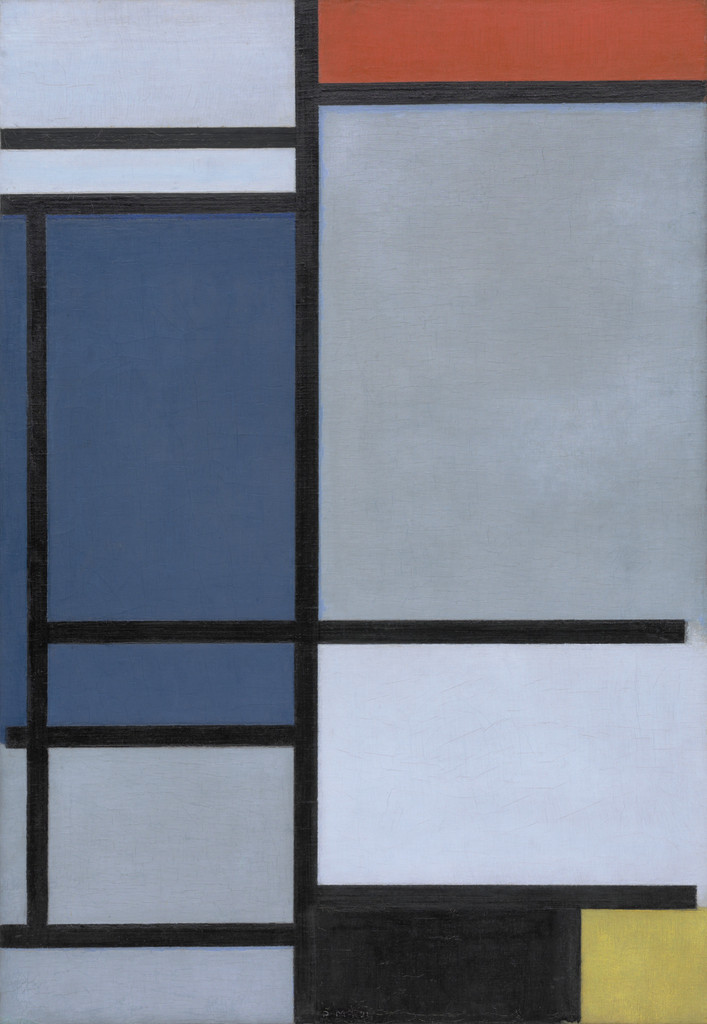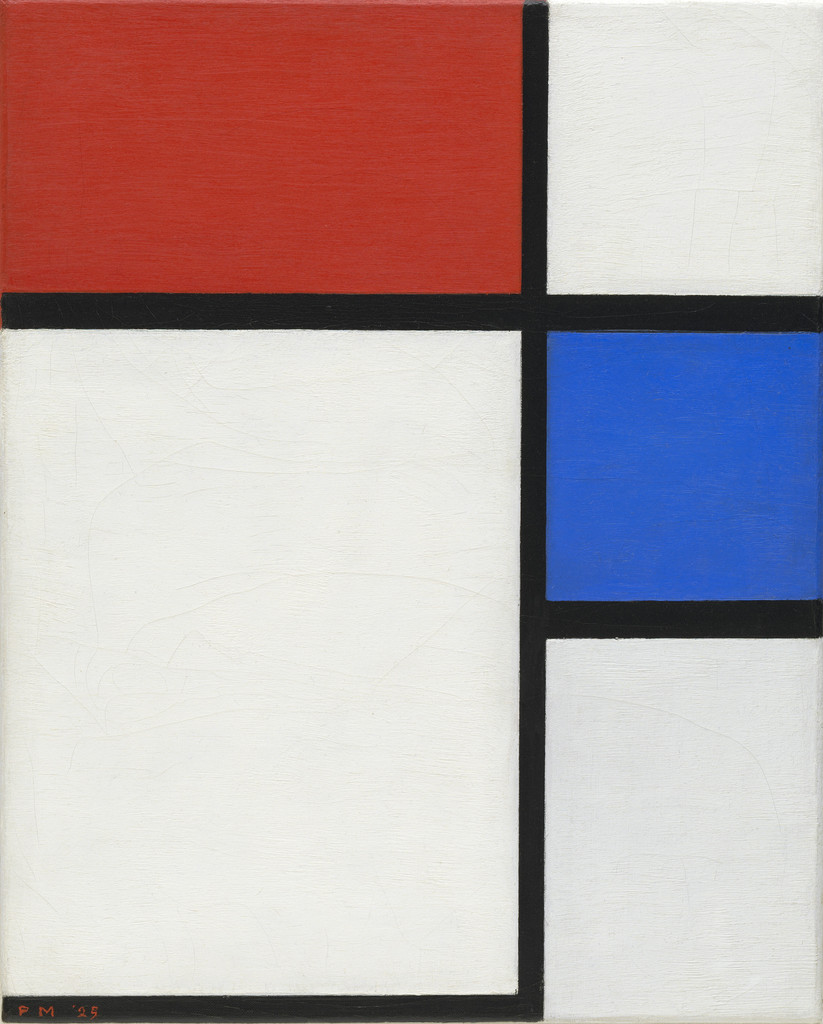
 Piet MondrianDutch, 1872–1944
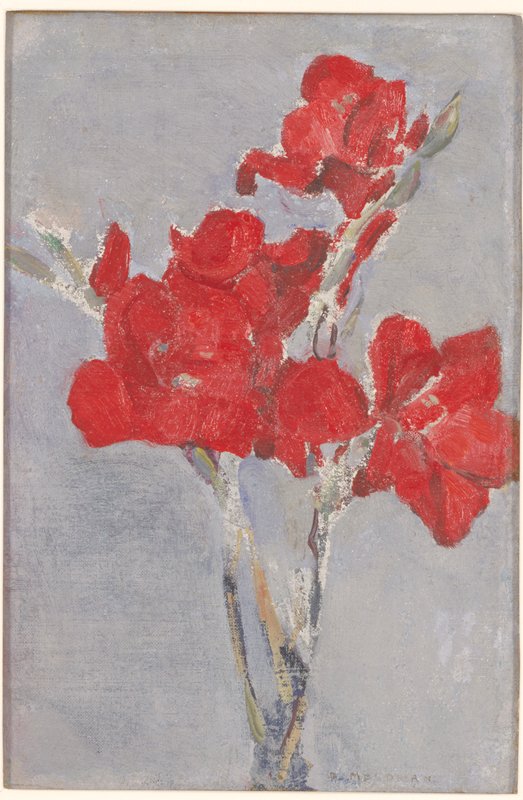
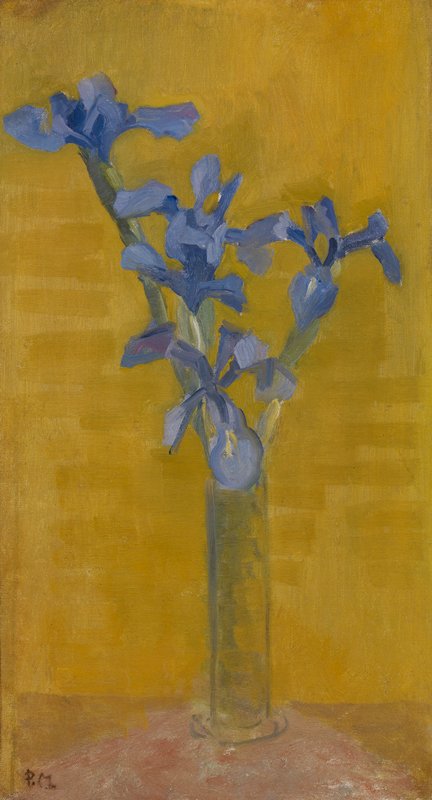
Irises
May one see it?
Not receiving at present

Minneapolis Institute of Art
Minneapolis, United States
It belongs to the collection, but is not on display at present.
- Checked
- 3 days ago
- In this state since
- Sep 25, 2026
- Source
- The museum's own collection data
Particulars
- Accession number
- 92.85.3
In the catalog
Sources
- Minneapolis Institute of Art: the museum's own open data · fetched 3 days ago
- Image: Minneapolis Institute of Art — © Minneapolis Institute of Art
Meanwhile, in the life of Piet Mondrian
The whole life1894 – December 1910 · Membership
Arti et Amicitiae
1909
Joins the Dutch Theosophical Society
Mondrian became interested in Helena Blavatsky's theosophical movement in 1908 and in 1909 joined the Dutch branch of the Theosophical Society; his spiritual and philosophical studies were intimately bound up with his art.
1911
The Cubist exhibition in Amsterdam
The Moderne Kunstkring exhibition of Cubism in Amsterdam deeply influenced Mondrian; his search for simplification shows in two versions of “Still Life with Ginger Pot”: a Cubist one of 1911 and one of 1912 in which the objects are reduced to a round shape with triangles and rectangles.
1911–1912
Changing his name from Mondriaan to Mondrian
Mondrian dropped one “a” from the Dutch spelling of his surname to emphasise his departure from the Netherlands and his integration into the Parisian avant-garde.
1912–1914
Move to Paris
In 1912 Mondrian moved to Paris, where the Cubism of Picasso and Braque showed in his work almost at once: “The Sea” (1912) and his studies of trees from that year still keep a measure of representation but are increasingly dominated by geometric shapes and interlocking planes.
1912–1917
The Cubist period
Mondrian was eager to absorb the influence of Cubism but saw it as a port of call on his artistic journey rather than a destination; his Cubist period lasted from 1912 to 1917.