Le CorbusierSwiss, 1887–1965
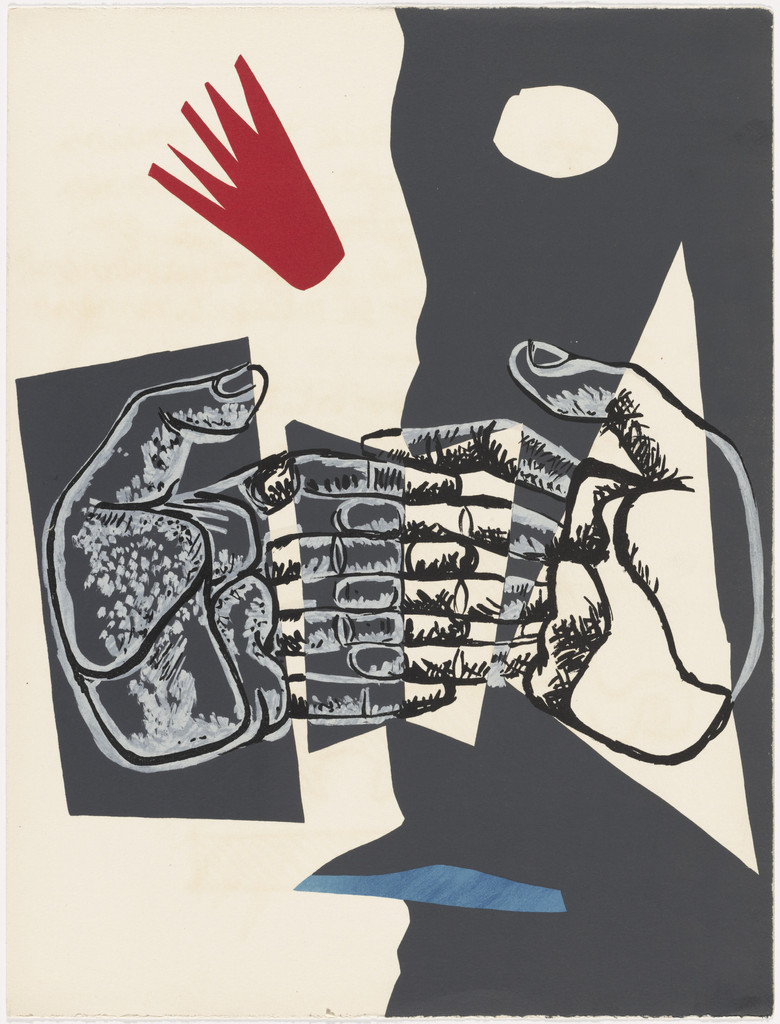
Lake Geneva
May one see it?
Not receiving at present

Art Institute of Chicago
Chicago, United States
It belongs to the collection, but is not on display at present.
- Checked
- 3 days ago
- In this state since
- Aug 19, 2026
- Source
- The museum's own collection data
Particulars
- Accession number
- 1963.425
In the catalog
Sources
- Art Institute of Chicago: the museum's own open data · fetched 3 days ago
- Image: Art Institute of Chicago — © the artist or rights holder
Meanwhile, in the life of Le Corbusier
The whole life1920
Adopts the name Le Corbusier
In the first issue of L'Esprit Nouveau, Charles-Édouard Jeanneret signed himself Le Corbusier, an altered form of his maternal grandfather's name, Lecorbésier. The pseudonym reflected his belief that anyone could reinvent themselves.
1920
The magazine L'Esprit Nouveau
With financial backing from the Swiss businessman Raoul La Roche, Jeanneret and Ozenfant launched the art magazine L'Esprit Nouveau. Jeanneret ran its architecture section, where the first chapters of his book Towards an Architecture appeared.
1922
The Ville Contemporaine at the Salon d'Automne
At the Paris Salon d'Automne Le Corbusier presented his plan for the Ville Contemporaine, a city for three million people: identical towers among lower zigzag blocks and a large park. An imaginary city in an imaginary place, it did not attract the attention he had hoped for.
1922
Opens his own office with his cousin Pierre Jeanneret
Le Corbusier opened his own architectural office in Paris and took on his cousin Pierre Jeanneret, who became his permanent partner.
1923
Publishes Towards an Architecture
Le Corbusier gathered his articles from L'Esprit Nouveau into his first and most influential book. It carried his famous maxim “A house is a machine to live in”, and its cover showed not a building but the promenade deck of an ocean liner.