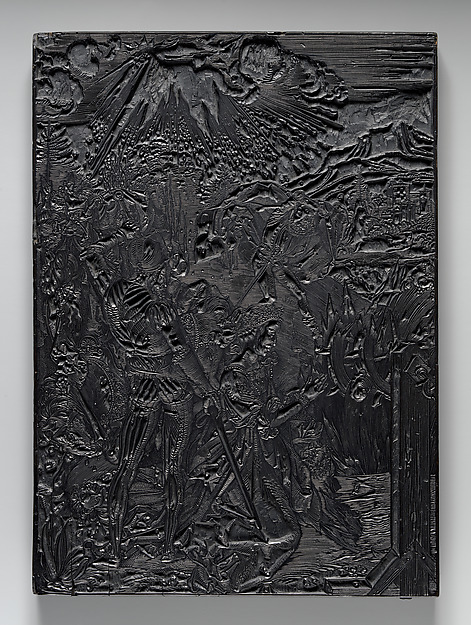
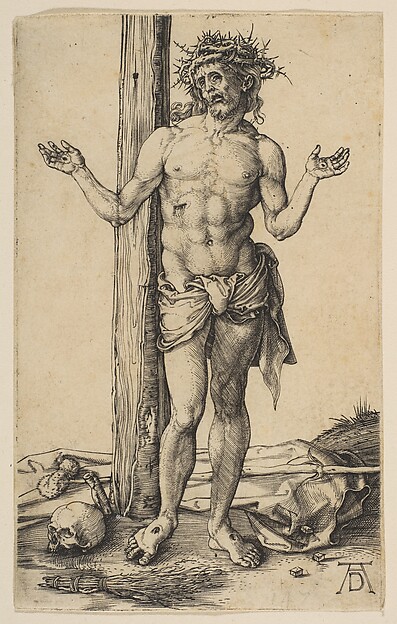
Albrecht DürerGerman, 1471–1528
Lamentation
May one see it?
Not receiving at present

Harvard Art Museums
Cambridge, United States
It belongs to the collection, but is not on display at present.
- Checked
- 3 days ago
- In this state since
- Sep 27, 2026
- Source
- The museum's own collection data
Particulars
- Accession number
- G7441
In the catalog
Sources
- Harvard Art Museums: the museum's own open data · fetched 3 days ago
- Image: Harvard Art Museums — © President and Fellows of Harvard College
Meanwhile, in the life of Albrecht Dürer
The whole life1496
A commission from Elector Frederick the Wise
Elector Frederick III of Saxony commissioned the Seven Sorrows Polyptych, which Dürer and his assistants executed around 1500.
1498
Creates the “Apocalypse”
His series of 15 woodcuts for the Apocalypse, published by Koberger — an embodiment of end-of-century apocalyptic dread, joining late Gothic language to Renaissance forms — made Dürer famous across Europe.
1498
Paints the Self-Portrait of 1498
For Dürer a painted self-portrait marked a stage of life and asserted his status: in the portrait of 1498 (now in the Prado) he appears as a man above his station, affirming the dignity of painting, still counted a craft in Germany.
1500
Jacopo de' Barbari and the secret of proportion
The Venetian Jacopo de' Barbari, whom Dürer had met in Venice, came to Nuremberg, and Dürer said he learned much from him about perspective, anatomy and proportion. Feeling that de' Barbari would not explain everything he knew, Dürer began studies of his own that became a lifelong preoccupation.
![Madonna and Child [obverse], Albrecht Dürer, c. 1496/1499](https://api.nga.gov/iiif/878db7e6-10ae-4cae-ba5d-6d6f5c413ae8/full/!2400,2400/0/default.jpg)
![Lot and His Daughters [reverse], Albrecht Dürer, c. 1496/1499](https://api.nga.gov/iiif/7565a449-f82a-414b-9bda-c93f55a51b4d/full/!2400,2400/0/default.jpg)