Jean DubuffetFrench, 1901–1985
Little Sneerer
May one see it?
Yes, receiving visitors

Art Institute of Chicago
Room397Chicago, United States
On public display.
- Checked
- 3 days ago
- In this state since
- Aug 19, 2026
- Source
- The museum's own collection data
Particulars
- Accession number
- 2018.288
In the catalog
Sources
- Art Institute of Chicago: the museum's own open data · fetched 3 days ago
- Image: Art Institute of Chicago — © the artist or rights holder
Meanwhile, in the life of Jean Dubuffet
The whole life1942
He resolves to devote himself to art again
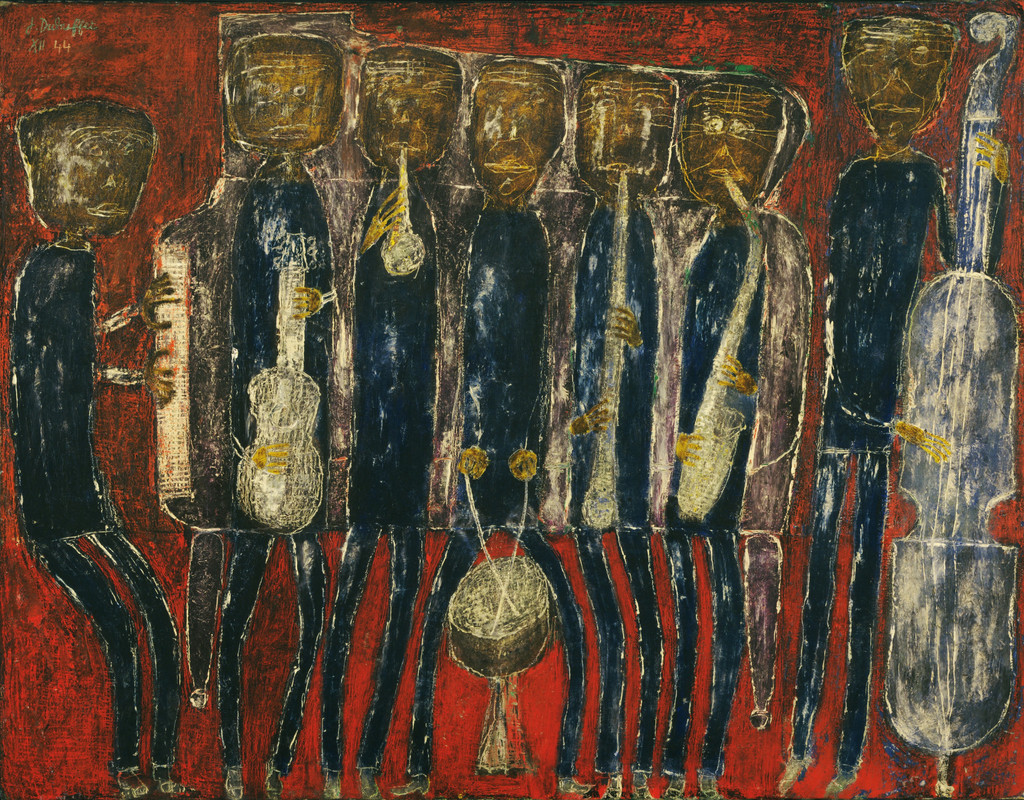
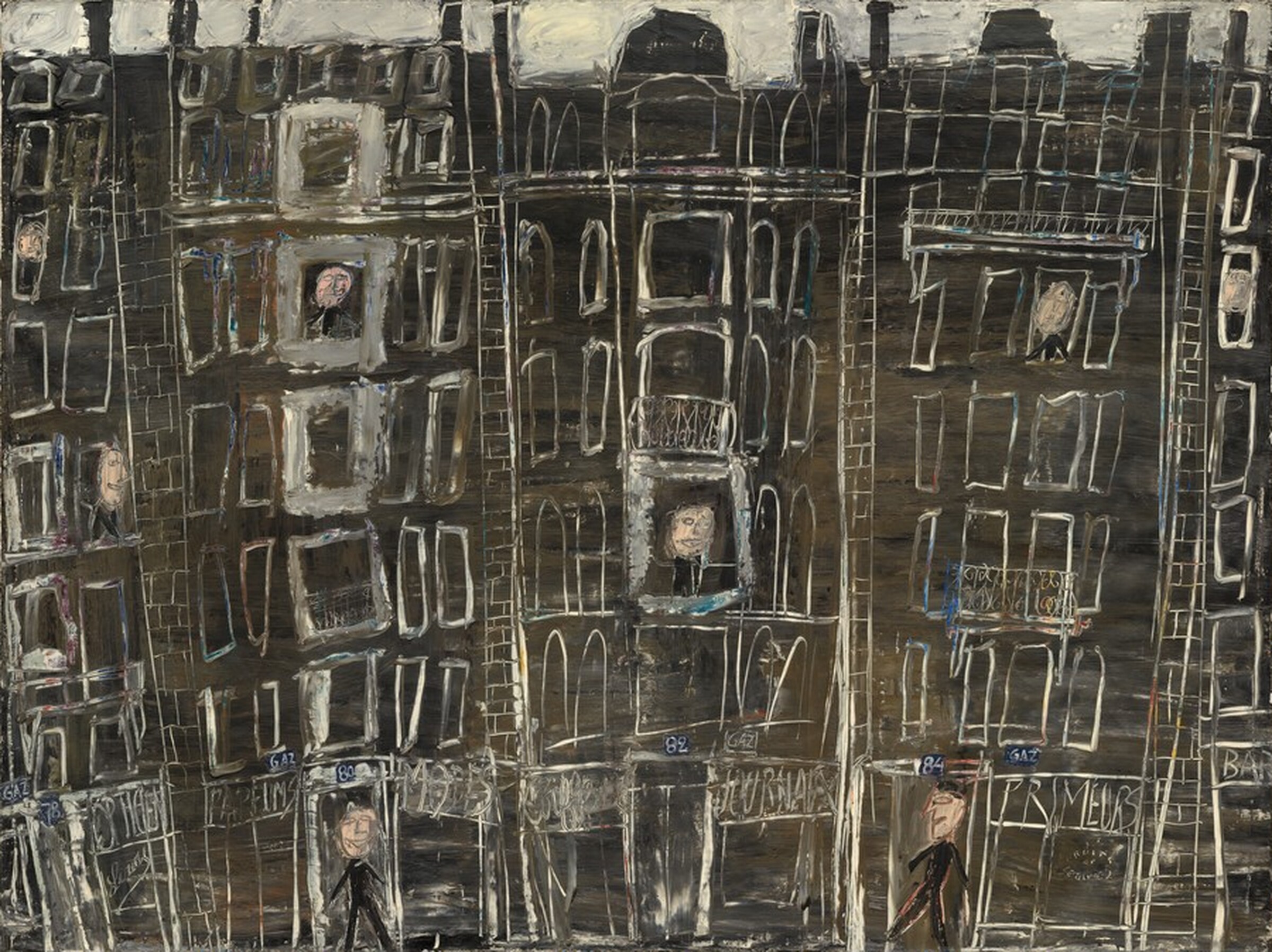
In 1942 Dubuffet decided to devote himself to art again. He drew subjects from everyday life, such as people sitting in the Paris Métro or walking in the country, and painted in strong unbroken colors recalling the palette of Fauvism and the Brücke painters, often placing figures in a very cramped space.
1943
Limbour brings Jean Paulhan to his studio
In 1943 his childhood friend, the writer Georges Limbour, took Jean Paulhan to Dubuffet's studio; the artist's work was unknown at that time. Paulhan was impressed and the meeting proved a turning point; in 1944 an important relationship between the two began.
October 1944
First solo show at Galerie René Drouin
Dubuffet's first solo show opened in October 1944 at the Galerie René Drouin in Paris, marking his third attempt to become an established artist.
1945
He begins collecting art brut
In 1945 Dubuffet began to collect art brut, “raw” art close to the work of children, the self-taught and the mentally ill; the collection is now in Lausanne.
1945
Fautrier's show and the thick paste
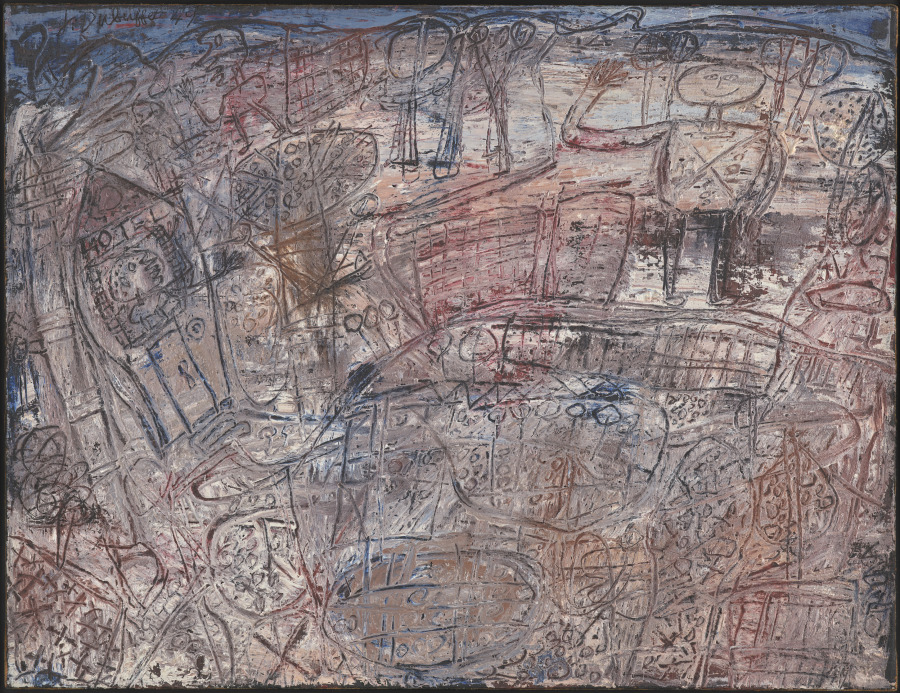
In 1945 Dubuffet saw a show of Jean Fautrier's paintings in Paris, in which he recognized meaningful art that expressed the depth of a person directly and purely. Emulating Fautrier, he began mixing thick oil paint with mud, sand, coal dust, pebbles, glass, straw, plaster, cement and tar, and made scratches and slashes in the paste.
1946
Pierre Matisse's New York show: success in America
Dubuffet was included in the Pierre Matisse Gallery exhibition in New York alongside Picasso, Braque and Rouault, one of only two young artists so honored. Clement Greenberg wrote positively about his three canvases, and Newsweek dubbed him the darling of Parisian avant-garde circles.