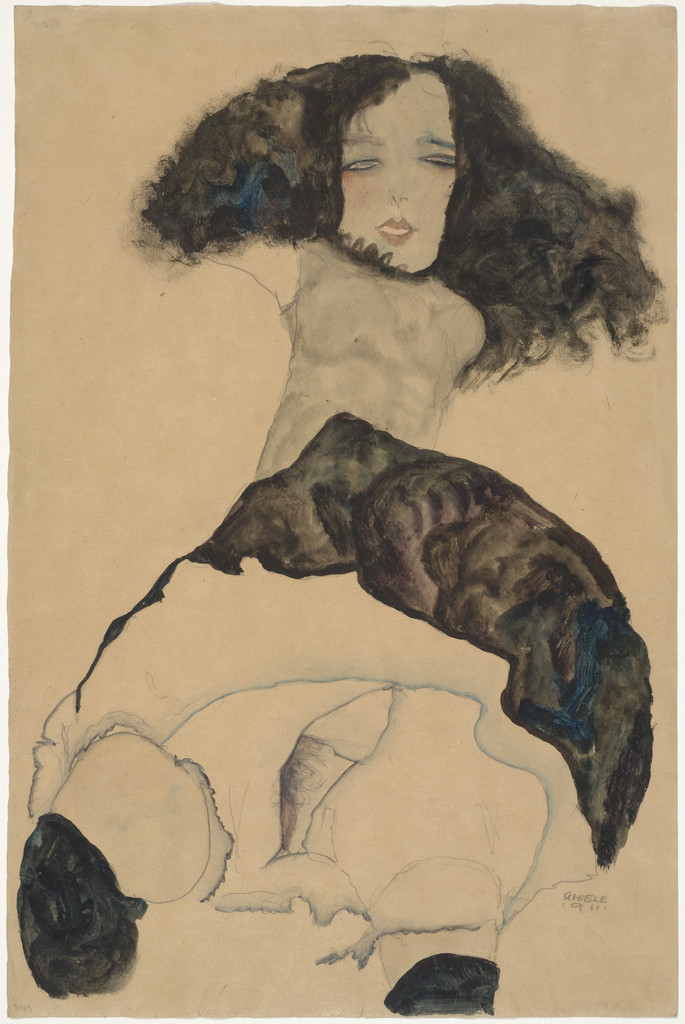
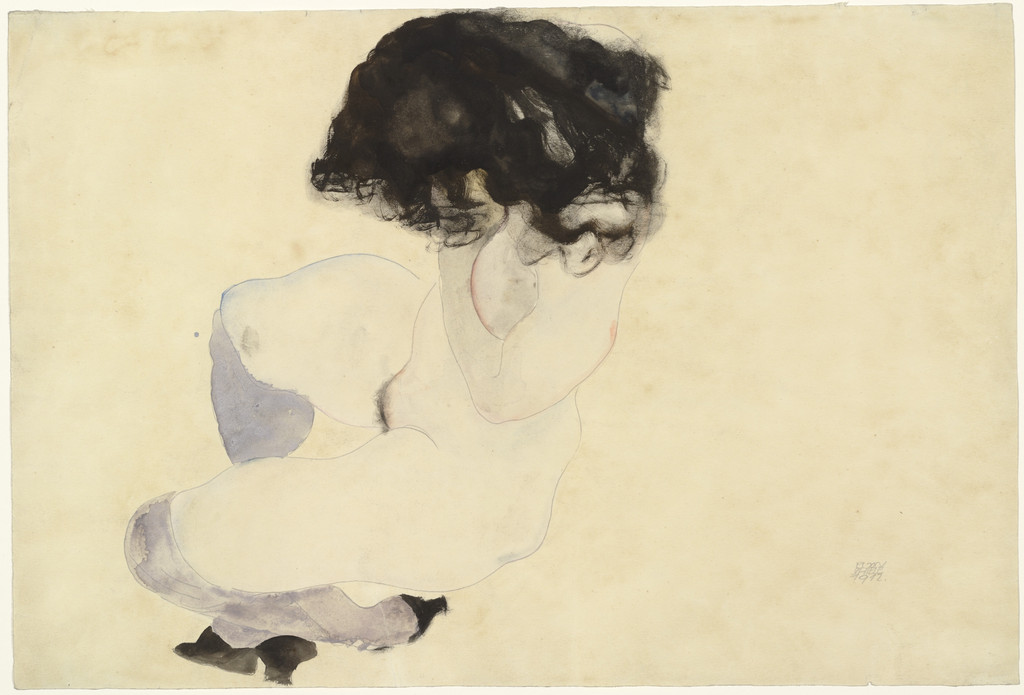
Egon SchieleAustrian, 1890–1918
Mädchenakt
May one see it?
Unknown: the museum keeps its counsel

Albertina
Vienna, Austria
The owner is known. Whether it is on view today, the museum does not say, and we were not trained to guess.
- In this state since
- Sep 27, 2026
- Source
- The museum's own collection data
Particulars
Sources
- Albertina: the museum's own open data · fetched 3 days ago
- Image: Albertina — Public Domain Mark 1.0
Meanwhile, in the life of Egon Schiele
The whole life1912–1916
Success at exhibitions across Europe
In 1912–1916 Schiele took part widely and successfully in exhibitions: his work was shown in Vienna, Budapest, Munich, Prague, Hamburg, Stuttgart, Zurich, Hagen, Dresden, Berlin, Rome, Cologne, Brussels and Paris.
January 1917
Transferred to Vienna: art comes first again
In January 1917, having done everything he could to get out of military service, Schiele was transferred to a military supply depot in Vienna and given no particular responsibilities. He was again able to focus on his art, and his output was prolific, reflecting the maturity of an artist in full command of his talents.
spring 1918
Klimt’s death: a claim to first place
After Klimt’s death in the spring of 1918 Schiele came to claim the role of Austria’s greatest artist.
28 October 1918
Edith dies of the Spanish flu
In the autumn of 1918 the Spanish flu pandemic reached Vienna; on 28 October Edith, six months pregnant, died of the disease.
28 – 31 October 1918
The last three days: a mirror and sketches of Edith
The very sick and weak Schiele was moved from the couple’s home to his in-laws’ house; for fear of contagion visitors spoke to him from afar by way of a mirror set up on the threshold between his room and the parlour; among his last visitors were his mother Marie and his sister Melanie. During the three days between Edith’s death and his own, Schiele drew a few sketches of her.
31 October 1918
Died