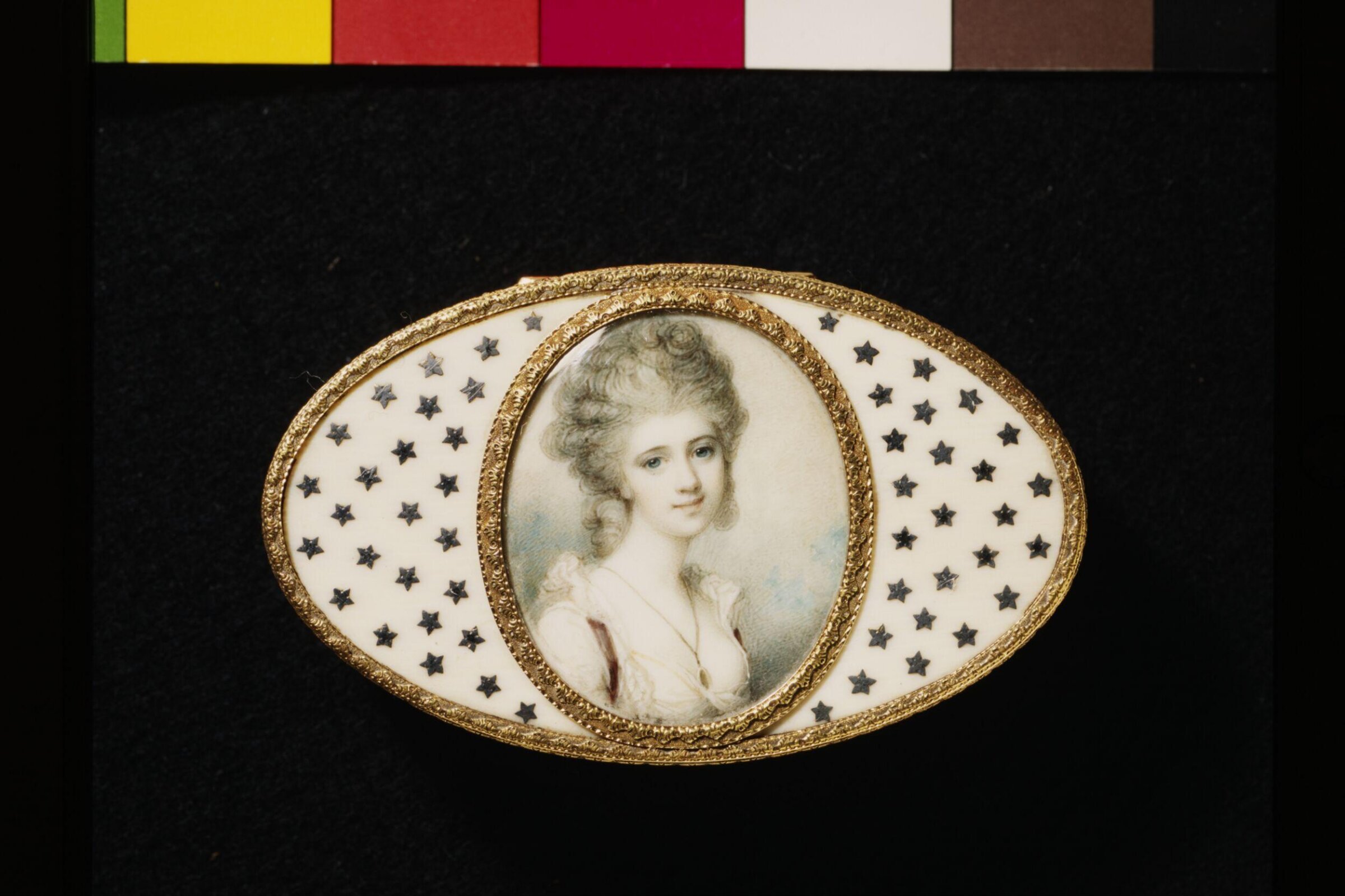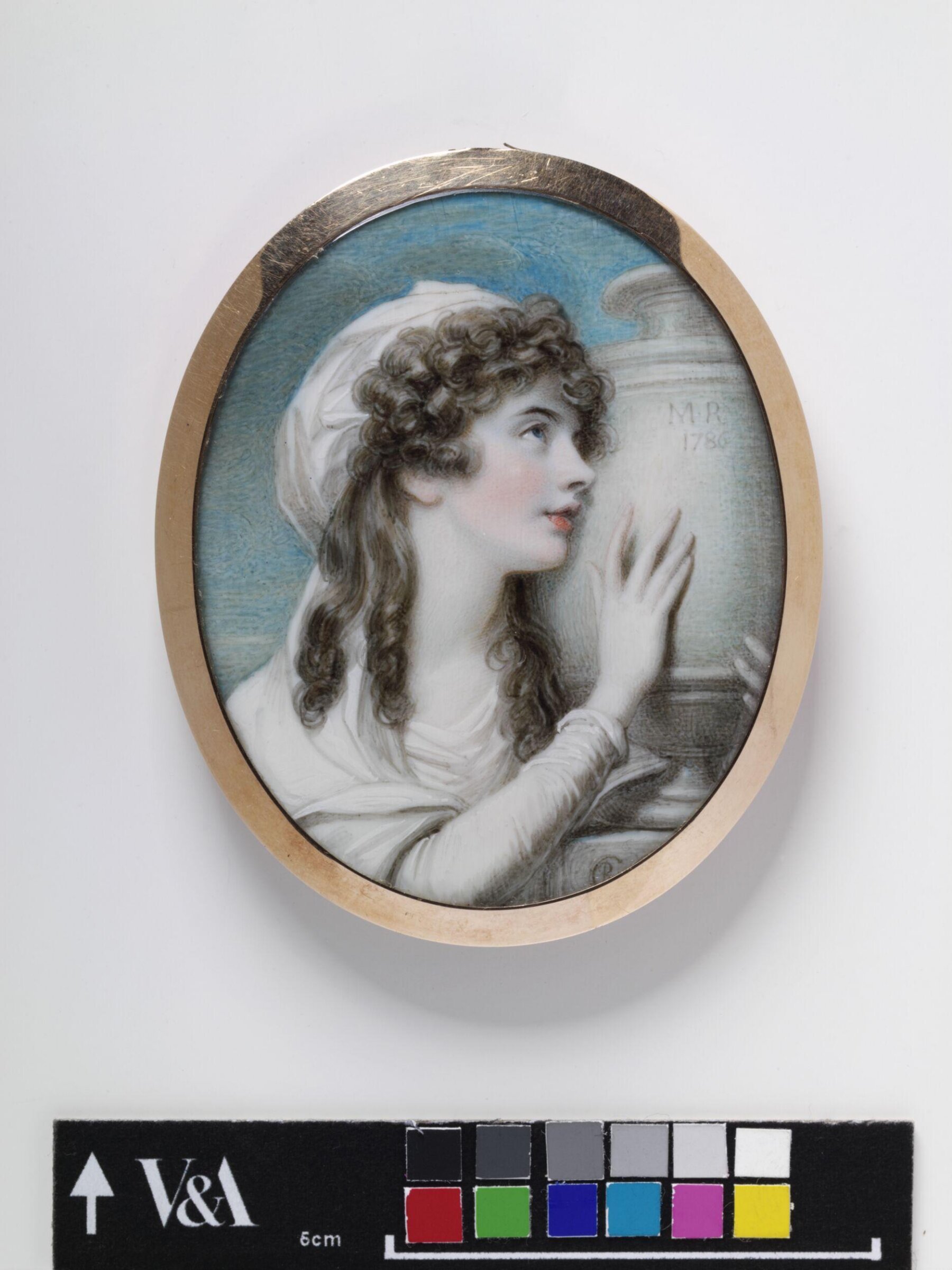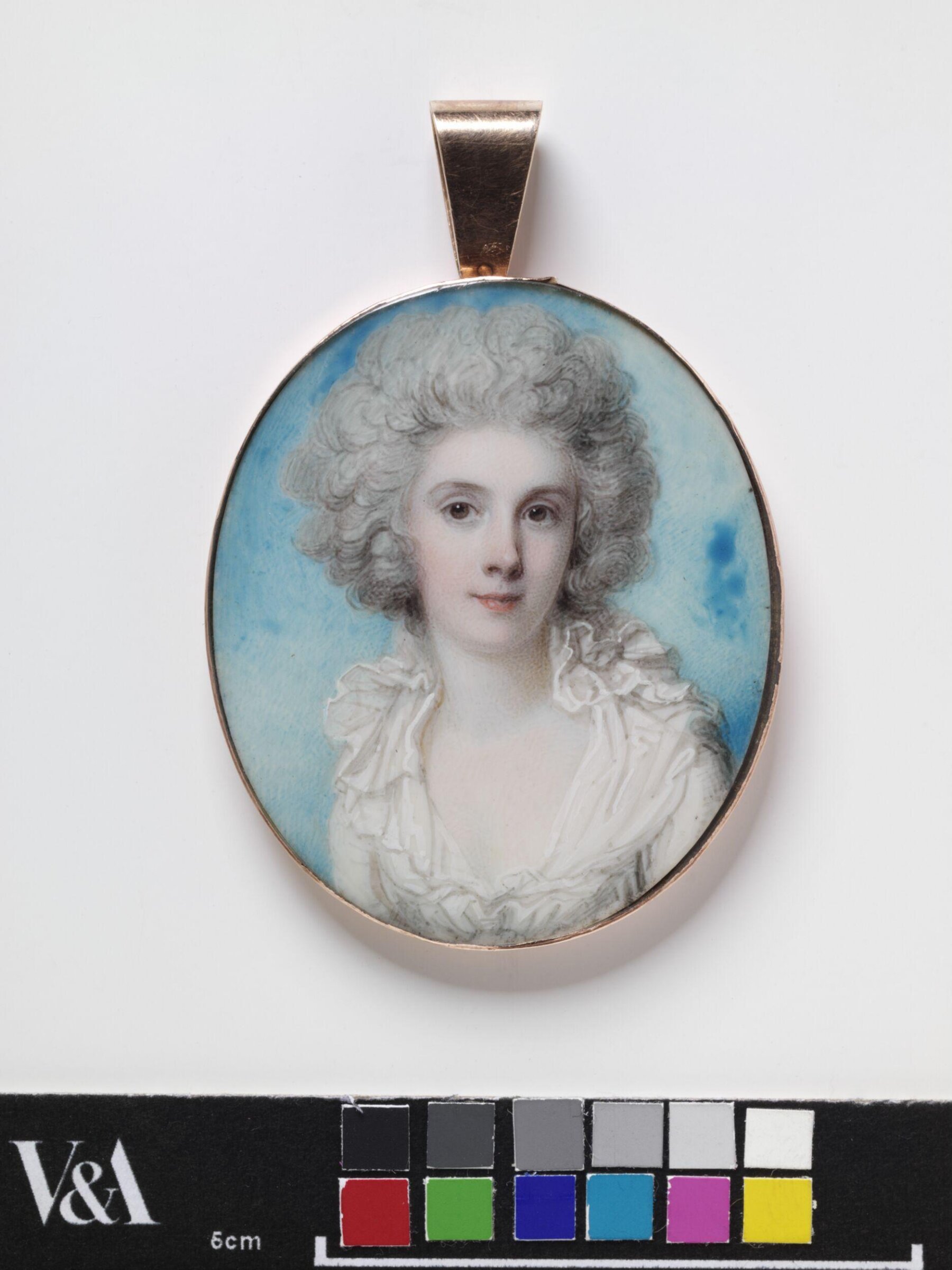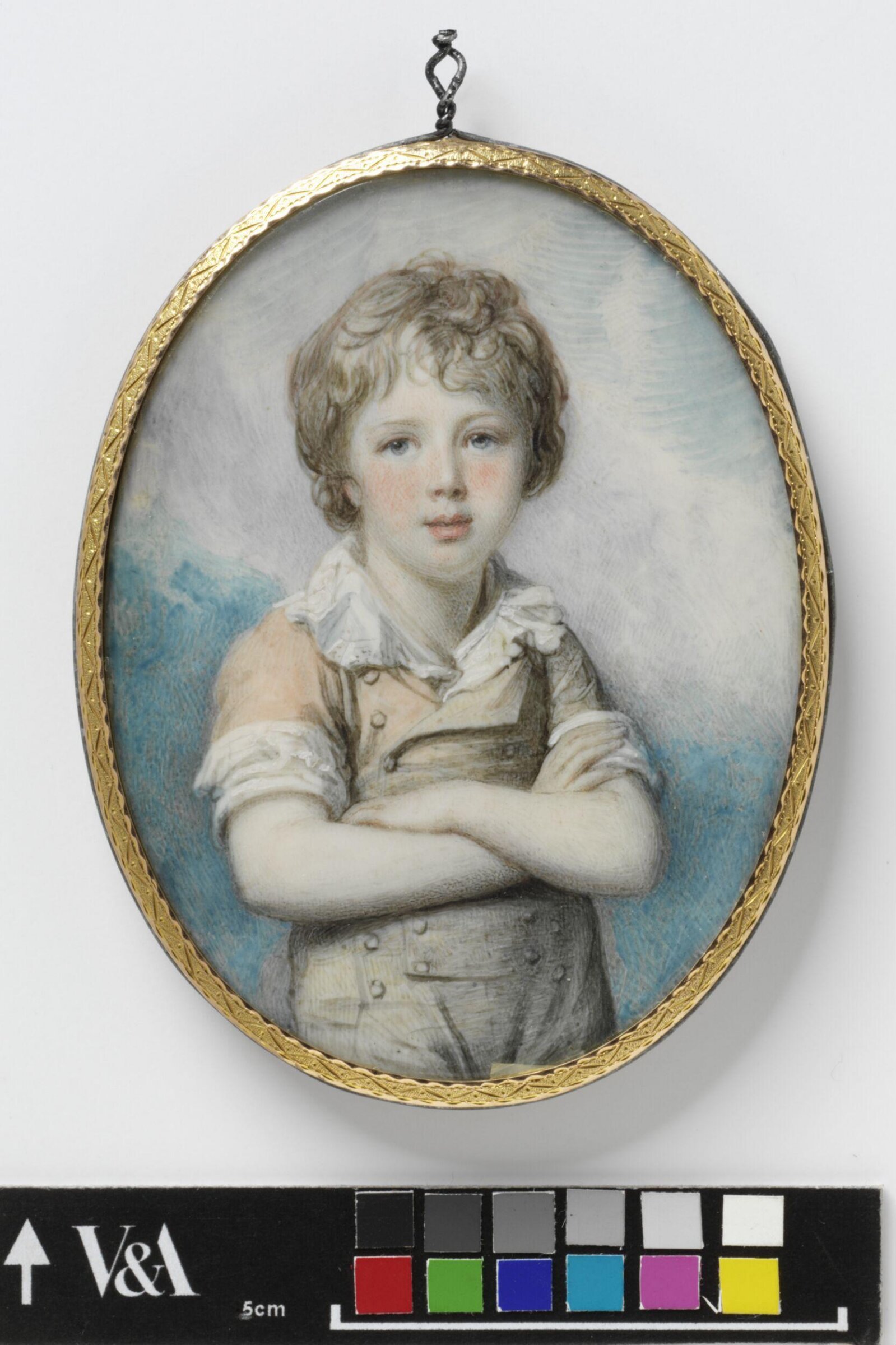
 Richard CoswayEnglish, 1742–1821
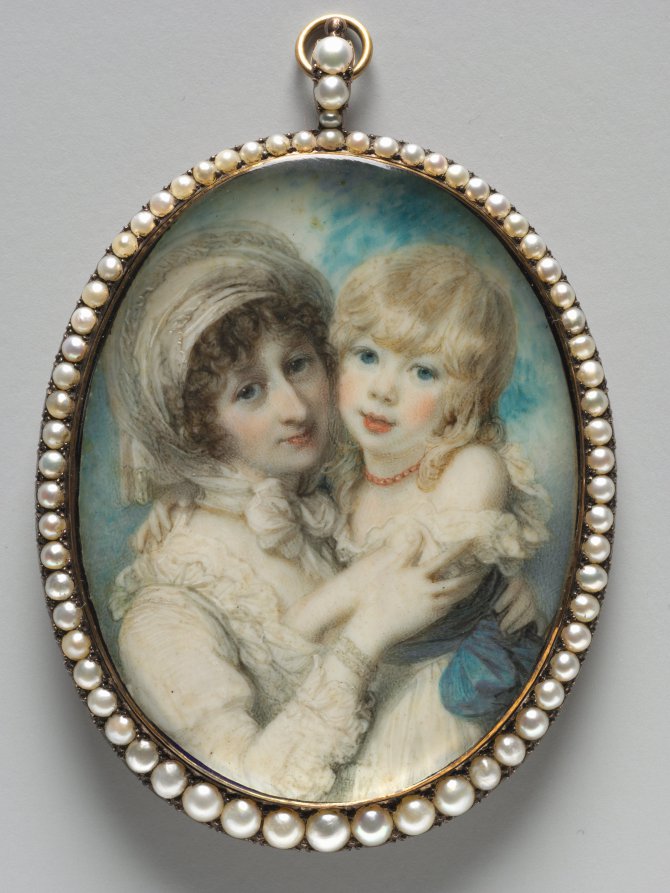
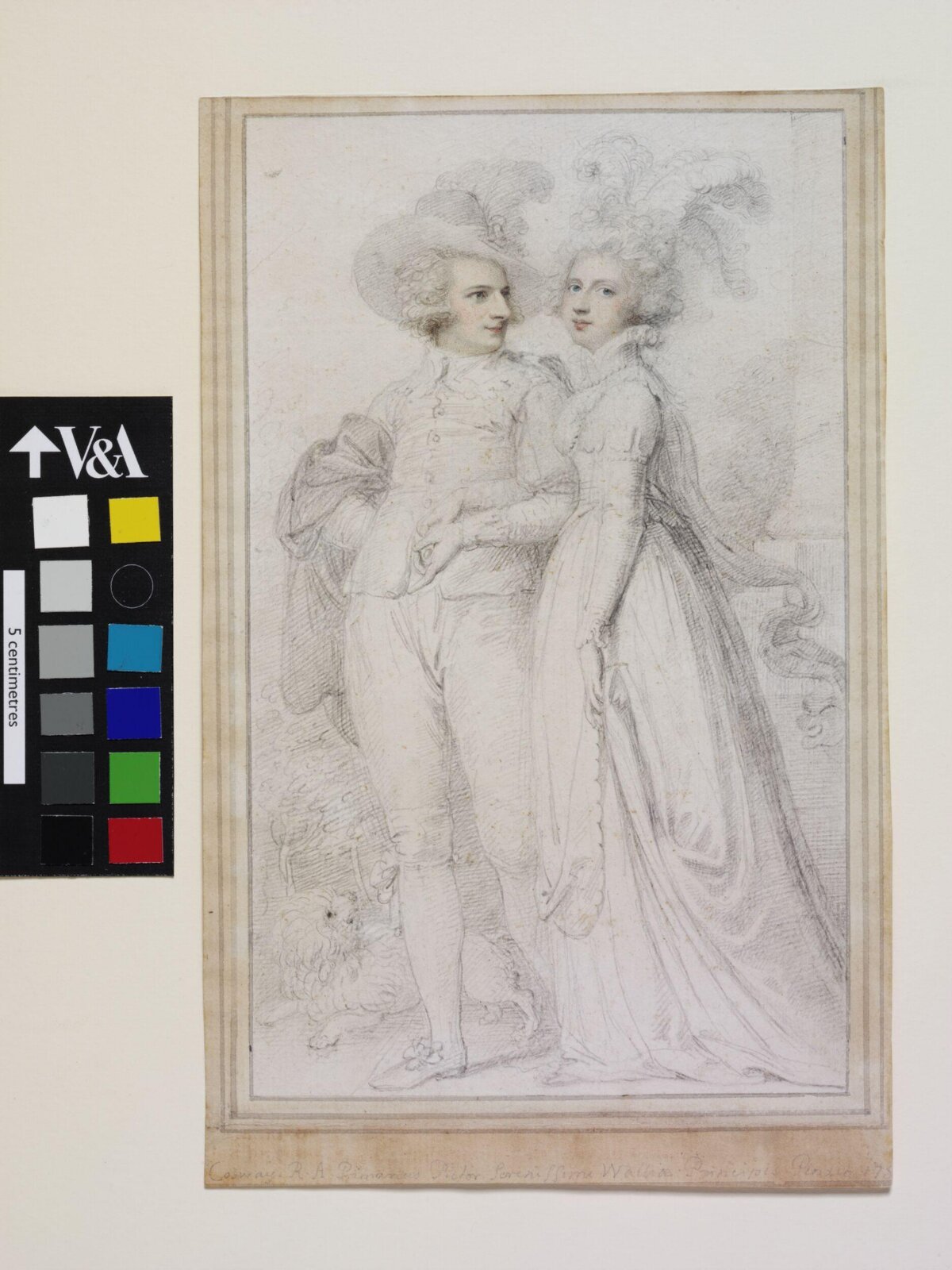
Mr and Mrs Hamlyn
May one see it?
Yes, receiving visitors

Victoria and Albert Museum
RoomPortrait Miniatures, Room 90a, The International Music and Art Foundation GalleryLondon, United Kingdom
On public display.
- Checked
- 7 days ago
- In this state since
- Sep 25, 2026
- Source
- The museum's own collection data
About the work
This portrait shows Mr James Hamlyn (1735-1811), later Sir James Hamlyn of Clovelly Court, Devon, and his wife Arabella (about 1739-1797), younger daughter of Thomas Williams of Derllys and Edwinsford. They married in June 1762. This is the work of Richard Cosway, Principal Painter to the Prince of Wales, Royal Academician, and the leading fashionable miniature painter of the day; the work is signed in Cosway's usual fashion "Cosway R. A. Primarius Pictor. Serenissima Wallia Principis Pinxit 178[9]".
Read on
In the 1780s Cosway developed an intriguing and highly sophisticated new form of portraiture to offer his clients. These portraits joined the graphic qualities of pencil drawing with the fine detail of miniature painting. The figures were sketched out with great vigour while the faces were carefully delineated using the miniature painter's techniques. This double portrait therefore is not an unfinished study, but an example of this innovative style of portraiture. The effect is very sophisticated and was emulated by contemporaries such as Henry Edridge and John Smart. Ingres, the pupil of Cosways's friend, David, later produced small full-length portraits in pencil with the figure boldly sketched and the face finely finished; an indication of the continuing appeal of this style.
This development was probably inspired by Cosway's collection of drawings by Rubens and Van Dyck, and by two drawings of Elizabeth I and Robert Dudley, attributed to Zuccaro (now in the British Museum), engraved by S Watts and published in 1773. The contrast between the colouring of Dudley's face and the sketchiness of the figure is reminiscent of Cosway's drawings. The unusual dress worn by the Hamlyns also demonstrates Cosway's admiration for Rubens and Van Dyck. It is a highly fanciful interpretation of seventeenth century costume and Cosway often portrayed himself and his wife in the same manner. This portrait epitomises the fashionable society of late eighteenth century London, and in choosing to be portrayed in this playful, elegant style by the self-proclaimed Principal Painter to the Prince of Wales, Mr and Mrs Hamlyn (Hamlyn was only created a Baronet in 1795) clearly sought to associate themselves with the society in which Cosway was himself such an energetic player.
Victoria and Albert Museum
Particulars
- Accession number
- E.11-2002
In the catalog
Sources
- Victoria and Albert Museum: the museum's own open data · fetched 7 days ago
- Image: Victoria and Albert Museum — © Victoria and Albert Museum, London