Hans MemlingDutch, 1494
Pagagnotti Triptych
May one see it?
Unknown: the museum keeps its counsel

The National Gallery
London, United Kingdom
The owner is known. Whether it is on view today, the museum does not say, and we were not trained to guess.
- In this state since
- Sep 29, 2026
- Source
- The museum's own collection data
About the painting
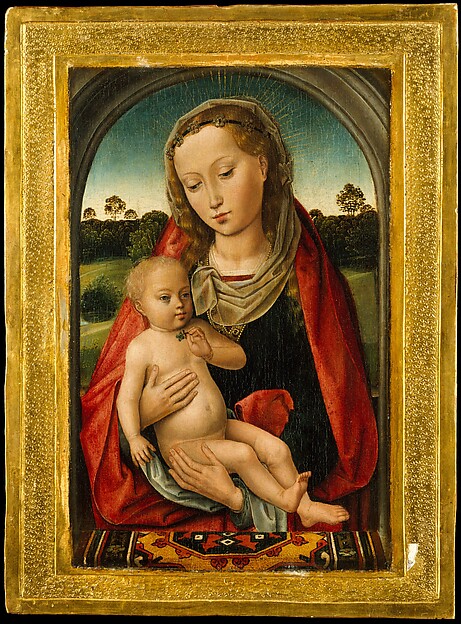
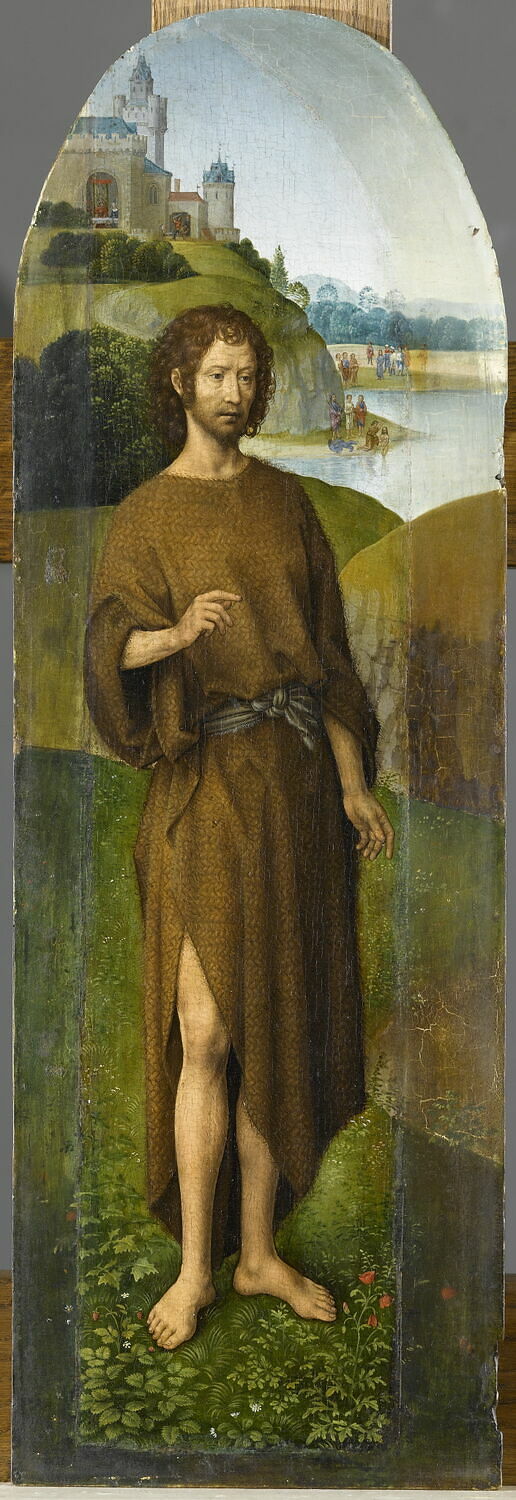
The Pagagnotti Triptych is a c. 1480 oil-on-wood triptych by the Early Netherlandish artist Hans Memling. The original was disassembled and separated, with the central panel now at the Uffizi gallery in Florence and the two wing panels at the National Gallery in London. The central Virgin and Child with two angels panel shows the enthroned Virgin holding the Child flanked by two angels. The left wing is a full-length portrait of St. John holding a lamb, while St. Lawrence stands in the right-hand panel holding a book.
Read on
In each panel, the figures are enclosed within archways and columns, and landscapes and buildings are visible through the rear openings. The painting was most likely commissioned by Bishop Benedetto Pagagnotti of Florence and, perhaps according to his instructions, Memling added elements more specific to contemporary Italian painting such as the festoons and putti above the Madonna. The reverse of both wings contains a highly unusual night scene of nine cranes standing beneath a coat of arms (presumably Pagagnotti's).
The art historian Paula Nuttall described the triptych as "a tour de force, pictorially, technically, and conceptually." Memling combined pictorial traditions and painterly techniques from Jan van Eyck and Rogier van der Weyden to evoke the sculptural representations with Italian all'antica influences and motifs. Elements from the painting, especially its background, were copied by Florentine artists such as Fra Filippino Lippi and Fra Bartolomeo. A similar triptych exists, executed by the Master of the Legend of St Ursula.
Particulars
Sources
- Wikidata · fetched 3 days ago
- Image: The National Gallery — Hans Memling · Public domain · Wikimedia Commons
Meanwhile, in the life of Hans Memling
The whole life1466–1494 · Workplace
Bruges
between 1470 and 1480
Marries Anna de Valkenaere
Memling marries Anna de Valkenaere (sometime between 1470 and 1480, according to English Wikipedia); the couple have three sons — Jan, Cornelis and Nicolaas.
1480
Among the richest burghers: a loan to Maximilian I
A tax document of 1480 lists Memling among the wealthiest citizens of Bruges: his name is on the list of 875 burghers obliged to subscribe to the loan Maximilian I of Austria raised to finance his war against France. It does not appear on later lists of this kind.
1480 and 1486
Two of Memling’s apprentices join the guild
The registers of the painters’ guild of Bruges name two apprentices who served their time with Memling and paid their dues on admission to the guild in 1480 and 1486.