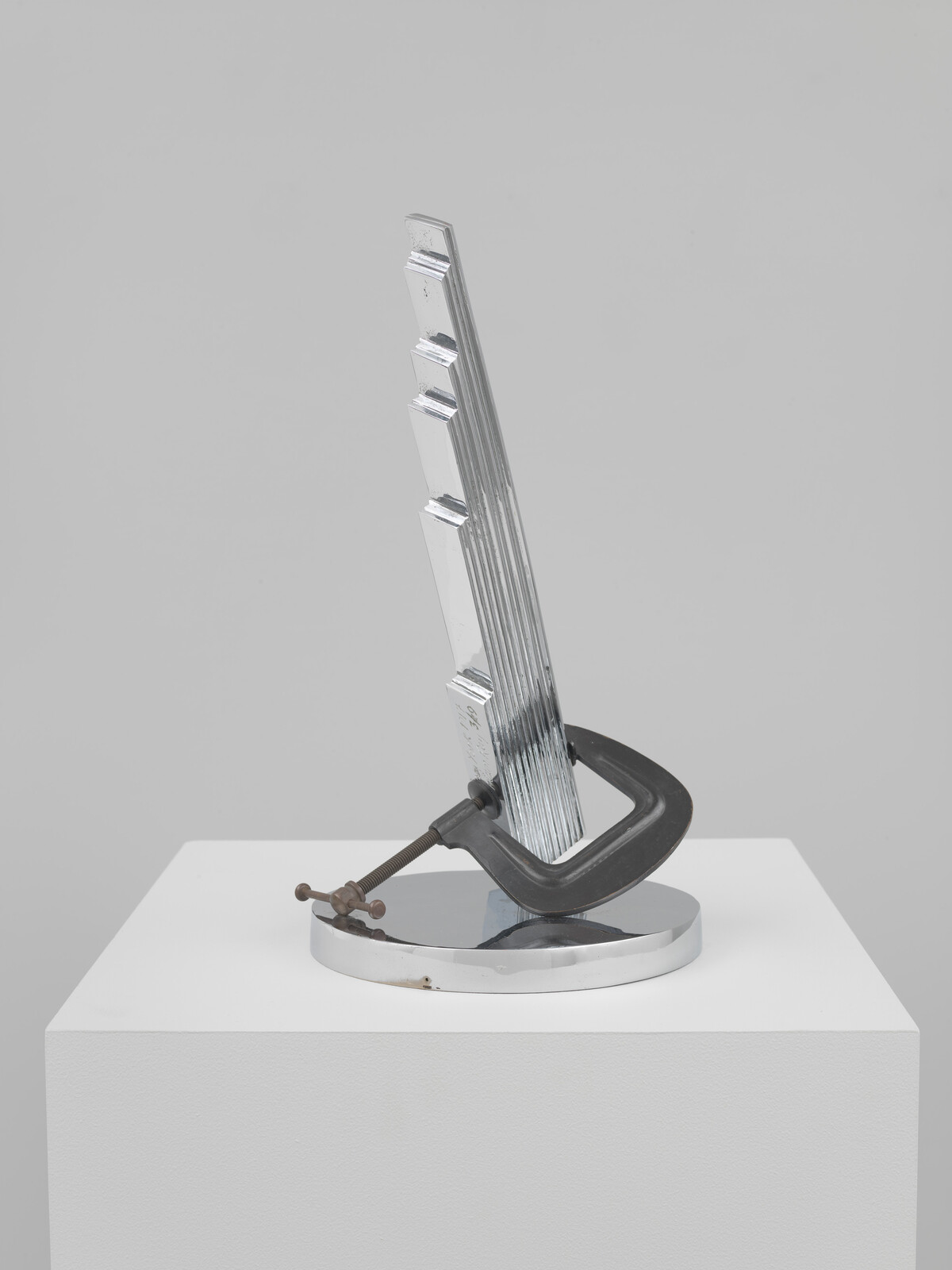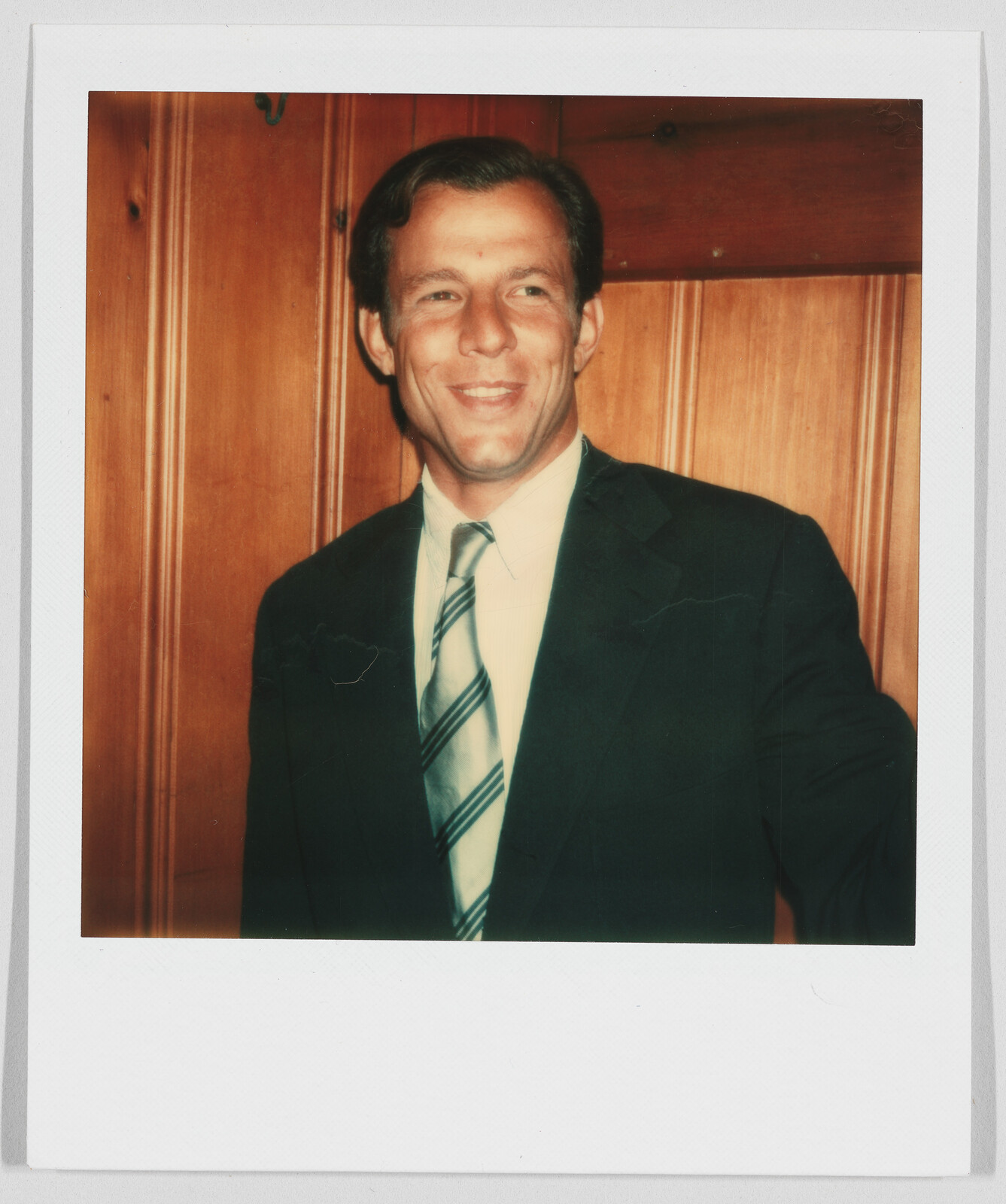
 Andy WarholAmerican, 1928–1987
(Peter Beard)
May one see it?
Yes, receiving visitors

Whitney Museum of American Art
New York, United States
On public display.
- Checked
- 7 days ago
- Source
- The museum's own collection data
Particulars
- Accession number
- 2014.29.159
Sources
- Whitney Museum of American Art: the museum's own open data · fetched 7 days ago
- Image: Whitney Museum of American Art — © the artist or rights holder
Meanwhile, in the life of Andy Warhol
The whole life1970–1971
The retrospective from Pasadena to the Whitney
In 1970 the Pasadena Art Museum organised a Warhol retrospective that travelled on to Chicago, Eindhoven, Paris, London and, in 1971, the Whitney Museum in New York. At the Whitney the Cow wallpaper (1966) served as the backdrop for the paintings.
1971
Creates the “Sticky Fingers” cover
Warhol came up with the concept and took the photograph for the cover of the Rolling Stones' album Sticky Fingers (1971), a close-up of jeans with a real zipper. He received a Grammy nomination for Best Album Cover in 1972.
c. 1971 – 1974
More and more often in Paris
Warhol began travelling to Europe more often and grew especially fond of Paris after filming L'Amour (1972); he kept an apartment on the Left Bank, on Rue du Cherche-Midi, shared with Fred Hughes. In Paris his circle socialised with Karl Lagerfeld, Yves Saint Laurent, Loulou de la Falaise and Paloma Picasso.
1972–1973
Creates the “Mao” series
Warhol made the Mao series in 1972–73; in November 1972 its silkscreens debuted at the Leo Castelli Gallery in New York.
1973
Diagnosis: a gallstone
In 1973 Warhol was diagnosed with a gallstone but adamantly refused surgery because he feared hospitals. His physician Denton Cox tried to obtain an experimental medication from Japan, while a chiropractor and a nutritionist suggested he wear a small crystal.
1975
“The Philosophy of Andy Warhol” is published
The book The Philosophy of Andy Warhol (From A to B & Back Again) appeared in 1975; in September Warhol set out on a U.S. book tour for it, followed by stops in Italy, France and England.

![Liz #3 [Early Colored Liz], Andy Warhol, 1963](/api/img?u=https%3A%2F%2Fwww.artic.edu%2Fiiif%2F2%2F362c0c2a-4576-2207-4ba9-2b87e6d0bad0%2Ffull%2F1200%2C%2F0%2Fdefault.jpg)