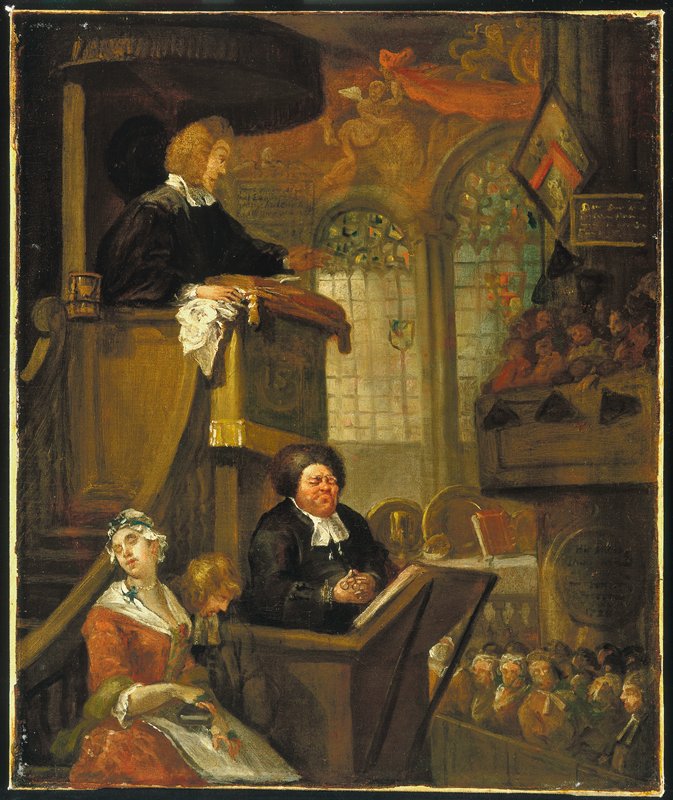
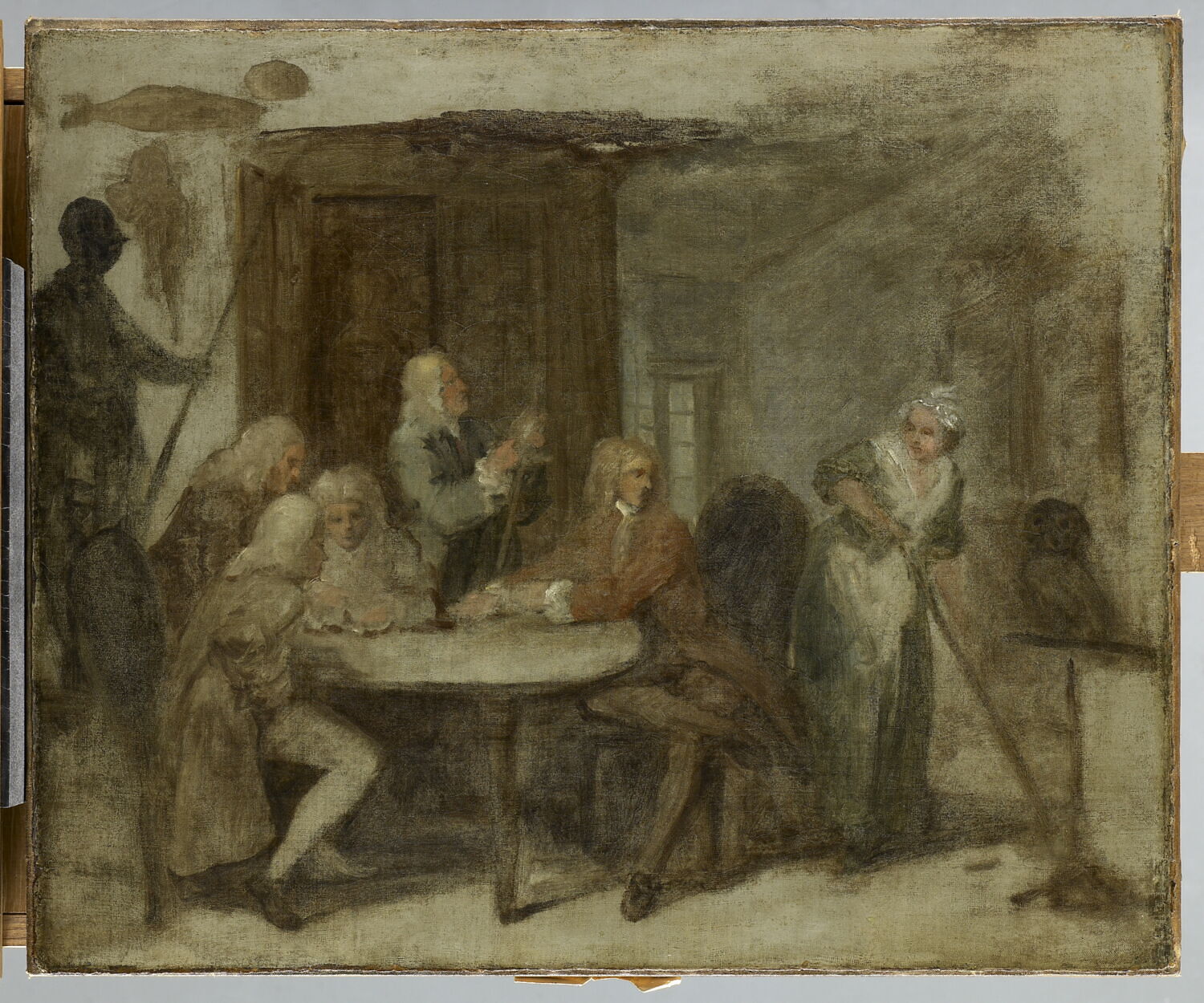
William HogarthEnglish, 1697–1764
Rechters
May one see it?
Unknown: the museum keeps its counsel

Rijksmuseum
Amsterdam, Netherlands
The owner is known. Whether it is on view today, the museum does not say, and we were not trained to guess.
- Source
- The museum's own collection data
Particulars
- Accession number
- RP-P-OB-18.730
What it shows
Sources
- Rijksmuseum: the museum's own open data · fetched 3 days ago
- Image: Rijksmuseum — public domain
Meanwhile, in the life of William Hogarth
The whole life1712–1764 · Workplace
London
1736–1756
History paintings for a hospital, a foundling home and churches
For many years Hogarth tried to make his name as a history painter: in 1736–37 he painted “The Pool of Bethesda” and “The Good Samaritan” for St Bartholomew’s Hospital, in 1747 “Moses brought before Pharaoh’s Daughter” for the Foundling Hospital, in 1748 “Paul before Felix” for Lincoln’s Inn, and in 1755–56 an altarpiece for St Mary Redcliffe in Bristol. He never won much respect in this genre.
1755–1758
“An Election”: a satire on canvassing
In the four prints of the “Election” series (1755–58) Hogarth lampooned canvassing for votes; his satirical portrayal of the age in “Marriage A-la-Mode” and “An Election” places him alongside the great satirical novelists of the 18th century. The paintings of the series are in Sir John Soane’s Museum.
1757
Serjeant Painter to the King
In 1757 George II appointed Hogarth Serjeant Painter to the King, successor to James Thornhill, who had held the post before him.
25 – 26 October 1764
His last day in Leicester Fields
On 25 October 1764 Hogarth, weak but cheerful, was taken from his villa in Chiswick to his home in Leicester Fields; he was still working, retouching “The Bench”. On 26 October he received a letter from Benjamin Franklin and drafted a reply; he boasted of eating a pound of beefsteaks for dinner, and that night, after suddenly vomiting, died in the arms of his servant Mary Lewis; John Nichols named an aneurysm as the cause, Horace Walpole “a dropsy of his breast”.
26 October 1764
Died