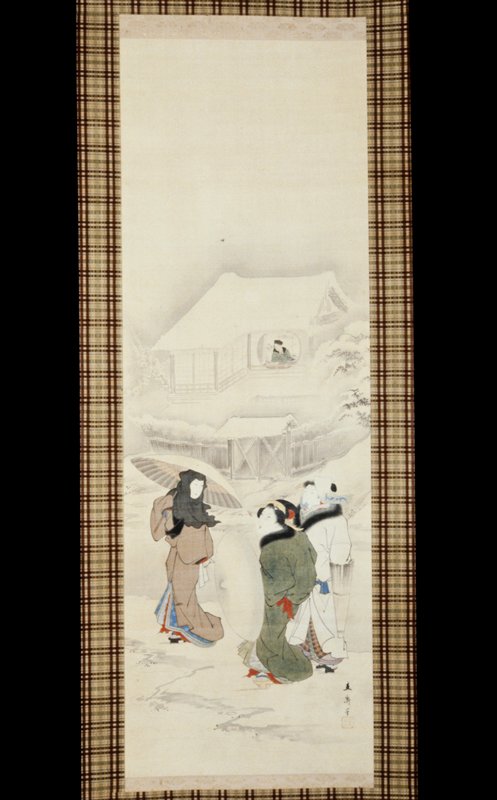
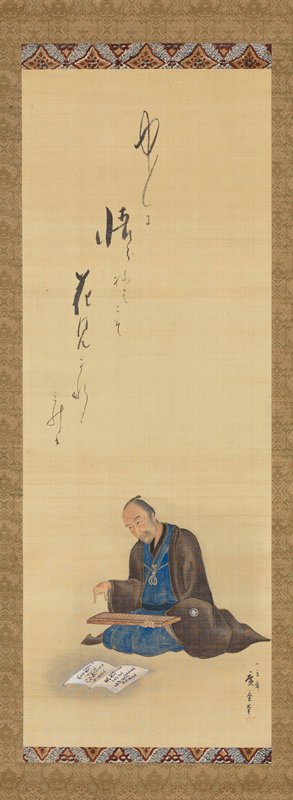
Utagawa HiroshigeJapanese, 1797–1858
Schetsblad
May one see it?
Unknown: the museum keeps its counsel

Rijksmuseum
Amsterdam, Netherlands
The owner is known. Whether it is on view today, the museum does not say, and we were not trained to guess.
- Source
- The museum's own collection data
Particulars
- Accession number
- RP-T-1960-292
Sources
- Rijksmuseum: the museum's own open data · fetched 3 days ago
- Image: Rijksmuseum — public domain
Meanwhile, in the life of Utagawa Hiroshige
The whole life1809
Death of his mother and father: an orphan at twelve
Hiroshige's mother died in early 1809 and his father later that year, but not before handing his fire warden duties to his twelve-year-old son. The boy was charged with preventing fires at Edo Castle, a duty that left him much leisure time.
1812
Permission to sign his works: the name Hiroshige
In 1812 Utagawa Hiroshige received the right to sign his own works; he worked under the pseudonym Andō Hiroshige.
1829–1830
The turn to landscape: “Eight Views of Ōmi”
Until then Hiroshige had worked in the usual ukiyo-e themes: book illustrations, beauties and kabuki actors. It was not until 1829–1830 that he began to produce the landscapes he is known for, such as the series “Eight Views of Ōmi”, and he also made an increasing number of bird and flower prints.
1832
Journey to Kyoto along the Tōkaidō
As a fire warden he was entitled to minor privileges reserved for low-ranking samurai, which is how he secured an invitation to join an official procession to Kyoto and travelled the Tōkaidō route linking the two capitals. He sketched the scenery along the way.
1856
He becomes a Buddhist monk
In 1856 Hiroshige “retired from the world”, becoming a Buddhist monk; this was the year he began his “One Hundred Famous Views of Edo”.
12 October 1858
Died
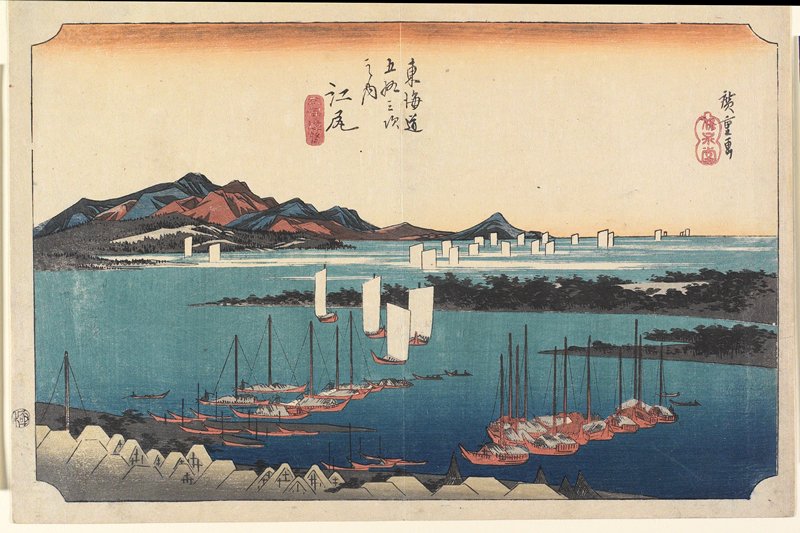
![Shinano Province, Moon Reflected in the Sarashina Paddy-fields, Mount Kyōdai (Shinano, Sarashina tagoto no tsuki, Kyōdaisan), from the series Famous Places in the Sixty-odd Provinces [of Japan] ([Dai Nihon] Rokujūyoshū meisho zue), Utagawa Hiroshige 歌川広重, Edo period, 1853 (Kaei 6, 8th month)](https://nrs.harvard.edu/urn-3:HUAM:CARP04802_dynmc/full/!2400,2400/0/default.jpg)