
 Rembrandt van RijnDutch, 1606–1669
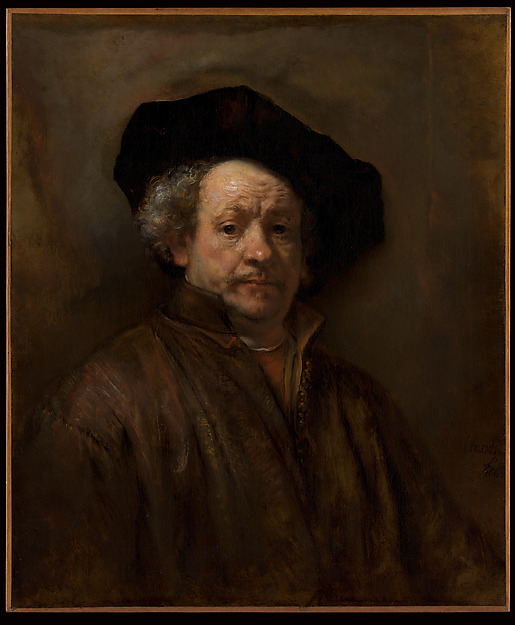
Selfportrait
May one see it?
Unknown: the museum keeps its counsel

Nationalmuseum
Stockholm, Sweden
The owner is known. Whether it is on view today, the museum does not say, and we were not trained to guess.
- In this state since
- Sep 27, 2026
- Source
- The museum's own collection data
About the painting
Rembrandt’s self-portrait is a relatively small painting, measuring just 12.2x15.5 cm. The base is copper plate covered with a layer of white lead completely overlaid with gold leaf. The portrait was acquired by Nationalmuseum in connection with the Rembrandt exhibition of 1956 and portrays the artist as a serious, quite melancholic young man. The face is modelled with fine, careful brushstrokes. The young man’s gaze is searching and concentrated. The portrait is dated 1630, when Rembrandt was 24 years old. There are known to be five Rembrandt paintings on copper, three of which are on a gold leaf ground. In addition to the Nationalmuseum self-portrait, these are An Old Woman at Prayer in Salzburg and The Laughing Soldier in The Hague. The paintings are in a similar format and date from the same period.
Read on
There are major similarities in terms of lighting, expression and character between Nationalmuseum’s self-portrait and other early self-portraits. However, due to its small format and special base, this little self-portrait required more detailed brushstrokes than the larger portraits on panel and canvas.
Nationalmuseum
Particulars
What it shows
Sources
- Nationalmuseum: the museum's own open data · fetched 3 days ago
- Image: Nationalmuseum — Public Domain Mark 1.0
Meanwhile, in the life of Rembrandt van Rijn
The whole life1625–1631 · Workplace
Leiden
14 January 1628 – 1631
Pupil: Gerrit Dou
1629
Meeting Constantijn Huygens
In 1629 the artist was noticed by the poet and patron Constantijn Huygens, secretary to the Prince of Orange. He helped Rembrandt connect with wealthy clients and commissioned religious paintings for the Prince of Orange.
1629–1631
Pupil: Isaac de Jouderville
1631–1669 · Workplace
Amsterdam


