BichitrIndian, 1615
Shah Jahan
May one see it?
Not receiving at present

Victoria and Albert Museum
London, United Kingdom
It belongs to the collection, but is not on display at present.
- Checked
- 7 days ago
- In this state since
- Sep 25, 2026
- Source
- The museum's own collection data
About the painting
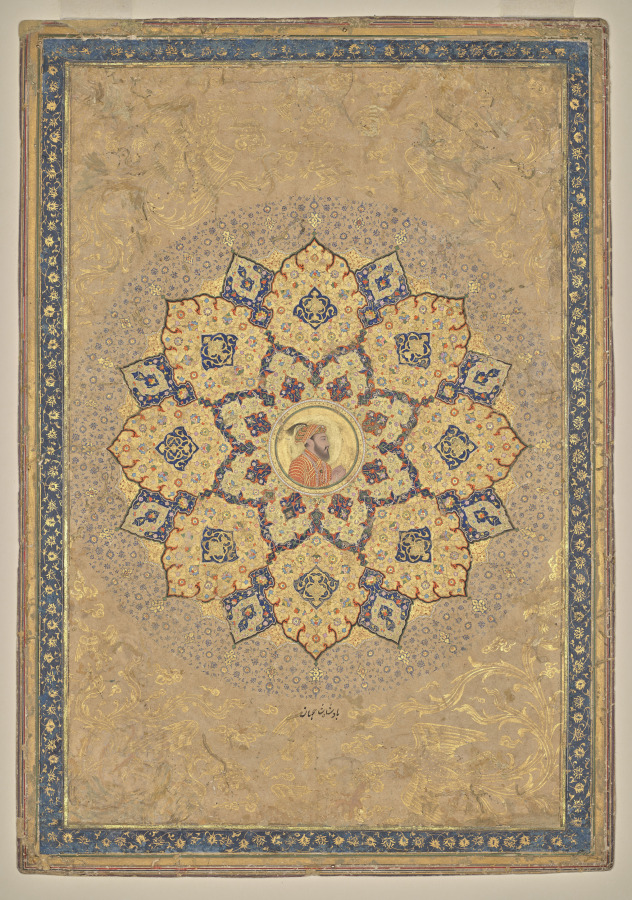
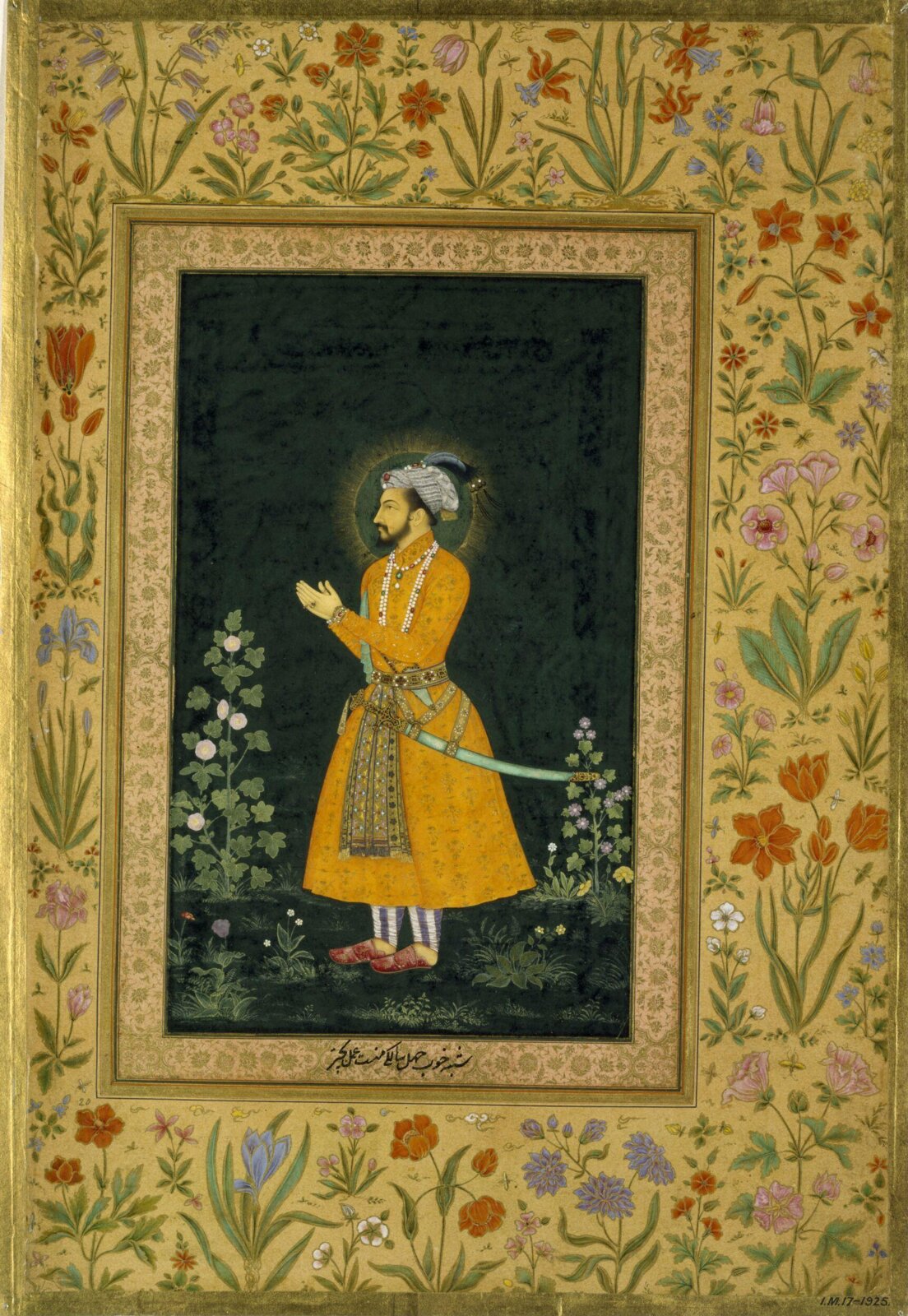
This portrait of the Mughal emperor Shah Jahan (r.1628-1658) is inscribed in his hand in the border immediately beneath his feet. He states that 'this is a good likeness of me in my fortieth year, the work of Bichitr'. The emperor was thus 39, and the painting must have been completed in about 1630 or early 1631, just before the tragedy of the death of his wife Mumtaz Mahal in childbirth. She died in the city of Burhanpur in June, 1631. According to contemporary historians, the emperor retired to the palace in deep grief, refraining from wearing fine clothes. After her death, the emperor's dark beard seen in this painting was said to have become more than one third white within days from his intense sorrow.
Read on
His appearance in this portrait is one of imperial magnificence. He is heavily bejewelled, wearing multiple bracelets, necklaces and turban ornaments, and a belt set with large stones. His sword has a gold hilt and scabbard fittings similarly set with precious stones.
The portrait was once part of a royal album with floral borders characteristic of Shah Jahan's reign. Forty pages from the album were sold at Sotheby's, London, in 1925 and bought by the collector Alfred Chester Beatty in collaboration with the Victoria and Albert Museum. The V&A acquired 21 folios, and the Chester Beatty Library 19, and the album was henceforth known as the Minto Album, from its known connnection with the Minto family. It is not known whether the album was acquired by the First Earl Minto, Governor General of India from 1807 to 1813, or by the fourth Earl, Viceroy of India from 1905 to 1910.
Victoria and Albert Museum
Particulars
- Accession number
- IM.17-1925
What it shows
In the catalog
Sources
- Victoria and Albert Museum: the museum's own open data · fetched 7 days ago
- Image: Victoria and Albert Museum — © Victoria and Albert Museum, London