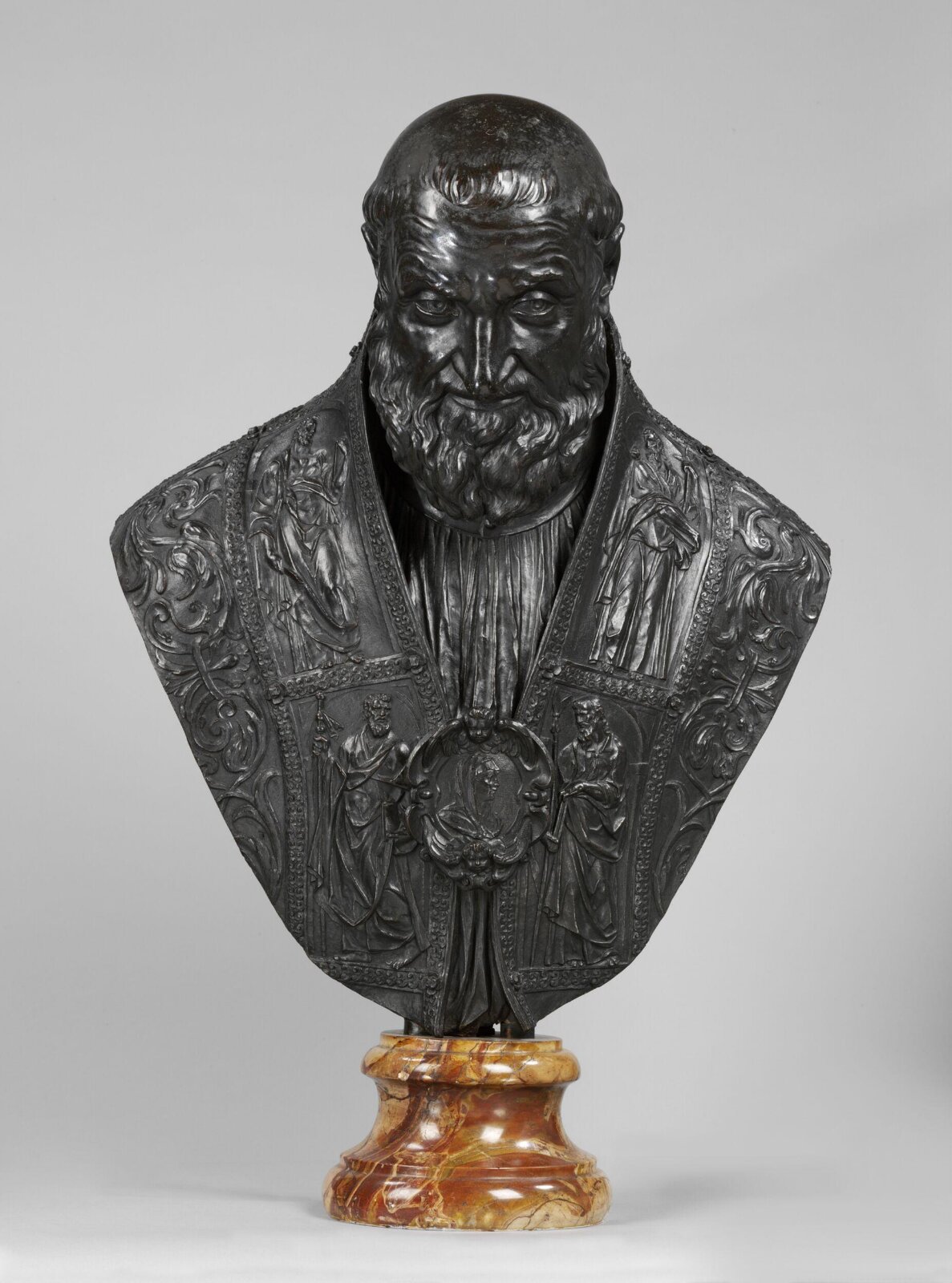
Sixtus V
May one see it?
Yes, receiving visitors

Victoria and Albert Museum
RoomEurope 1600-1815, Room 7, The Sheikha Amna Bint Mohammed Al Thani GalleryLondon, United Kingdom
On public display.
- Checked
- 7 days ago
- In this state since
- Sep 25, 2026
- Source
- The museum's own collection data
About the sculpture
Pope Sixtus V (Felice Peretti) was born in 1521 and was pope from 1585 to 1590. This bust, together with its pair depicting Pope Pius IV (born 1499; Pope 1559-65; see A.40-1910), must have been created after the accession of Sixtus in 1585, and are probably both posthumous portraits made in the Vatican Foundry. The head of the Virgin seen on the morse (the clasp used to fasten the cope, the ceremonial cape worn by a priest or bishop) appears on numerous medals where it sometimes appears as the reverse for the head of Christ, seen on the morse of the Pius bust.
Read on
Sixtus followed Gregory XIII as Pope, who had left the papal state in disorder. When appointed, Sixtus restored order within two years, using ruthless and repressive measures. He also engaged in wide economic and financial reforms, restoring the papal treasury. His legacy lies in the restoration of the church's central administration. He was called the 'iron' pope and was a patron of building and scholarship in the spirit of the Catholic renewal. Through his reconstructions, Rome became a magnificent baroque city with a new layout connecting the seven pilgrimage churches, opening up boulevards and building aqueducts, the 'Acqua Felice'. He also finished the construction of St. Peter's dome and established the Vatican press.
Victoria and Albert Museum
Particulars
- Accession number
- A.41-1910
What it shows
In the catalog
Sources
- Victoria and Albert Museum: the museum's own open data · fetched 7 days ago
- Image: Victoria and Albert Museum — © Victoria and Albert Museum, London