 John ConstableBritish, 1776–1837
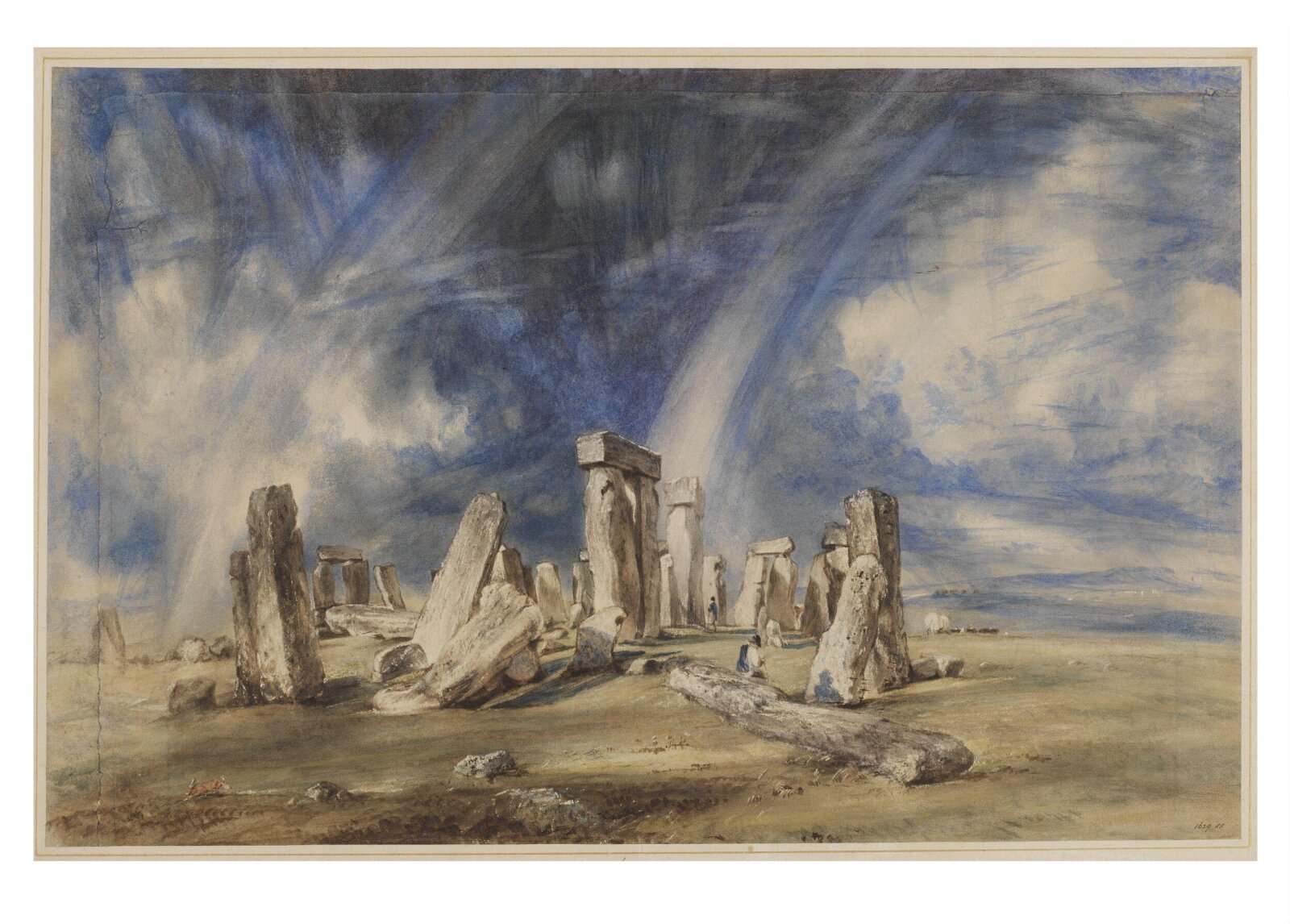
Stonehenge
May one see it?
Not receiving at present

Victoria and Albert Museum
London, United Kingdom
It belongs to the collection, but is not on display at present.
- Checked
- 7 days ago
- In this state since
- Sep 25, 2026
- Source
- The museum's own collection data
About the work
Constable painted this watercolour at a sad time in his life. Both his wife, Maria, and his closest friend, John Fisher, had died, and his two eldest sons had left home. He is perhaps expressing his personal unhappiness in the watercolour, for the image is certainly a melancholy one. The painting was exhibited in the Royal Academy Summer Exhibition of 1836. Some of the lines that accompanied this painting in the catalogue describe 'The mysterious monument of Stonehenge, standing remote on a bare and boundless heath...'. Constable himself probably wrote them.
Victoria and Albert Museum
Particulars
- Accession number
- 1629-1888
What it shows
In the catalog
Sources
- Victoria and Albert Museum: the museum's own open data · fetched 7 days ago
- Image: Victoria and Albert Museum — © Victoria and Albert Museum, London
Meanwhile, in the life of John Constable
The whole life1828–1837
A widower with seven children
For the rest of his life Constable dressed in black and brought up his seven children alone; according to Leslie he was “a prey to melancholy and anxious thoughts”. Several of the children also painted, notably Lionel.
1835
A last lecture to the Academy’s students
In 1835 Constable gave his last lecture to the students of the Royal Academy, praising Raphael and calling the Academy the “cradle of British art”; it was cheered most heartily.
1836
Lectures at the Royal Institution: three theses
In a series of lectures at the Royal Institution in 1836 Constable proposed three theses: landscape painting is scientific as well as poetic; imagination alone never can produce art that bears comparison with reality; and no great painter was ever self-taught.
31 March 1837
Death in the night, probably of heart failure
Constable died on the night of 31 March 1837, apparently of heart failure (another account names dyspepsia), and was buried beside Maria.
31 March 1837
Died



![Vallon à Helmingham [Helmingham Dell], Constable, John, 1e quart du XIXe siècle (peint à l'été 1823 (selon Beckett)) (1823)](https://collections.louvre.fr/media/cache/large/0000000021/0000065616/0000312650_OG.JPG)