
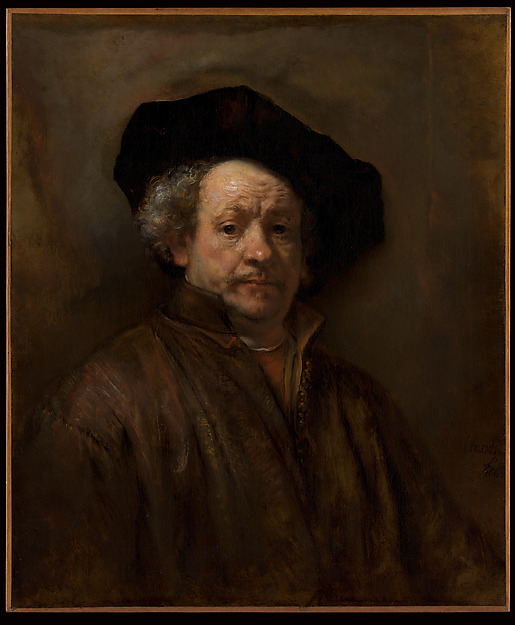
 Rembrandt van RijnDutch, 1606–1669
"The Kitchen Maid"
May one see it?
Unknown: the museum keeps its counsel

Nationalmuseum
Stockholm, Sweden
The owner is known. Whether it is on view today, the museum does not say, and we were not trained to guess.
- In this state since
- Sep 27, 2026
- Source
- The museum's own collection data
About the painting
“The Kitchen Maid” is considered by many to be one of Rembrandt’s most representative works. The warm shades of red, brown and yellow, and the vivid depiction of the girl, make this one of his true masterpieces. One might assume that Rembrandt had a special person, perhaps someone in his household, as a model, someone he knew well, since he has given her such a distinct character. However it was not his Hendrickje, the woman he was living with in 1651. She was 25 years old by then and the girl in “The Kitchen Maid” is probably somewhat younger. In the middle of the 17th century, Rembrandt painted a series of paintings on the borderline between portraits and genre pictures of young women. Nationalmuseum’s collection includes a series of drawings with a similar composition, where the model is resting on her elbows.
Nationalmuseum
Particulars
Sources
- Nationalmuseum: the museum's own open data · fetched 3 days ago
- Image: Nationalmuseum — Public Domain Mark 1.0
Meanwhile, in the life of Rembrandt van Rijn
The whole life1631–1669 · Workplace
Amsterdam
1639–1658 · Residence
Rembrandt House Museum
1648–1652
Pupil: Nicolaes Maes
early 1649
Beginning of His Relationship with Hendrickje Stoffels
In early 1649 Rembrandt grew close to the 23-year-old Hendrickje Stoffels, who had previously served as his maid. Her image appears in many works of his late period.
1649–1653
Pupil: Constantijn à Renesse
1653
Aristotle with a Bust of Homer
The painting was executed in 1653 on commission from the Sicilian nobleman Antonio Ruffo; it is a characteristic example of the clarity and monumentality of his large-figure compositions of the 1650s.


