 Viktor Vasnetsov1848–1926
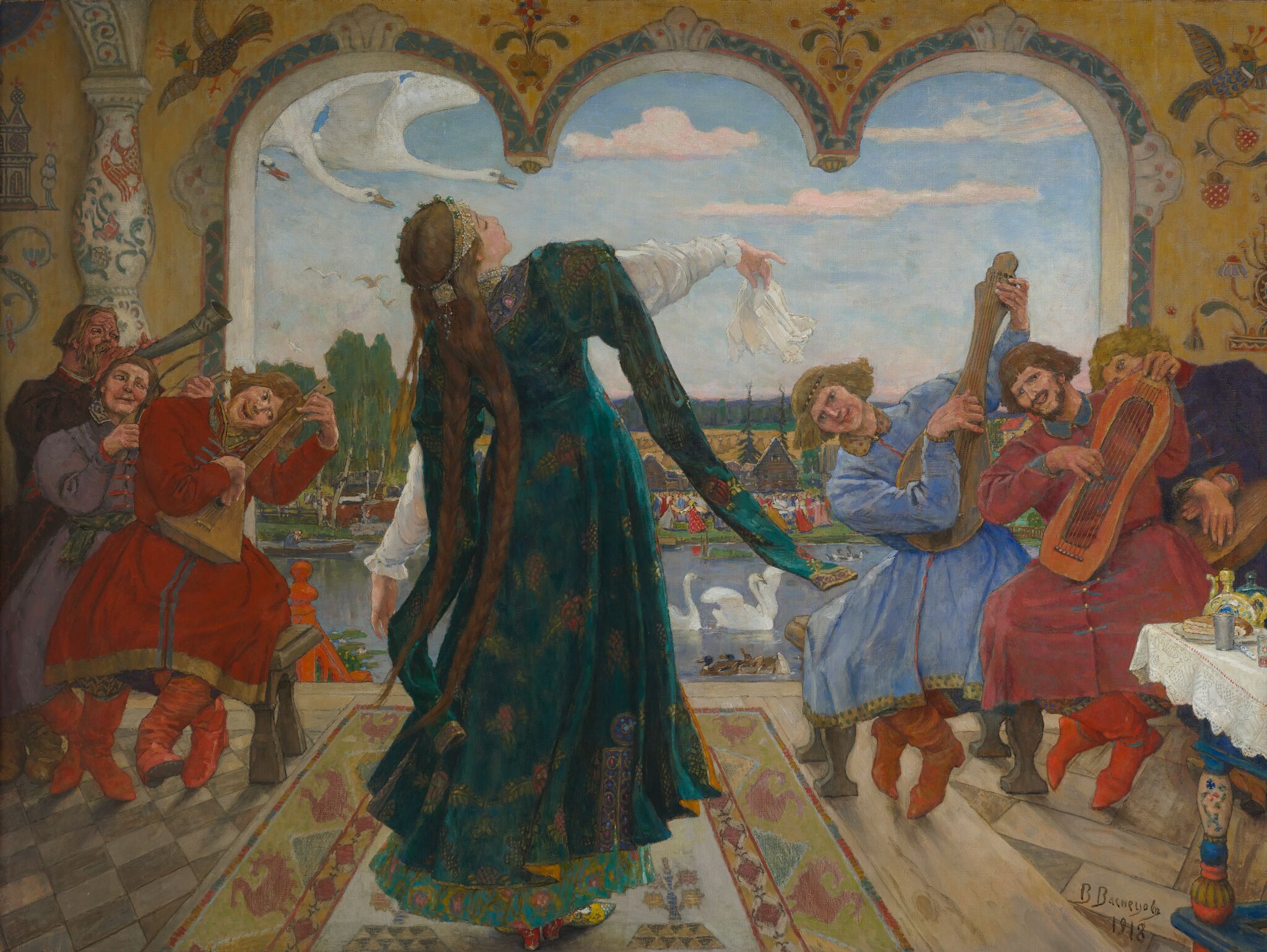
Царевна-лягушка
May one see it?
Unknown: the museum keeps its counsel

Tretyakov Gallery
Moscow, Russia
The owner is known. Whether it is on view today, the museum does not say, and we were not trained to guess.
- Source
- The museum's own collection data
Particulars
- Accession number
- ДМВ Ж-97
Sources
- Tretyakov Gallery: the museum's own open data · fetched 3 days ago
- Image: Tretyakov Gallery — © State Tretyakov Gallery
Meanwhile, in the life of Viktor Vasnetsov
The whole life1917
He rejects the revolution but stays in Russia
He did not accept the October Revolution, calling himself a convinced monarchist “on the ancient Russian principles”; his nobility and ties with the old regime found no favour with the Bolsheviks, but he did not emigrate and went on living and working in Moscow.
after 1917
After the revolution: church paintings to the Tretyakov
After the October Revolution he advocated moving some of the religious paintings from churches to the Tretyakov Gallery; even before the revolution he had been a trustee of the gallery and gave a significant part of his income to the State Historical Museum, a large part of whose collection was acquired with his money.
1919
His son Boris dies
In 1919 his son Boris (1880–1919) died; after the revolution the artist’s family was scattered, which he took hard.
September 1919
Rumours that Vasnetsov has been shot
In September 1919 a Russian émigré newspaper reported that the Bolsheviks had “in all likelihood” killed the artist; the rumour reached Repin at Penaty, who anxiously asked the Soviet artists visiting him whether it was true that Vasnetsov had been shot.
1920
His son Mikhail emigrates on the last steamer
During the Civil War Mikhail taught at the White Army’s flying school in Kiev; in 1920, escaping the Red Army, he sent his wife and son to his father’s house and left on the last steamer sailing from Crimea to Gallipoli — the family knew nothing of his fate until 1922.