 Beatrix Potter1866–1943
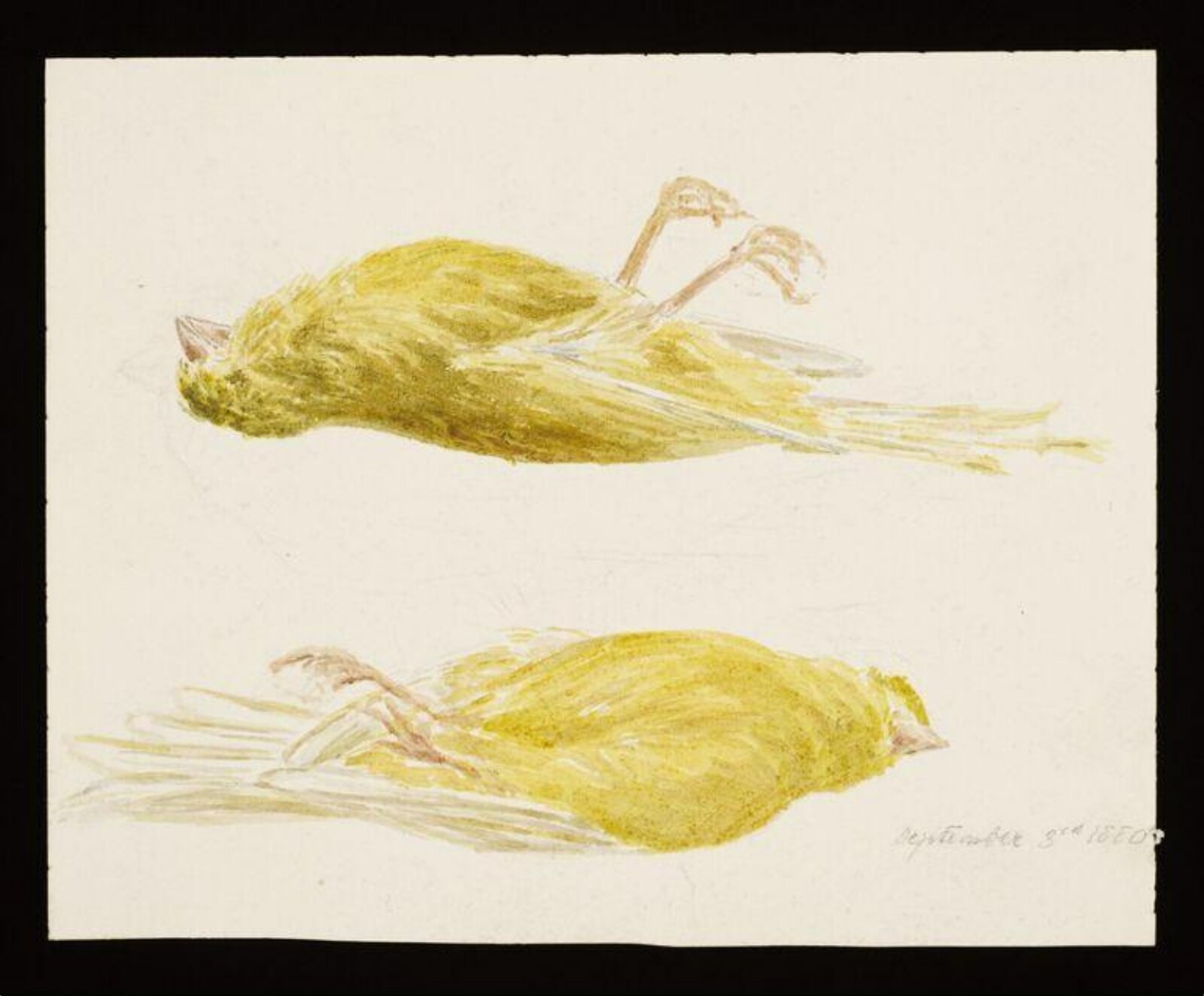
Watercolour
May one see it?
Not receiving at present

Victoria and Albert Museum
London, United Kingdom
It belongs to the collection, but is not on display at present.
- Checked
- 7 days ago
- In this state since
- Sep 25, 2026
- Source
- The museum's own collection data
Particulars
- Accession number
- BP.277
What it shows
In the catalog
Sources
- Victoria and Albert Museum: the museum's own open data · fetched 7 days ago
- Image: Victoria and Albert Museum — © Victoria and Albert Museum, London
Meanwhile, in the life of Beatrix Potter
The whole lifechildhood
A schoolroom turned menagerie
The schoolroom of Beatrix and Bertram housed mice, rabbits, a hedgehog, bats, frogs and a newt named Isaac Newton, alongside collections of butterflies and other insects; the animals even went on long holidays, and the children watched them closely and drew them endlessly. Among the favourites were two rabbits — one of them, Peter, Beatrix walked on a lead, took with her on trains and dressed in a blue jacket, and later wrote her first tale about him.
1866–1881
Summers at Dalguise
For most of the first fifteen summers of her life Beatrix stayed at Dalguise, an estate on the River Tay in Perthshire, Scotland, where she and her brother enjoyed great freedom to sketch and explore. Her first sketchbook from those holidays, kept at the age of eight and dated 1875, is held by the Victoria & Albert Museum.
in youth
The Royal Academy and John Everett Millais
In her teens Beatrix was a regular visitor to London’s art galleries, especially enjoying the Royal Academy’s summer and winter exhibitions; her journal shows the growth of her taste and critical eye. She was also influenced by her father’s friend, the painter Sir John Everett Millais, who recognised her gift of observation.
1881–1897
A journal in a cipher of her own
From 1881 Beatrix kept a journal in a simple substitution cipher of her own devising — in tiny handwriting, serving as both sketchbook and literary experiment, in which she described society, her impressions of art and the life around her. The entries stop in 1897, when her energies were absorbed in scientific study and in efforts to publish her drawings.
1882
The Lake District and Hardwicke Rawnsley
When Dalguise was no longer available, the Potters spent their first summer in the Lake District in 1882, at Wray Castle near Lake Windermere; sixteen-year-old Beatrix fell in love with its beauty and resolved to live there one day. There she met Hardwicke Rawnsley, the vicar of Wray and later founding secretary of the National Trust, whose views on the countryside left a lasting mark on her.