
 Constantin BrancusiRomanian, 1876–1957
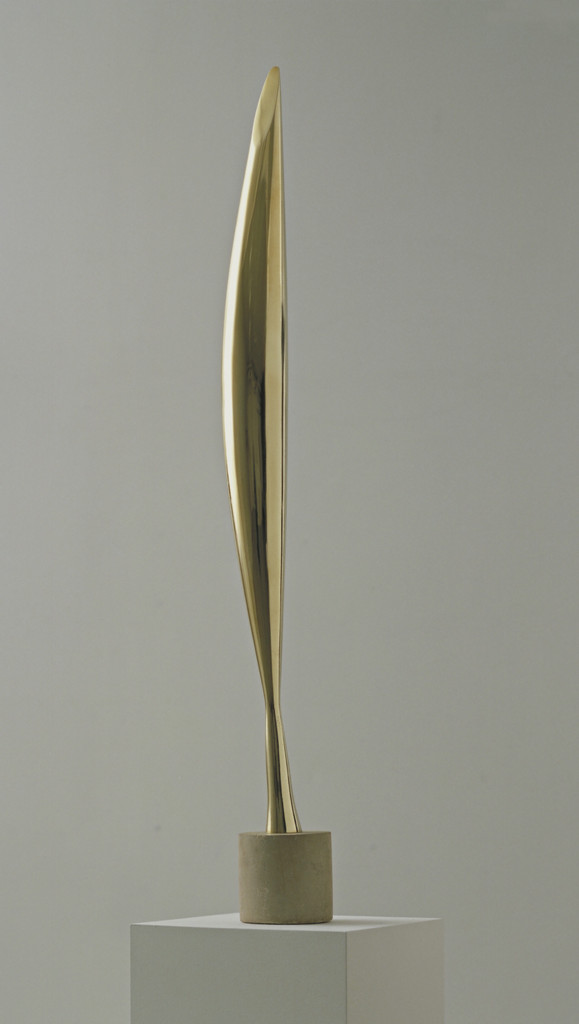
Woman's Head
May one see it?
Not receiving at present

National Gallery of Art
Washington, D.C., United States
It belongs to the collection, but is not on display at present.
- Checked
- 3 days ago
- In this state since
- Aug 19, 2026
- Source
- The museum's own collection data
Particulars
- Accession number
- 1971.66.2
What it shows
In the catalog
Sources
- National Gallery of Art: the museum's own open data · fetched 3 days ago
- Image: National Gallery of Art — © the artist or rights holder
Meanwhile, in the life of Constantin Brancusi
The whole lifefrom 1908
His Paris circle: Léger, Duchamp, Rousseau, Apollinaire
From 1908 Brâncuși spends time with artists and writers working in Paris, including Amedeo Modigliani, Fernand Léger, Marcel Duchamp, Henri Rousseau, Guillaume Apollinaire, Alexander Archipenko and Henri Matisse. He also stays in touch with Romanians living in France — George Enescu, Theodor Pallady, Benjamin Fondane, Panait Istrati — speaks Romanian in his studio and welcomes visitors from Romania.
1909
Meeting Modigliani
In 1909 the collector Paul Alexandre introduces Brâncuși to Amedeo Modigliani; the two become friends, and the Italian draws his portrait in black and red pencil that year. From 1909 to 1914 Modigliani works chiefly in sculpture, and his elongated limestone heads, with simplified forms and polished surfaces, are related to Brâncuși’s sculpture.
1910s
“Mobile groups”: rearranging the sculptures
During the 1910s Brâncuși arranges sculptures and pedestals in changing compositions that he calls “mobile groups”: he moves the works and watches how each change alters the space around them. When he sells a sculpture he often puts a plaster version in the same position, and by the 1920s the studio is also an exhibition space whose arrangement forms part of the work.
autumn 1912
The Grand Palais aviation show with Duchamp and Léger
In the fall of 1912 Brâncuși visits an aviation exhibition at the Grand Palais with Marcel Duchamp and Fernand Léger; the three stop before an airplane propeller, and its mechanical precision leads them into a conversation about machine-made forms and the direction sculpture might take. In May of that year he had rented a second studio at 47 rue du Montparnasse, across from the first.





![Scenes from the Passion of Christ: The Descent into Limbo [right panel], Andrea Vanni, 1380s](https://api.nga.gov/iiif/4205a539-eadd-4486-89a7-3cff9c1ba428/full/!2400,2400/0/default.jpg)


