 August MackeGerman, 1887–1914
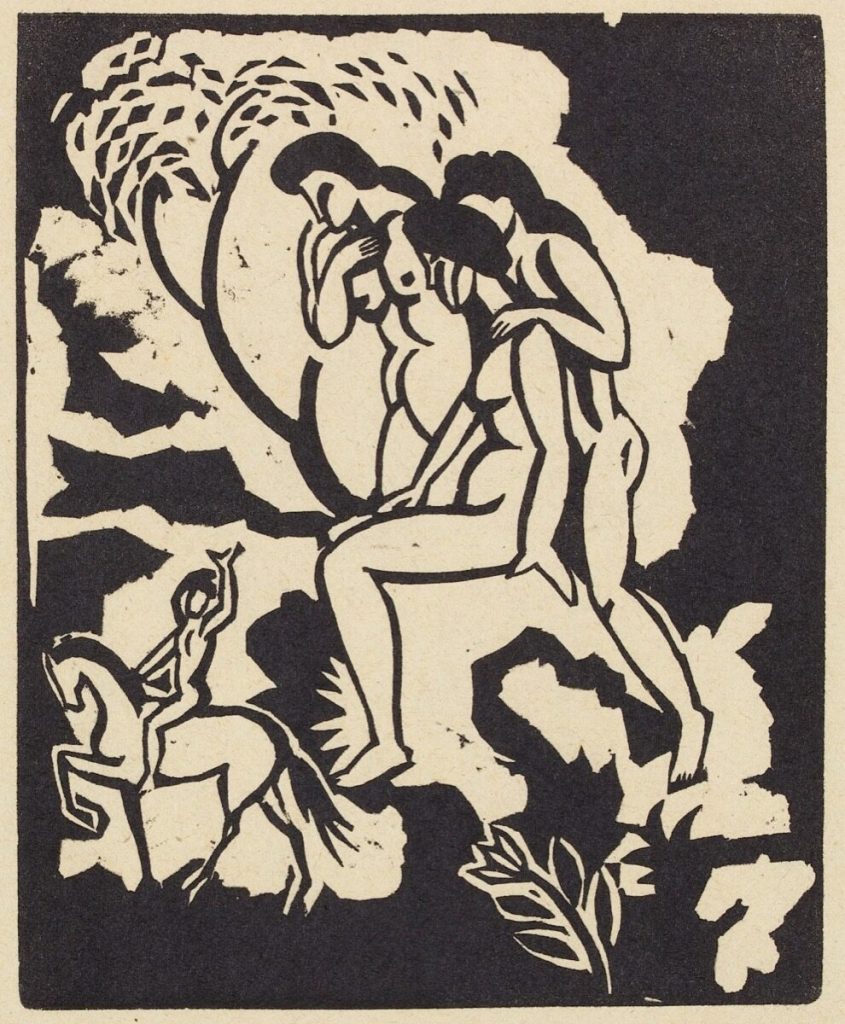
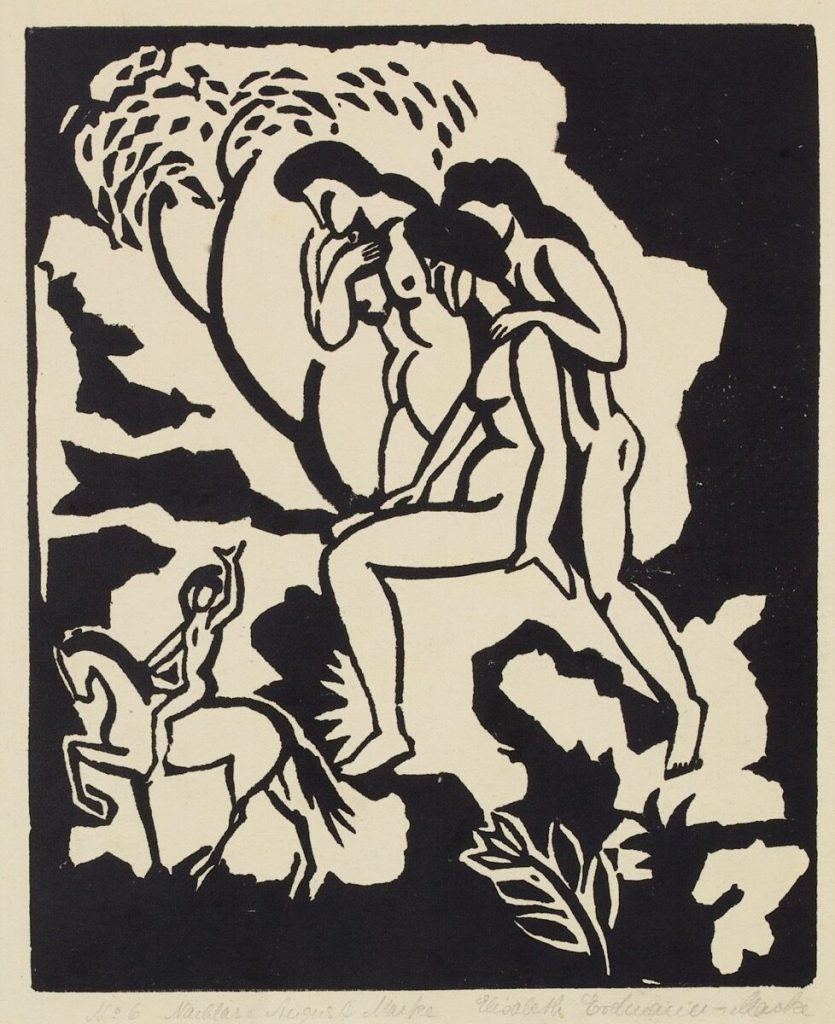
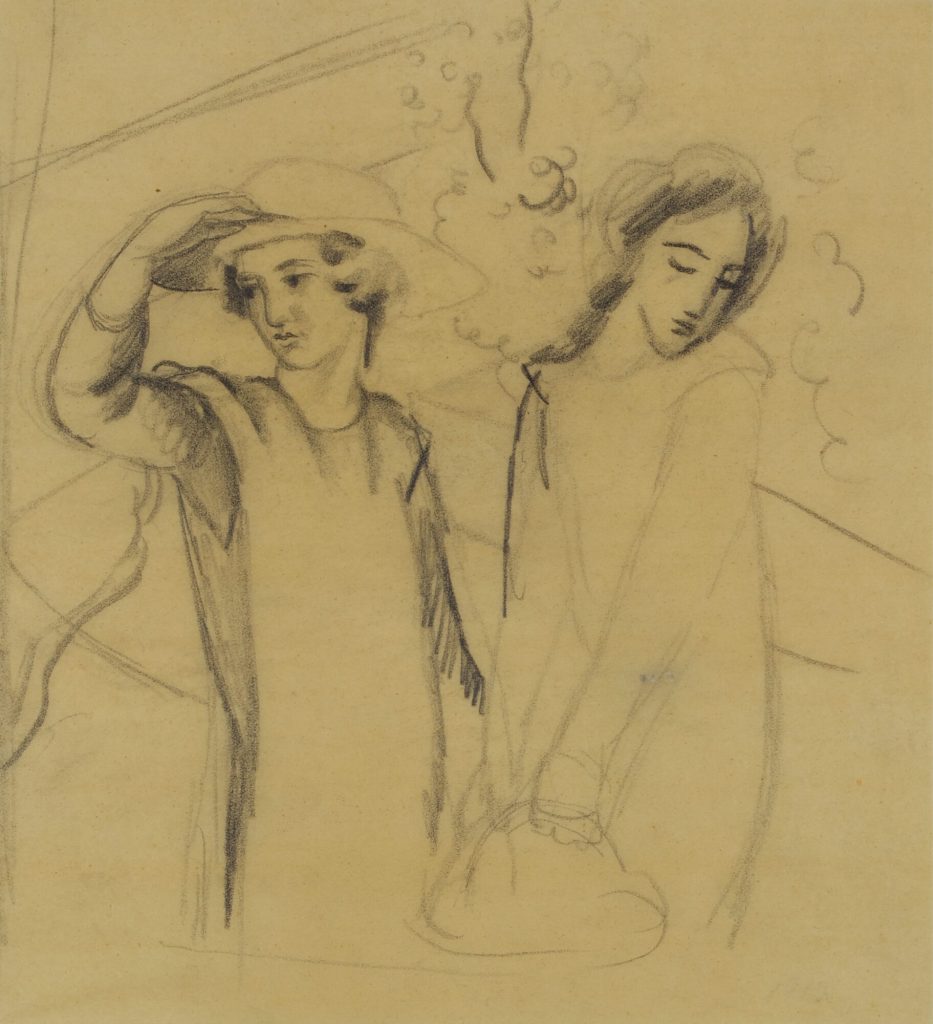
Zwei Mädchen mit Korb
May one see it?
Unknown: the museum keeps its counsel

Kunstpalast
Düsseldorf, Germany
The owner is known. Whether it is on view today, the museum does not say, and we were not trained to guess.
- In this state since
- Sep 27, 2026
- Source
- The museum's own collection data
Particulars
Meanwhile, in the life of August Macke
The whole lifeearly 1910
Meeting Franz Marc
In early 1910 in Munich Macke sees an exhibition of Franz Marc’s paintings and decides to meet him at once: with his cousin Helmuth, also an artist, and Bernhard Koehler’s son, he goes to Marc’s home. From that day to the end of their lives the two are close friends: Macke draws Marc out of his “creative isolation”, the most quoted lines of Marc’s letters about the symbolic meaning of colours are addressed to him, and under his influence Marc begins to paint with large areas of saturated colour.
1911
The Blue Rider: three works in the first exhibition
According to Russian Wikipedia, Macke founds the association of Expressionist artists Der Blaue Reiter together with Wassily Kandinsky, Alfred Kubin and Franz Marc; three of his works are shown at the Blue Rider exhibition in Munich in 1911.
April 1914
Tunisia with Klee and Moilliet: landmark watercolours
In April 1914 Macke makes a two-week trip to Tunisia with Paul Klee and Klee’s school friend, the painter Louis Moilliet, and brings back a large number of landmark watercolours. The exotic atmosphere of Tunisia becomes fundamental to the luminist approach of his final period; the sketches and photographs will serve as material for “Tunisian Landscape”, “Landscape with Cows and a Camel” and other works, but Macke will not manage to use them fully.
8 August 1914
Mobilisation: to the front as a reservist
Almost immediately after the outbreak of the First World War, on 8 August 1914, Macke, a reservist, is called up for the front. Far, as Elisabeth wrote years later, from the “hurrah-patriotism” that seized many, he nevertheless considers it his duty to go; in his letters from the front he describes the horror and cruelty of the war.


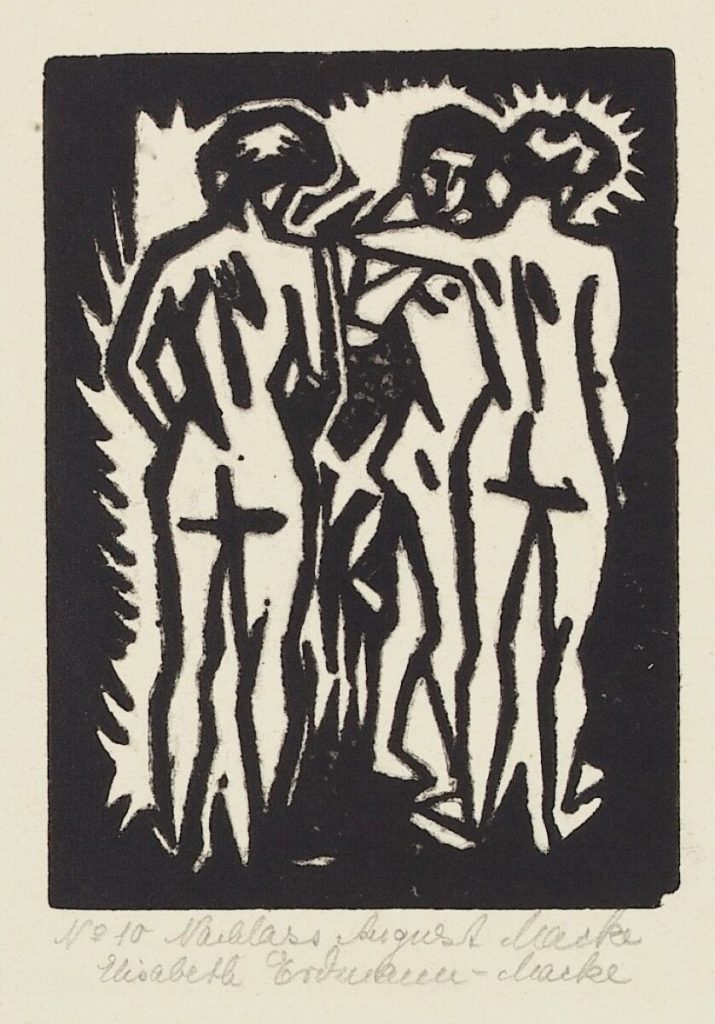
![Composition (3 Nudes) [Komposition (3 Akte)] (plate, preceding p. 79) from the periodical Das Kunstblatt, vol. 2, no. 4 (Apr 1918), August Macke, 1918 (executed 1912)](https://www.moma.org/media/W1siZiIsIjEyMjAwNCJdLFsicCIsImNvbnZlcnQiLCItcmVzaXplIDEwMjR4MTAyNFx1MDAzZSJdXQ.jpg?sha=6b27195223cf9aa3)