 Edward LearReino Unido, 1812–1888
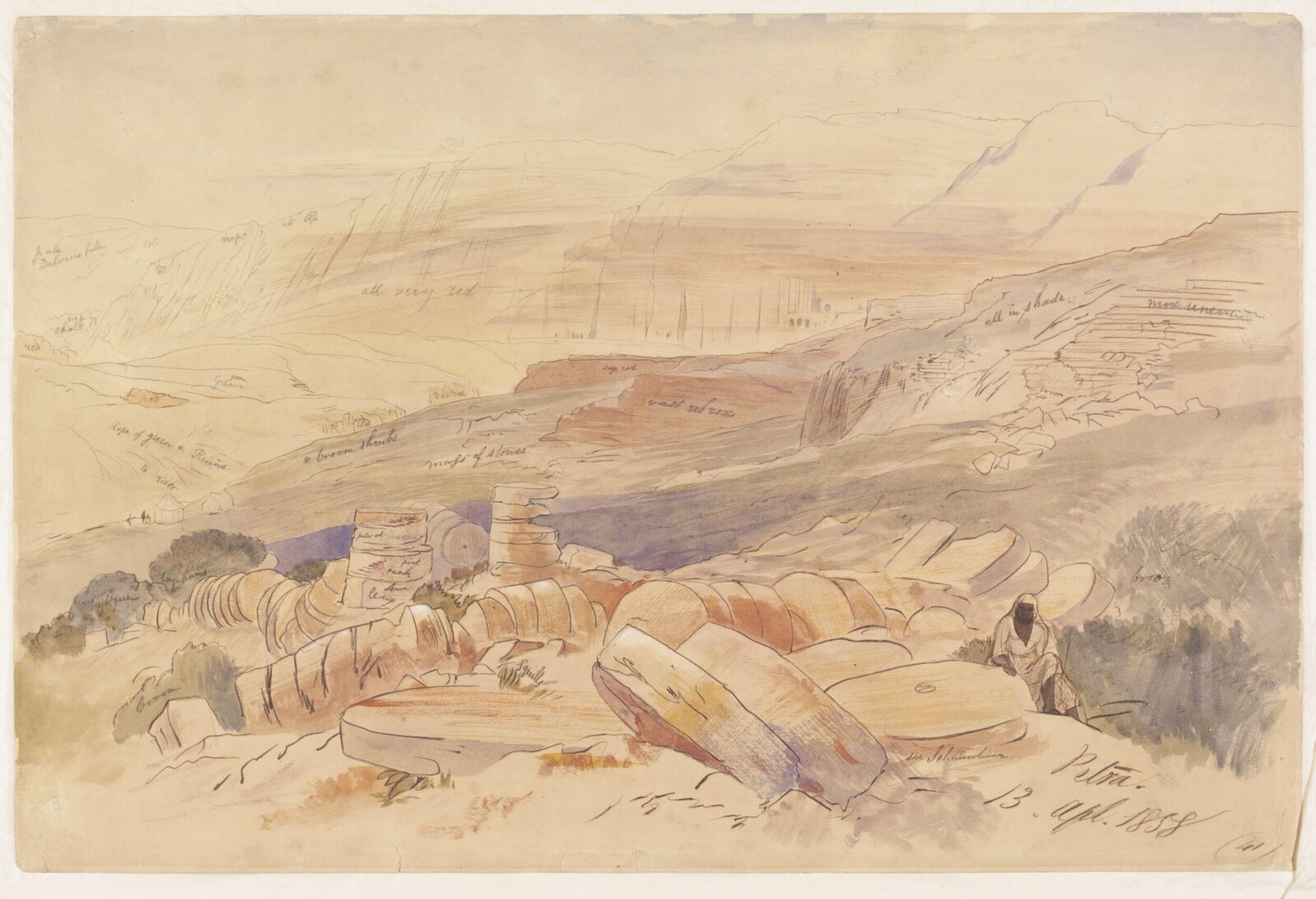
Petra
¿Se puede contemplar?
Por ahora no recibe

Museo de Victoria y Alberto
Londres, Reino Unido
Pertenece a la colección, pero ahora mismo no está expuesta.
- Comprobado
- hace 7 días
- En este estado desde
- 25 sept 2026
- Fuente
- Los datos de colección del propio museo
Sobre la obra
Despite insecurity, epilepsy and ill-health, Lear was one of the most intrepid of nineteenth-century artist-travellers. He spent most of his adult life abroad, living for many years in Rome and Corfu, and travelling from there to other parts of Italy, Greece, Albania and the rest of Europe, as well as to the Near East on several occasions. At the age of sixty he toured India and Ceylon. Of the many dangers and hardships he endured on his travels, Lear's experiences at Petra were especially taxing. The day after he arrived there, on 13 April 1858, the local tribesmen who had gathered around his party demanded payment, and when they threatened violence he was forced to make a quick getaway, though not before he was robbed of 'everything from all my pockets, from dollars and penknives to handkerchiefs and hard-boiled eggs'.
Read on
Astonishingly, he had already made several sketches, responding in typically individual manner to Petra's extraordinary combination of impressive ruins and dramatic landscape: 'All the cliffs are of a wonderful colour - like ham in stripes; & parts are salmon colour', he wrote to his sister Ann. He made drawings from various viewpoints, including the one exhibited here from 'one of the higher terraces where a mass of fallen columns lies in profuse confusion, not unlike the ruins of the Sicilian Selinunti'. The figure beside the broken columns may well be Feragh, the black slave lent to Lear for the visit by a local shaykh.
Museo de Victoria y Alberto
Ficha
- Número de inventario
- SD.562
What it shows
En el catálogo
Fuentes
- Museo de Victoria y Alberto: the museum's own open data · obtenido hace 7 días
- Imagen: Museo de Victoria y Alberto — © Victoria and Albert Museum, London